Why Heavy Equipment Manufacturers Need Effective Dust & Fume Collection
Maintain a Safe and Compliant Manufacturing Environment
When you look around your plant, you can probably point to the main sources of dust and fumes straight away: welding stations, grinding booths, cutting tables, maybe thermal spray or similar processes. Each one can release fine particulate and metal fumes that build up in the air if they are not captured properly. Over months and years, that exposure can lead to serious health concerns for your team.
In heavy equipment manufacturing, you often have several of these processes running at the same time, in the same general area. That is why you cannot rely on general ventilation alone. Effective source capture and filtration help you keep airborne contaminants closer to the limits set by OSHA, and good housekeeping of dust helps you align with NFPA guidance around combustible dust and explosion risk. In simple terms: better fume and dust control means a safer, more predictable environment for the people who keep your lines running.
Reduce Equipment Wear and Unplanned Downtime
Dust and fumes do not only affect people. Fine metal dust can work its way into bearings, ways, control cabinets, and robotics. It can coat sensors, settle on boards, and accelerate wear on moving parts. You might not notice the impact in a single shift, but over a year or two it can show up as more frequent breakdowns, sticky actuators, nuisance alarms, or fans and filters that constantly need attention.
A dust and fume collection system that is designed around your actual processes helps keep this buildup under control. By capturing particulate before it spreads through the building, you protect critical machines, robots, and tools from unnecessary wear. That usually means fewer unplanned stops and more of your maintenance budget going toward planned work instead of emergency repairs.
Dust Collection Systems Used in Heavy Equipment Manufacturing
In heavy equipment manufacturing, dust and fume control usually starts with the processes that drive your production: welding lines, cutting tables, blasting areas, and finishing booths. Each one behaves differently, so the system you choose should follow where contaminants are actually generated and how your facility is laid out, rather than the other way around.
Source Capture Systems for Welding and Fabrication
For both manual and robotic welding, source capture is often your first line of control. Local hoods, extraction arms, fume guns, and downdraft tables are all designed to pull fumes away from the breathing zone and into a collector before they drift across the shop.
If you run robotic welding cells or multi-station lines with high arc time, you know how quickly fumes can build up. In those areas, a dedicated system sized for the cells themselves allows you to run continuously without overloading the rest of your ventilation. The idea is straightforward: catch the fume as close as possible to where it is generated, move it through ductwork designed for that load, and filter it efficiently before the air is exhausted or returned.
Cartridge Dust Collectors for Cutting and Grinding
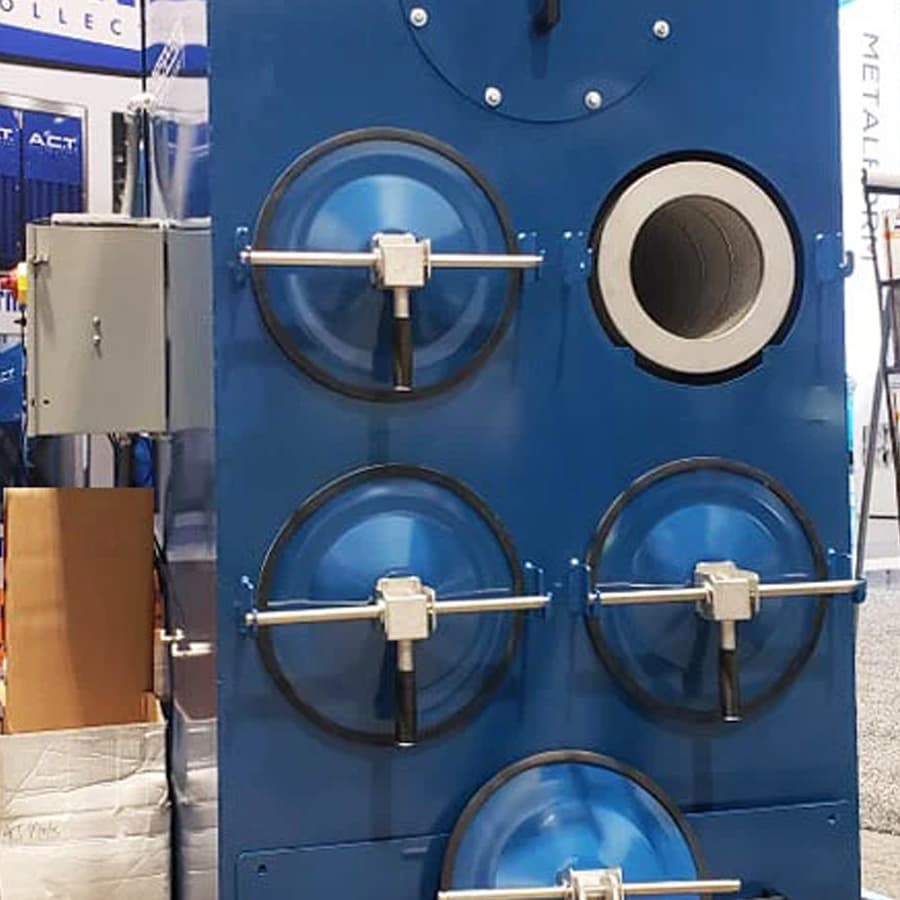
Laser and plasma cutting, grinding, and deburring generate very fine particulates that tend to stay suspended in the air. Cartridge dust collectors are commonly used with these processes because the pleated cartridges provide a large filter area in a compact housing and are well suited to dry, fine dust.
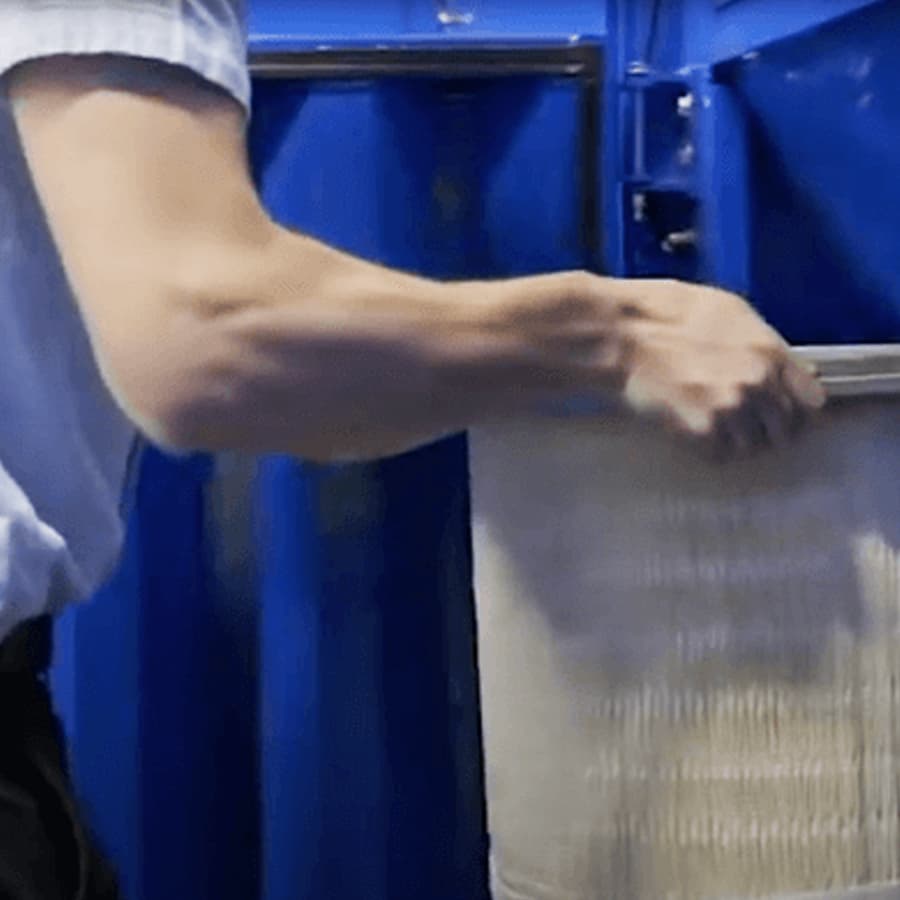
If you rely on cutting tables and grinding cells for long shifts, you also need a system that can run in continuous duty. Automatic pulse cleaning helps keep the cartridges working within the right pressure range, which means more stable airflow and more predictable energy use. From your side, that translates to cleaner air around the process and fewer surprises in terms of filter life.
Centralized Systems for Large Manufacturing Facilities
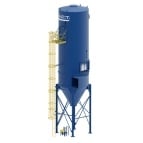
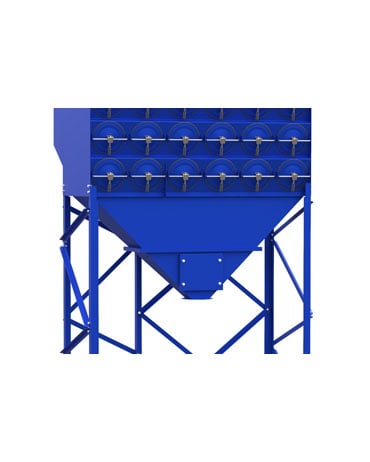
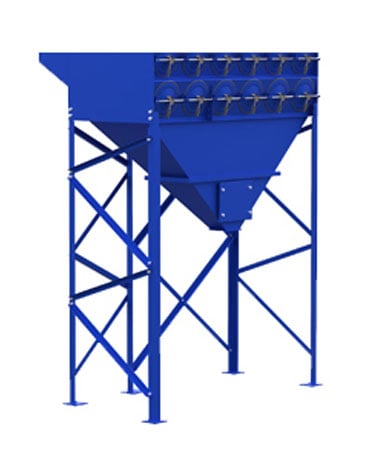
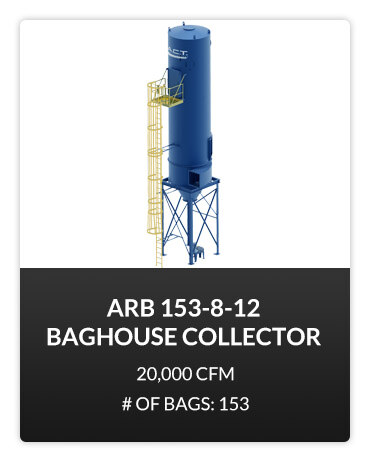
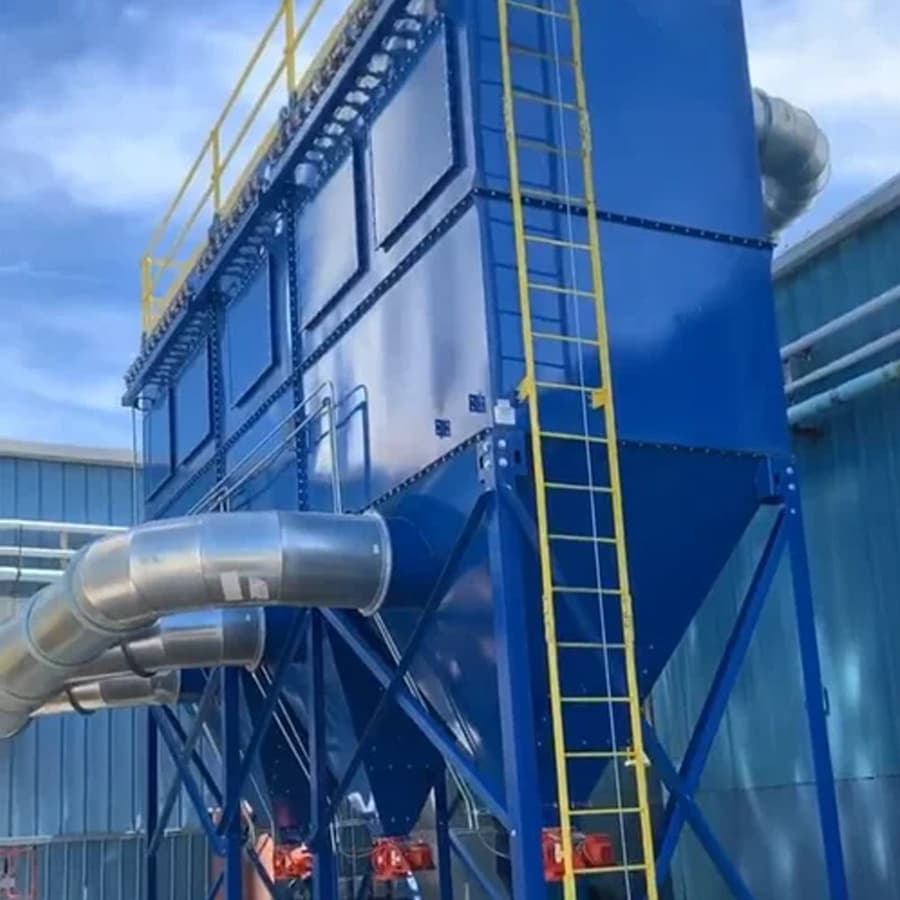
In larger plants, it often makes sense to connect several operations to a shared, centralized dust collection system. You might, for example, tie multiple grinding stations and cutting tables to one collector while keeping robotic welding on its own system. In some cases a cartridge collector is the right choice; in others, especially with heavier or more abrasive dust, a baghouse may be used.
The key is not just the total airflow number. It is how that air is distributed through the ductwork, how capture points are designed at each machine, and how the collector is sized to keep each branch doing its job without starving another part of the system.
WeldPack Dust Collectors
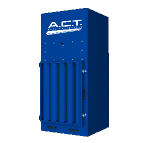
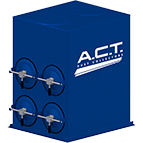
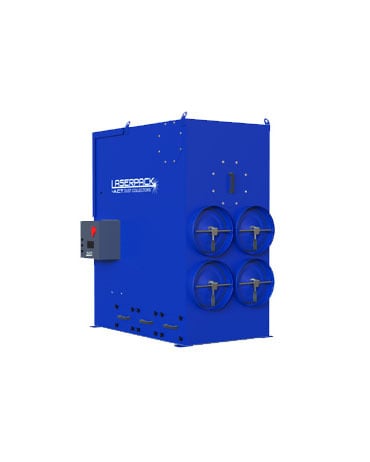
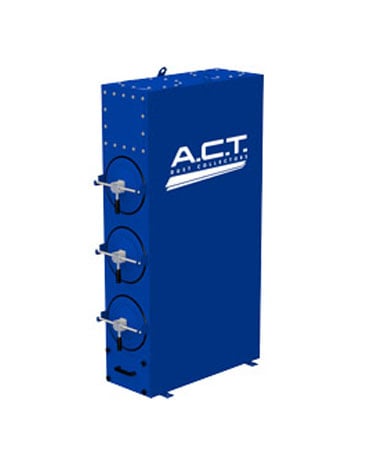
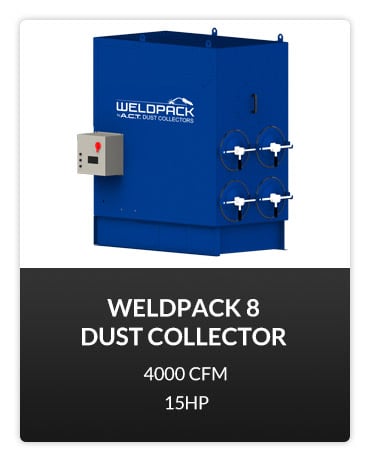
For welding-focused areas, particularly robotic cells and high-output lines, A.C.T.’s WeldPack series is built with welding fumes in mind. These units are compact enough to sit close to the source, sized for the continuous fume loads you see in production welding, and designed to work with common layouts for welding cells and source-capture hoods.
If you are adding automation or expanding welding capacity, a WeldPack can give you a dedicated fume control solution for that part of the plant, without forcing you to redesign your entire ventilation strategy all at once.
Cartridge Dust Collectors
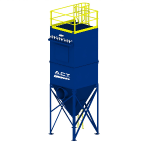
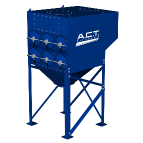
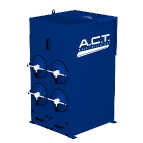
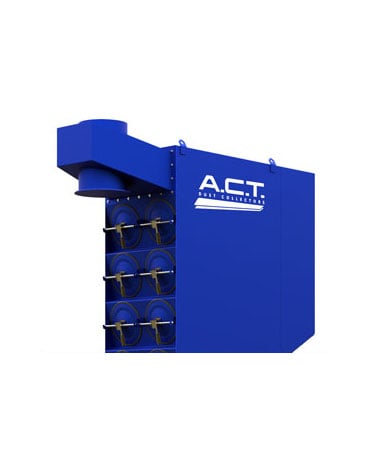
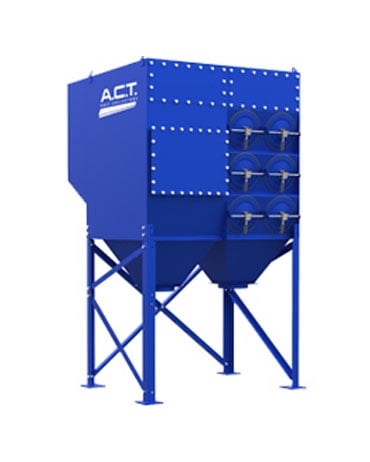
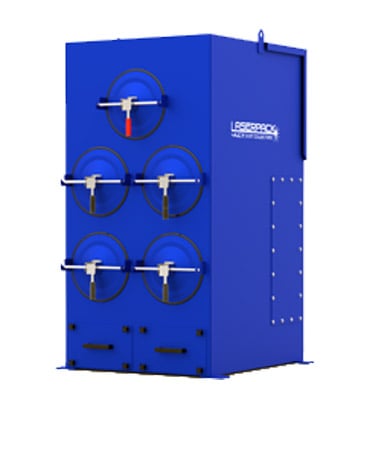
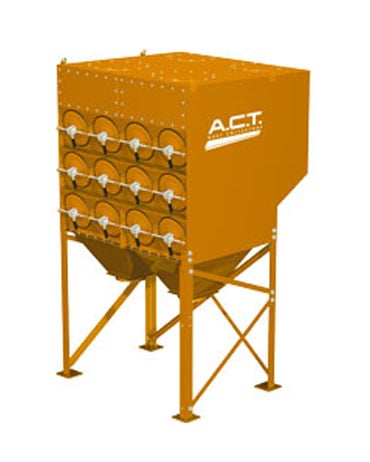
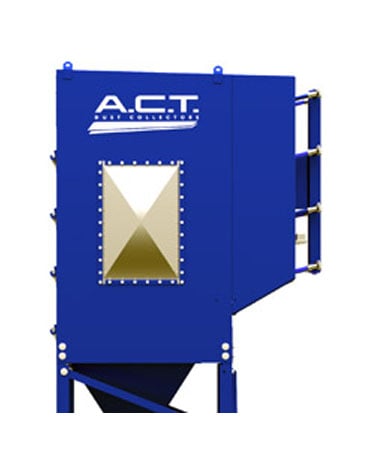
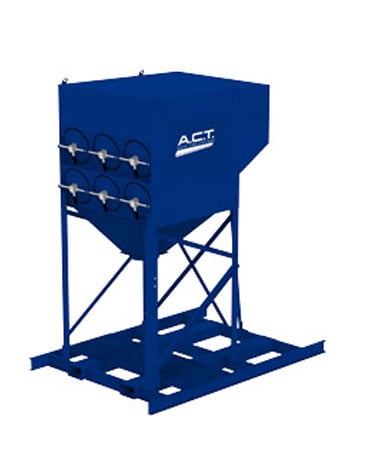
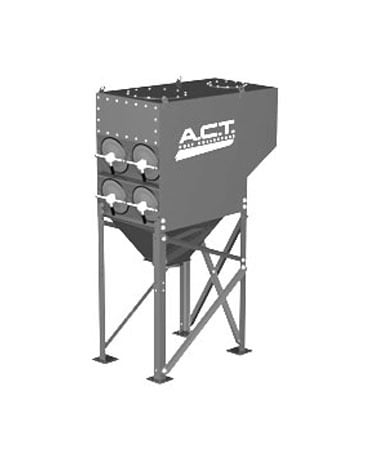
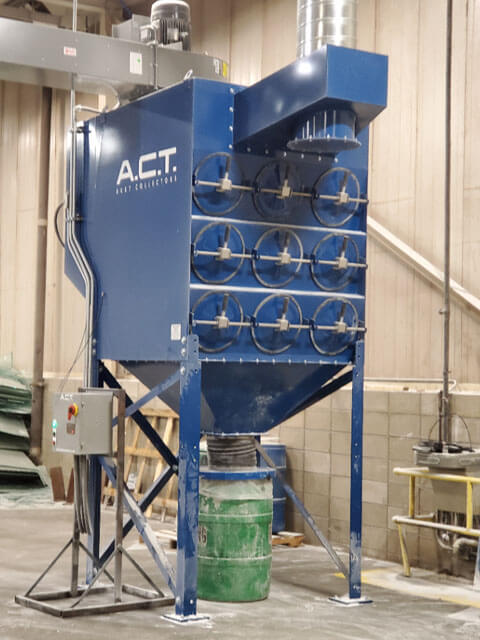
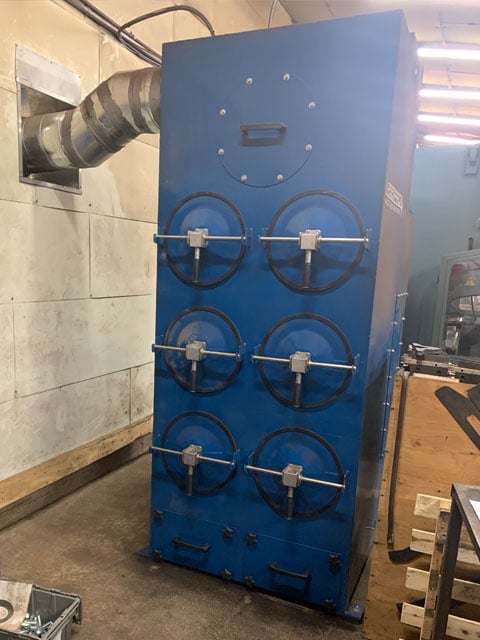
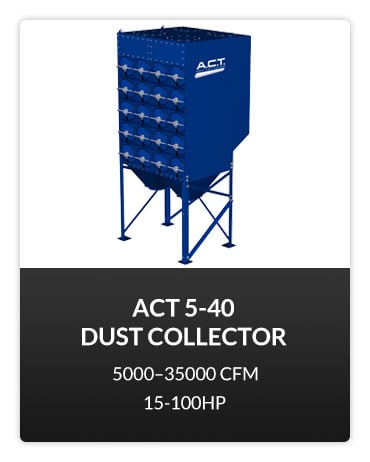
A.C.T. cartridge dust collectors are widely used in metalworking and fabrication facilities where fine particulate is the main challenge. The pleated cartridges are selected for efficient capture of welding smoke, grinding dust, cutting fumes, and similar contaminants, and pulse-jet cleaning helps keep differential pressure in a manageable range.
In a heavy equipment plant, you might mount these collectors near production areas, connect them directly to cutting tables, or incorporate them into a centralized system. The flexibility in configuration allows you to match the collector to your existing floor space and process flow instead of starting with a fixed layout on paper.
If you are unsure which approach fits your facility, you can talk with the A.C.T. team about your specific mix of welding, cutting, and fabrication. They can help you compare options and narrow down a system that fits your constraints and goals.
Why A.C.T. Dust Collectors is a Fit for Heavy Equipment Manufacturers
Heavy equipment manufacturing puts extra pressure on dust collection systems. Shifts run long, weldments are large, fume and dust loads are high, and your product mix or layout can change over time. You need systems that can live in that reality: they should run reliably without constant attention and still give you room to adapt as your plant evolves.
A.C.T. designs and builds industrial dust collectors in the United States and works with facilities that deal every day with welding smoke, grinding and cutting dust, blast media, and similar contaminants. That experience shapes how systems are engineered for you. Instead of starting with a generic model, the team looks at:
- The type of dust and fume you generate and the filter media that suits it
- Where equipment sits on your floor and how inlets and discharges should be arranged
- The fan and duct sizing needed to keep capture velocities where they should be at each hood
For high-duty cycles, components, controls, and filter cleaning systems are chosen with long-term reliability and realistic maintenance in mind. The goal is not just to move air on day one, but to keep performance stable so your team can look after the system without it taking over their week.
Whether you are planning a single collector for a new robotic weld cell or a coordinated layout that ties several production areas together, A.C.T. can help you design a solution that fits your facility, rather than forcing your processes to fit the equipment. If you would like to talk through options, you can reach out for guidance on dust control in heavy equipment manufacturing and review product choices that match your schedule and budget.
Common Dust Collection Applications for Heavy Equipment Manufacturing
Heavy equipment manufacturing brings many dust- and fume-generating processes under one roof. That is part of what makes air quality management more demanding than in lighter fabrication. Each area has its own profile, and together they add up to a substantial overall dust load.
Typical applications where you may need dedicated or shared dust collection include:
A useful first step is simply mapping where these activities occur in your plant and which ones are most critical to your production. That map often becomes the backbone of a dust collection strategy that makes sense for your operation.



.svg)


















%20Collectors%20Image.png?width=143&height=143&name=ADC%20(Ambient)%20Collectors%20Image.png)


.webp?width=1512&height=2016&name=ACT%205-40%20at%20CPP.jpg%20(1).webp)

.png?width=240&height=91&name=ACT%20Dust%20Collectors%20Logo%20Solid%20White%202020%20(1).png "ACT Dust Collectors Logo Solid White 2020-2")
.png?width=148&height=149&name=usa-manufactured-dust-collectors%20(1).png "United States Flag")