Why Dust Collection is Critical in Defense Manufacturing
The materials and processes in defense manufacturing create some of the more serious air quality challenges in industrial fabrication.
Depending on your programs and materials, you may be working with stainless and specialty alloys, reactive metals, and abrasive media, under production pressures that do not leave room for unplanned downtime or safety incidents. Addressing airborne contamination properly from the start is considerably easier than managing the consequences later.
That said, here’s why you need a quality-checked dust collection system in a defense manufacturing environment:
Airborne Hazards in Defense and Aerospace Fabrication
Precision fabrication demands a controlled environment. When airborne dust and fumes are left unmanaged, worker health, equipment reliability, and production consistency all take a hit. Worker exposure to metal dust and welding fumes can result in serious long-term health effects, and maintaining clean air is a baseline expectation for any facility running continuous production.
OSHA Exposure Limits for Welding Fumes and Metal Dust
OSHA maintains permissible exposure limits (PELs) for a wide range of substances generated in metalworking and fabrication, including hexavalent chromium, manganese, and various metal oxides. These limits apply to defense manufacturing facilities the same way they apply to any industrial operation, and staying within them requires more than general ventilation in most production settings.
For some substances, industry health bodies recommend exposure thresholds more stringent than the current federal PELs, so your EHS team's guidance should inform how you approach those specific hazards.
Combustible Dust and Fire Risk in Defense Facilities
Beyond worker health, uncontrolled dust accumulation introduces a separate category of risk.
Fine metallic particles from grinding, blasting, and cutting operations can become combustible when airborne in sufficient concentrations. NFPA 652 establishes the fundamentals of combustible dust safety across industries and directs facilities handling metals to NFPA 484, which covers combustible metals specifically. Facilities working with aluminum, titanium, or magnesium should review these standards with their safety team, as they carry specific expectations around dust hazard analysis and explosion protection.
Common Dust and Fume Sources in Defense Manufacturing
Many defense manufacturing facilities deal with a mix of contaminants, not just one. Common sources include:
- Welding fumes and smoke from manual welding stations and robotic welding cells
- Laser cutting dust and plasma cutting dust from high-temperature cutting, piercing, and profiling operations
- Grinding and deburring particulates from edge preparation, finishing, and surface refinement
- Blasting media and surface prep dust from abrasive blasting and part cleaning operations
- Coating overspray and fine powder where powder coating or liquid finishing processes are present
Many defense contractors run several of these processes simultaneously, often in the same building. That kind of environment calls for a dust collection strategy that accounts for a wide range of dust types, particle sizes, and generation rates across your facility.
Dust Collection Applications in Defense Manufacturing
Understanding your specific processes is the most useful starting point when planning a dust collection system. Here is a closer look at the four most common applications in defense manufacturing environments:
Welding Fume Extraction
Welding generates metallic fumes, oxides, and smoke that can spread quickly through a facility without proper source capture. In defense fabrication, where stainless steel and high-chrome alloys are common, fumes can contain substances such as hexavalent chromium and nickel compounds. A welding fume extraction system using hoods, fume arms, or enclosures captures contaminants before they reach the breathing zone, whether the operation is manual or robotic.
Laser and Plasma Cutting Dust Collection
Laser and plasma cutting produce extremely fine metallic particulate, fumes, and metallic vapors, along with sparks and hot debris that travel through ductwork. A laser cutting dust collector or plasma cutting dust collector for these applications needs spark control upstream of the filter media and sufficient airflow to capture at the table rather than relying on ambient air movement.
Grinding and Deburring Dust Collection
Grinding and deburring produce fine to medium metallic particles that stay airborne longer than most people expect. In a defense environment where close-tolerance components are being produced, dust settling on parts or equipment creates both quality and health problems. A grinding dust collection system with consistent source capture at the station keeps particle concentrations in check throughout the shift.
Blasting and Surface Preparation Dust Collection
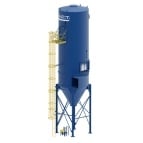
Abrasive blasting releases large volumes of dust and spent media rapidly, and visibility can drop quickly without adequate collection in place. A blasting dust collection system needs enough capacity to handle the high dust loads generated during active blasting, with hopper design and inlet construction suited to the weight and abrasiveness of the material being collected.
Taken together, most defense manufacturing sites are running several of these processes at the same time. That is why it is worth thinking about dust collection as a facility-wide strategy rather than addressing each process individually. A well-planned approach helps you avoid gaps in coverage and ensures that your systems are appropriately sized for actual operating conditions. If you are not sure where to start, the A.C.T. team is happy to help you think it through. Talk to us about your application and we can point you in the right direction.
How Dust Collection Systems Protect Equipment and Production
Defense manufacturing facilities run expensive, precision-dependent equipment. CNC machining centers, robotic welding systems, laser cutting tables, and automated material handling lines are not built to tolerate contaminated air indefinitely. Fine metallic dust finds its way into electrical enclosures, servo drives, linear guides, and precision bearings, and once it does, the damage shows up gradually until it does not. Premature wear, sensor faults, and unplanned downtime are the predictable result, and in a facility running on fixed delivery schedules, none of that is acceptable.
Getting dust under control at the source changes that picture. Here is what a well-matched dust collection system does for your operation beyond air quality:
- Longer service intervals on CNC equipment, robotics, and precision tooling
- Fewer contamination-related defects and rework on close-tolerance components
- Less time spent by your maintenance team on unscheduled cleaning and equipment checks
- Reduced surface accumulation, which matters for both product quality and combustible dust risk
- A more stable, predictable production environment across shifts
It is important to note that a system only delivers if it is maintained. Routine filter inspection, pulse-cleaning system maintenance, and hopper monitoring are all part of keeping that performance consistent over time.
Choosing the Right Dust Collector for Defense Manufacturing
Selecting the right dust collection system starts with understanding your processes, your facility layout, and the characteristics of the dust you are generating. A few factors are particularly important:
- Airflow requirements are determined by the number and type of dust sources, the size of capture hoods or enclosures, and the length and configuration of your ductwork. Getting airflow right from the beginning prevents the most common performance problems: insufficient capture velocity at the source, or excessive pressure loss across the duct system.
- Dust type and particle size affect both filter selection and collector design. Fine metallic fumes from welding require different filtration than the heavier abrasive dust from grinding or blasting. In some cases, a facility will need different collector types for different applications rather than a single centralized system.
- Spark and fire risk must be assessed for any process involving cutting, grinding, or high-speed material removal. Where sparks are present, your system design should include spark control measures before the dust stream reaches the filter media.
- Air-to-cloth ratio is a measure of how much airflow is passing through each square foot of filter media. A lower ratio generally means longer filter life and more consistent performance, which matters in high-production environments. Discussing your dust load and operating schedule with a dust collection specialist helps ensure the system is sized correctly for your actual conditions rather than a theoretical minimum.
Defense manufacturing environments are rarely straightforward, and the right system for one facility will not always be the right fit for another. The A.C.T. team works with defense and military manufacturers across the US and can help you work through these variables before you commit to a system. Talk to us about your application.
Recommended Dust Collection Systems for Defense Manufacturing
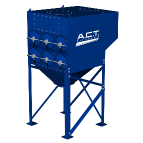
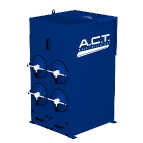
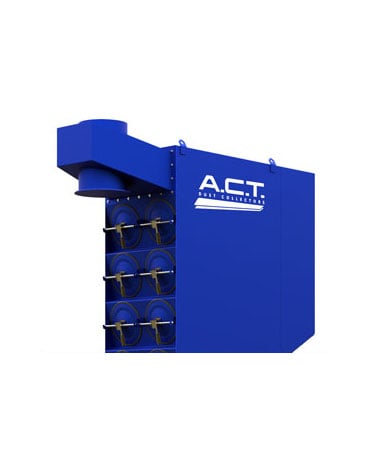
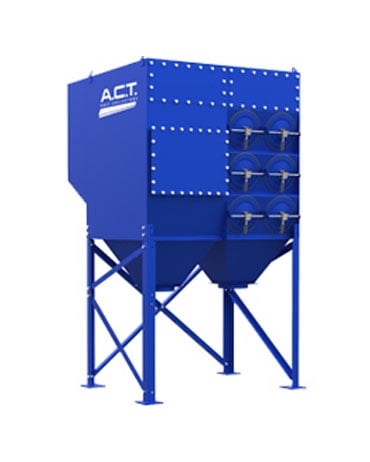
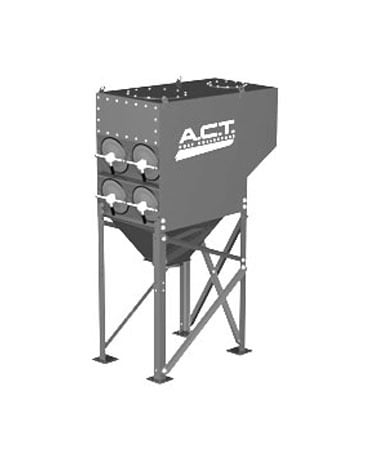
Different fabrication processes call for different equipment. Here is an overview of the A.C.T. systems most commonly used in defense manufacturing applications.
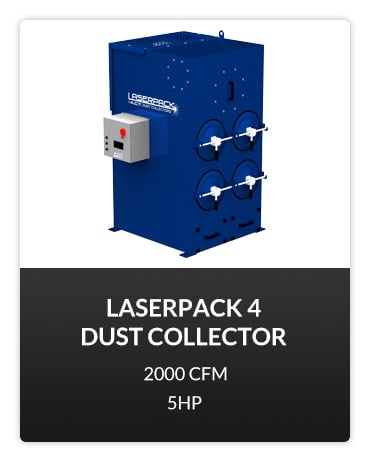
LaserPack Dust Collectors
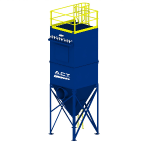
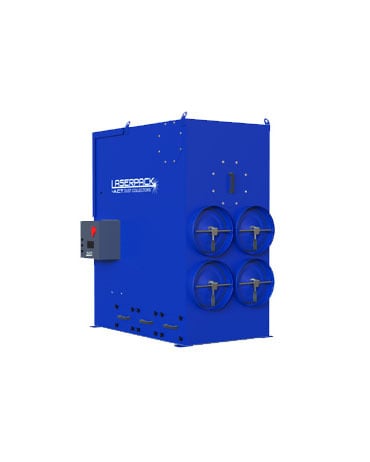
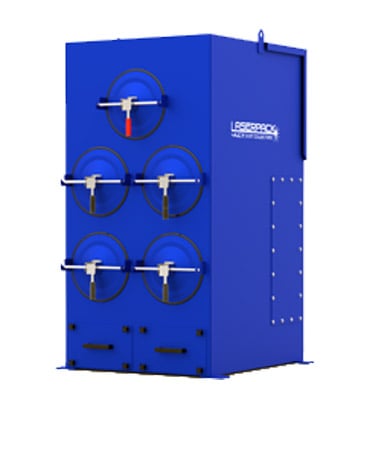
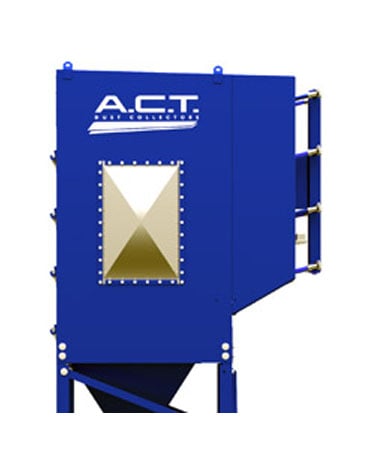
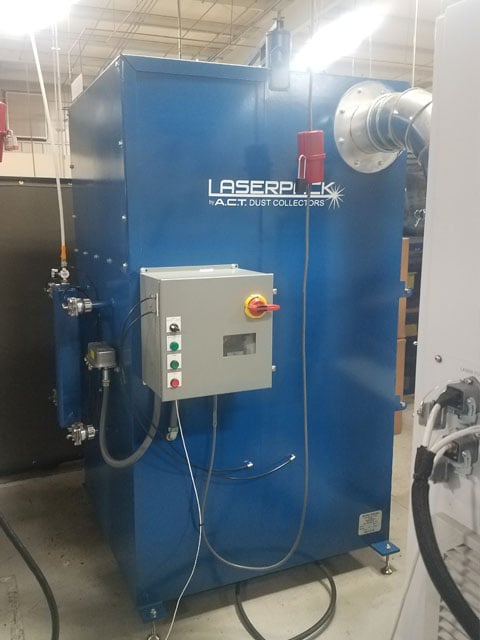
The LaserPack series is designed specifically for laser and plasma cutting environments where sparks, fine particulate, and metallic vapors are present. LaserPack systems are built to handle the demands of high-production cutting tables, with filtration designed for the fine, sticky particulate that cutting operations generate. The series is available in multiple configurations to match different table sizes and airflow requirements. If your facility runs laser or plasma cutting as a primary operation, the LaserPack is worth a close look.
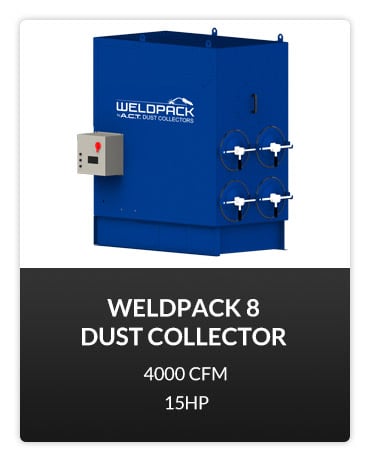
WeldPack Dust Collectors
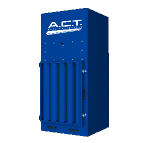
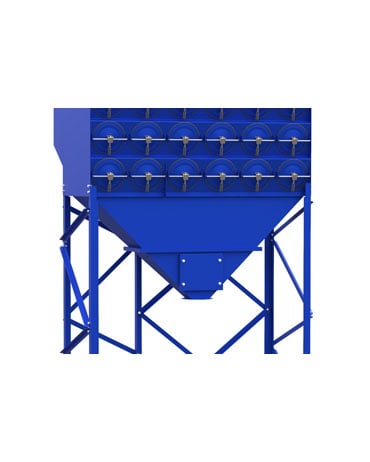
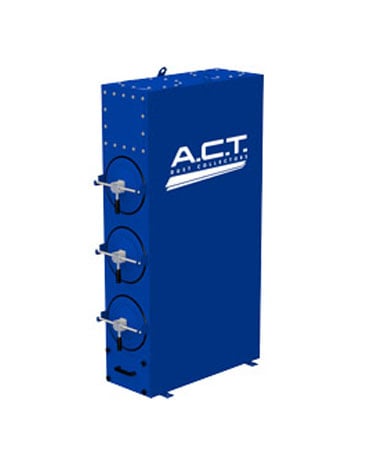
The WeldPack series is built for welding fume extraction in both manual and robotic welding applications. These compact units are designed to capture weld smoke and metallic fumes at the source, working with welding booths, extraction hoods, and fume arms to keep contaminants out of the general facility air. WeldPack collectors are available in several sizes and are a practical choice for defense fabrication shops where welding is a frequent or continuous operation.
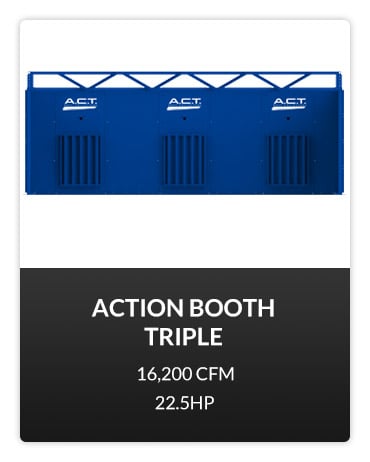
ACTion Booth Collectors
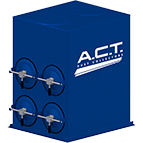
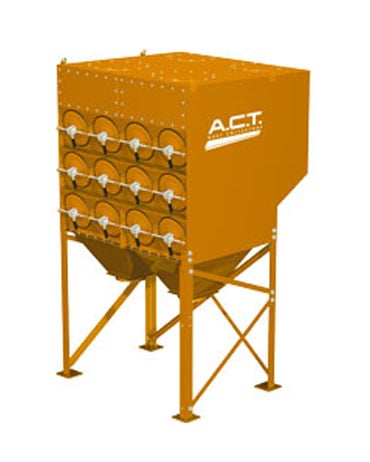
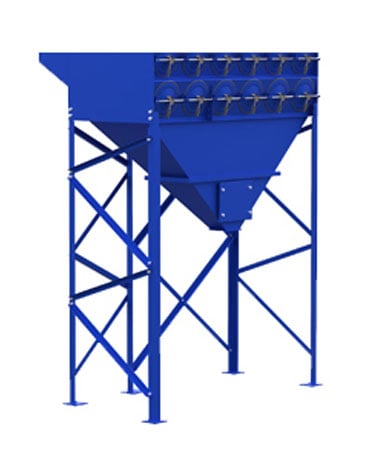
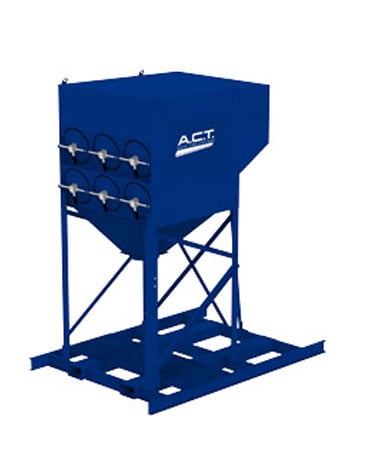
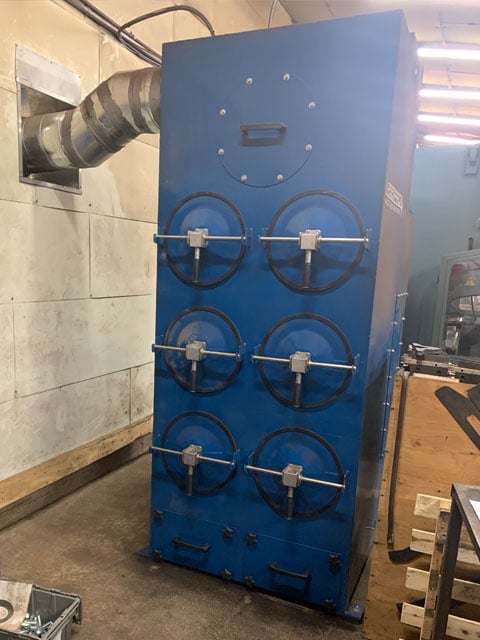
The ACTion Booth series provides a flexible approach to dust control for operations where the work moves around rather than staying at a fixed point. These booth-style systems are well suited to finishing, blasting, and general fabrication tasks where operators need room to maneuver. The booth design supports steady airflow and practical dust capture across the working area, which contributes to consistent performance over time. For defense facilities that need a practical ambient or source-capture solution for finishing and surface prep work, the ACTion Booth is a reliable option.
Explore all A.C.T. dust collection systems to find the right fit for your facility, or contact our team to request a quote for your unique needs.
Ready to Improve Air Quality in Your Defense Manufacturing Facility
The United States operates a vast network of military and defense manufacturing facilities, and each one is expected to meet federal air quality and safety standards as part of delivering reliable, uninterrupted production. A well-maintained dust collection system contributes directly to that, keeping operations safe, reducing compliance headaches, and supporting the kind of consistent environment that precision manufacturing demands.
If you are planning to upgrade an existing system or need a new installation, talk to the A.C.T. team. We manufacture our systems in the United States and carry a range of ready-to-ship models for facilities that cannot afford long lead times. For additional guidance on system performance and maintenance, explore our resources and FAQs.
Frequently Asked Questions About Dust Collection in Defense Manufacturing
What type of dust collector works best for welding in defense manufacturing?
For welding in defense manufacturing, a cartridge-style dust collector with source capture is generally the most effective approach. Welding fume extraction systems like the WeldPack series are designed specifically for this application, capturing metallic fumes and smoke at or near the weld point using hoods or fume arms. The right size and configuration depend on the number of welding stations and whether the operation is manual or robotic.
Do defense manufacturing facilities need spark control in dust collectors?
Yes, for processes like laser cutting, plasma cutting, and grinding, spark control is an important part of the dust collection system design. Sparks that travel through ductwork and reach the filter media can damage filters or create a fire risk. Systems designed for cutting applications, like the LaserPack series, are built with this in mind. For any process that generates sparks, it is worth discussing spark control measures with your dust collection provider before finalizing the system design.
How does dust collection improve air quality in fabrication plants?
Dust collection improves air quality by capturing airborne particles and fumes at or near the source before they spread through the facility. Rather than relying on general ventilation to dilute contamination, source capture systems remove particulates from the air stream directly. This reduces worker exposure to harmful substances, limits dust accumulation on equipment and surfaces, and helps maintain cleaner conditions throughout the facility. For a deeper look at how facilities manage indoor air quality, read our blog on improving indoor air quality in industrial environments.
What regulations apply to welding fumes and metal dust in defense manufacturing?
Regulations include OSHA requirements for controlling exposures, including substance-specific standards such as OSHA's Chromium (VI) rule where applicable. Many facilities also reference NFPA standards when combustible dust or combustible metal hazards are present. Your EHS team should determine what applies to your specific materials and processes.



.svg)



















%20Collectors%20Image.png?width=143&height=143&name=ADC%20(Ambient)%20Collectors%20Image.png)


.jpg?width=1500&height=2000&name=ACT%20Action%20Booth%204%20-%20Holland%20(1).jpg)

.png?width=240&height=91&name=ACT%20Dust%20Collectors%20Logo%20Solid%20White%202020%20(1).png "ACT Dust Collectors Logo Solid White 2020-2")
.png?width=148&height=149&name=usa-manufactured-dust-collectors%20(1).png "United States Flag")