Why Dust Collection is Critical in the Plastics Industry
Plastics facilities present dust collection challenges that general-purpose systems are not always built to handle. The dust loads vary significantly from one process to the next, particle sizes range from very fine resin fines to coarser grinding particulates, and some materials carry combustibility risks that require more than basic filtration.
Here is a look at the key reasons why a properly engineered system matters:
- Air quality for workers: Fine polymer and resin particles can become and remain airborne for extended periods. A properly designed dust collection system removes this particulate at the source before it disperses through the production floor.
- Equipment protection: Plastic dust that settles on machinery can affect operating tolerances, interfere with cooling airflow or sensitive equipment, and accelerate wear on moving components. Keeping dust contained reduces unplanned downtime and maintenance costs.
- Housekeeping and product contamination: Accumulated dust on surfaces, conveyors, and finished parts creates housekeeping burdens and can introduce contamination into products. Source capture eliminates buildup before it becomes a problem.
- Static buildup: Plastic dust is prone to generating static electricity during conveying and processing. Static charge can contribute to dust adhesion on surfaces and, in some cases, become an ignition concern in combustible dust environments.
- Combustible dust risk: Many resin and polymer dusts have measurable combustibility characteristics when finely divided and suspended in air. Facilities should not assume their plastic dust is non-combustible without proper evaluation.
A standard shop vacuum or basic filtration setup is rarely sufficient for production-scale plastics operations. These environments need a properly engineered dust collection system matched to the airflow requirements, dust characteristics, and layout of the facility.
Dust Collection for Plastics Applications
Injection Molding
Injection molding itself typically produces limited airborne dust during the molding cycle, but material handling, regrind blending, trimming, and part finishing can still release polymer particulate. Localized source capture with a cartridge dust collector or portable unit positioned near the work area is usually the most efficient approach for these operations.
Extrusion
Extrusion operations can generate dust during resin feeding, pellet cutting, trimming, and material handling around the line. Fine resin and polymer dust released at these points can become airborne quickly. Cartridge dust collectors connected to dedicated capture hoods near the generation source help contain this particulate before it spreads through the production floor.
Pellet Conveying Systems
Pneumatic conveying of plastic pellets is a particularly active dust-generating process. As pellets move through conveying lines, they break down and produce pellet fines that collect in transfer points, silo vents, and receiver bins. Bin vent dust collectors are commonly used at silo and receiver discharge points to capture this fines-laden air before it is released into the facility.
Plastic Grinding and Recycling
Granulators, shredders, and size-reduction equipment used in plastics recycling generate high volumes of coarse and fine particulate simultaneously. These applications often require cyclone pre-separators to remove the heavier particles before the air stream reaches the filter media, extending filter life and improving overall system performance. The remaining fine particulate is then captured by a downstream cartridge or baghouse collector.
Collecting Plastic Dust in Manufacturing Environments
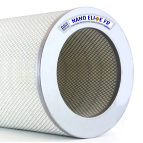
Selecting the right plastic dust collection system involves more than just matching airflow numbers. The air-to-cloth ratio, filter media type, pulse-cleaning method, and system layout all affect how well the collector performs over time. For fine resin and polymer dusts, high-efficiency cartridge filters with nanofiber filter media are typically well-suited because they capture very fine particles while maintaining lower differential pressure across the filter surface.
Proper duct design and conveying velocity also matter significantly. If air velocity in the ductwork drops too low, heavier plastic particulates can settle in the ducts rather than reaching the collector. System sizing should account for all connected capture points and factor in the specific gravity and particle size distribution of the dust being collected.
Once the particulate is collected, the cleaned air can either be returned to the facility or exhausted outdoors, depending on the facility layout and local air quality requirements. If air is being returned indoors, filtration efficiency becomes especially important. A.C.T. Dust Collectors' Nano-Elite filters are designed for high-efficiency particulate capture to support clean air return applications. If you have questions about system design for your specific plastic processing operation, our team is glad to discuss your application.
Types of Dust Collectors Used in Plastics Processing
Different plastics applications call for different collector types. Here is a brief overview of the systems most commonly used in plastics manufacturing environments:
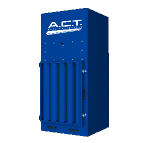
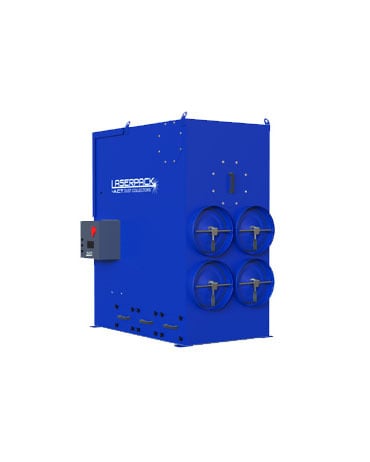
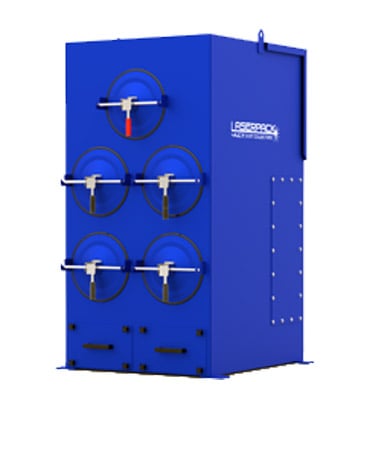
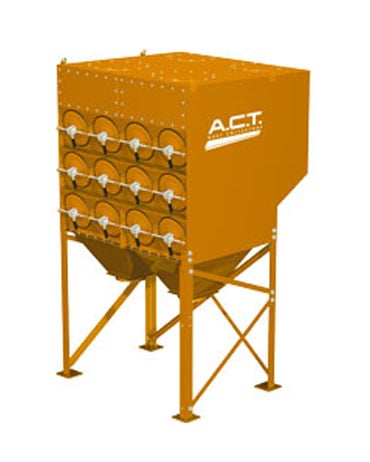
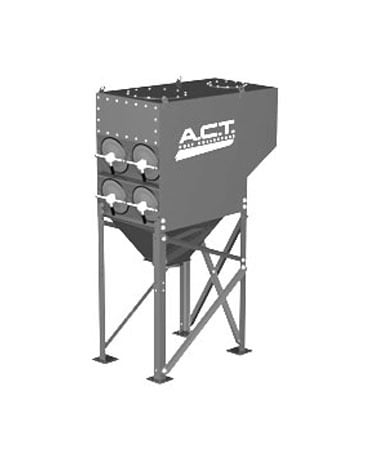
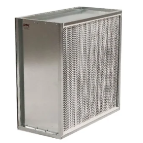
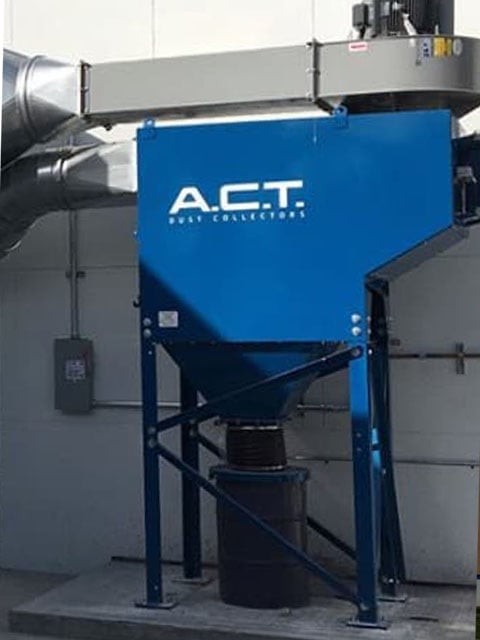
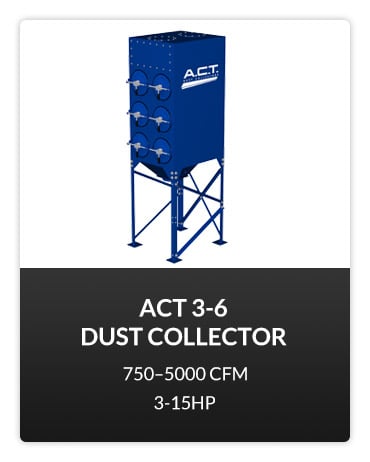
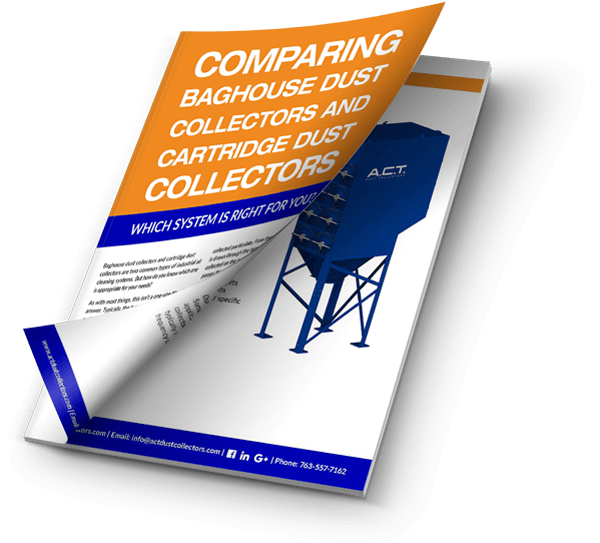
- Cartridge dust collectors are widely used across plastics facilities because they offer compact footprints and strong filtration efficiency for fine polymer and resin dusts. Pulse-cleaned cartridge units are well suited for continuous operations.
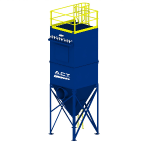
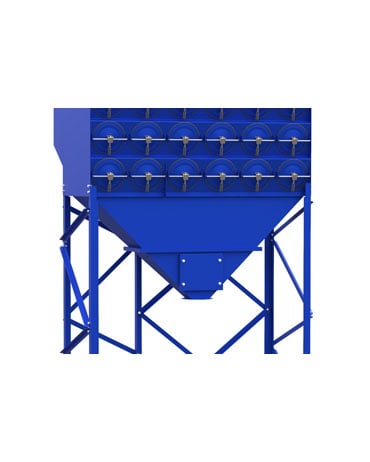
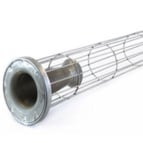
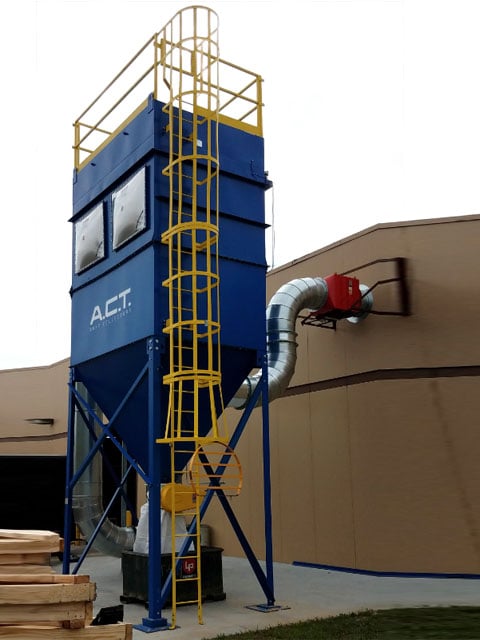
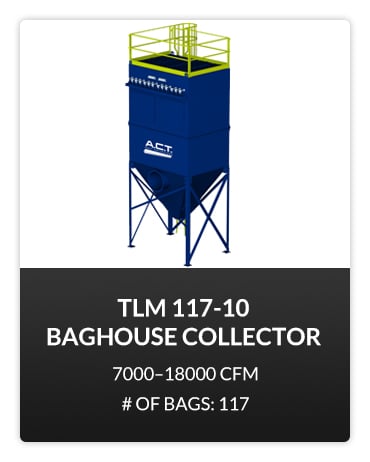
- Baghouse dust collectors are a practical choice for higher-volume applications or where coarser dust loads are involved. They can be sized for large central systems serving multiple capture points.
- Cyclone pre-separators are used upstream of cartridge or baghouse collectors when the dust stream contains a significant volume of heavier particles, such as in grinding and recycling applications. Pre-separation reduces the load on filters and extends service intervals.
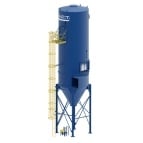
- Bin vent dust collectors are designed specifically for silo and receiver vent applications where pellet conveying systems discharge fine-laden air that needs to be filtered before release.
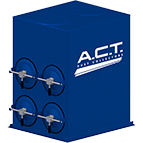
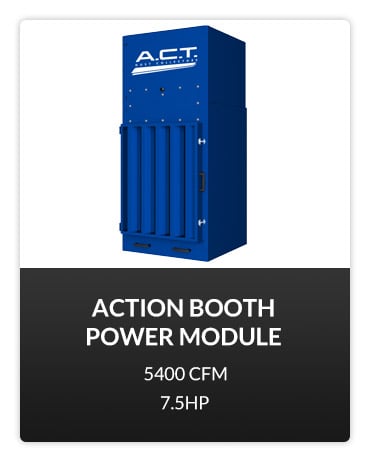
- Portable and ambient collectors can supplement primary systems at trimming stations or small press operations where flexible source capture is needed.
Explosion Protection and Safety Considerations
Many resin, polymer, and additive-based dusts have measurable combustibility characteristics when finely divided and suspended in air at sufficient concentration. Plastics facilities should not assume their dust is non-combustible without a proper evaluation.
NFPA 652 and the consolidated NFPA 660 standard require facilities handling potentially combustible materials to conduct a Dust Hazard Analysis (DHA) to identify risks and determine what protective measures are needed. Where combustible plastic dust is confirmed, the dust collection system may need to include specific safety components. These commonly include:
- Explosion venting panels: Designed to relieve pressure from a deflagration event inside the collector, directing the energy away from personnel and equipment.
- Isolation dampers: Installed on inlet and outlet ductwork to prevent a deflagration from propagating back through the duct system to connected equipment or workstations.
- Spark detection and suppression systems: Detect sparks or embers in the air stream before they reach the filter media, triggering automatic suppression to prevent ignition inside the collector.
- Proper grounding and bonding: Ensures that static charge generated by plastic dust movement is safely dissipated throughout the system, reducing one of the most common ignition sources in plastics operations.
For a detailed look at dust collector explosion causes and prevention measures, see A.C.T.'s resource: Dust Collector Explosion: Causes, Prevention, and Safety Measures.



.svg)



















%20Collectors%20Image.png?width=143&height=143&name=ADC%20(Ambient)%20Collectors%20Image.png)



.png?width=240&height=91&name=ACT%20Dust%20Collectors%20Logo%20Solid%20White%202020%20(1).png "ACT Dust Collectors Logo Solid White 2020-2")
.png?width=148&height=149&name=usa-manufactured-dust-collectors%20(1).png "United States Flag")