Food Processing Dust Collection FAQs
What type of dust collector is best for food processing applications?
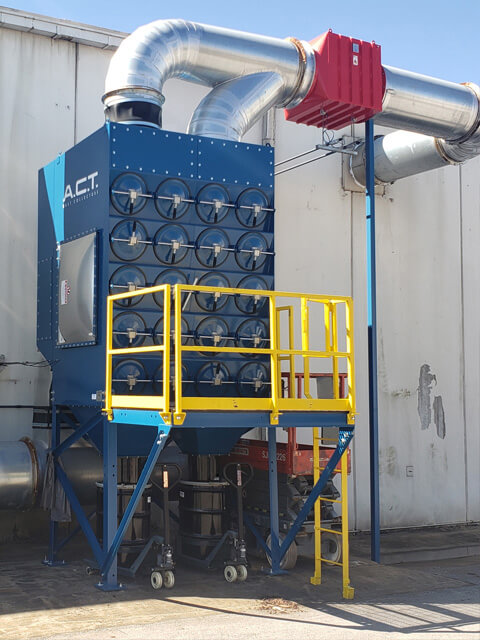
The best dust collector for food processing depends on the ingredient being handled, the amount of dust generated, and whether the dust is combustible. Cartridge dust collectors are well suited for moderate dust loads from mixing, blending, and packaging, while baghouse dust collectors handle higher-volume operations with continuous dust generation. Facilities processing sugar, flour, spices, or other combustible ingredients may also require explosion protection in addition to dust collection to support safe operation.
How does a dust collector work in a food processing facility?
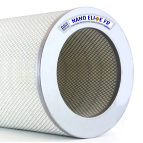
A food processing dust collector captures airborne dust generated during mixing, blending, conveying, and packaging before it can spread throughout the facility. Dust-laden air is drawn into a cartridge or baghouse collector, where high-efficiency filters remove fine particulate from the airstream. Nano-Elite filters, rated MERV 15, capture up to 99.9% of airborne particulate before the cleaned air is returned to the facility or exhausted outside, helping maintain cleaner production areas and improve air quality.
How much maintenance does a food processing dust collector require?
Food processing dust collectors require routine maintenance to maintain airflow, extend filter life, and ensure reliable operation. Operators should regularly monitor differential pressure, inspect filter condition, and verify that pulse-cleaning systems are functioning properly. Fine ingredient dust such as flour, sugar, and starch can load filters more quickly than coarser materials, making routine system monitoring essential for reducing downtime and maintaining consistent collection performance.
Do I need explosion suppression in addition to standard dust filtration?
Whether you need explosion suppression depends on the combustibility of the dust generated by your food processing operation. Standard dust filtration removes airborne particulates but does not prevent or contain a combustible dust explosion. When processing combustible ingredients such as sugar, flour, starch, or spices, a Dust Hazard Analysis (DHA) may determine that explosion suppression, explosion venting, or isolation devices are required. Combining appropriate explosion protection with effective dust collection helps facilities improve safety while supporting OSHA and applicable NFPA standards.
Where should dust be captured in a food processing facility?
Food processing dust should be captured as close to the point where it is generated as possible. Source capture at mixers, blenders, conveyors, transfer points, packaging lines, and ingredient dump stations prevents fine dust from spreading throughout the facility. Capturing dust at the source improves collection efficiency, reduces housekeeping requirements, helps maintain product quality, and minimizes the accumulation of combustible dust on equipment and building surfaces.



.svg)


















%20Collectors%20Image.png?width=143&height=143&name=ADC%20(Ambient)%20Collectors%20Image.png)




.png?width=240&height=91&name=ACT%20Dust%20Collectors%20Logo%20Solid%20White%202020%20(1).png "ACT Dust Collectors Logo Solid White 2020-2")
.png?width=148&height=149&name=usa-manufactured-dust-collectors%20(1).png "United States Flag")