Why Dust Collection Matters in Construction Equipment Manufacturing
Construction equipment manufacturing produces a wide mix of dust and fumes, and these contaminants can spread quickly if not controlled. Whether your facility handles welding, cutting, blasting, sanding, or coating, each step adds to the overall air burden. Without the right systems in place, this buildup affects your team’s health, the reliability of your equipment, and the stability of day-to-day operations.
Here are the key reasons dust collection plays such a critical role in construction equipment manufacturing:
Protecting Workers From Harmful Dust and Fumes
Construction equipment manufacturing relies on welding, grinding, cutting, blasting, sanding, and coating - each releasing airborne contaminants that can spread quickly without proper control. Some of the most hazardous include welding fumes, metal dust, and respirable crystalline silica from concrete and masonry.
Meeting OSHA Requirements With Engineered Controls
Because of the health risks linked to long-term exposure, OSHA requires employers to use engineering controls to limit airborne dust. Effective dust collection captures contaminants before they move through the facility, helping manufacturers stay compliant while reducing the burden on administrative controls or personal protective equipment.
Reducing Equipment Wear and Unexpected Downtime
Airborne particulates don't only affect people - they also settle into bearings, sensors, electrical panels, conveyor systems, and cooling components. Over time, this buildup leads to overheating, premature wear, and unplanned maintenance. In welding and cutting bays, haze can also reduce visibility and disrupt quality checks.
Creating a Cleaner, More Predictable Working Environment
A well-designed dust collection system helps stabilize air quality across the floor. By capturing contaminants at the source, it reduces housekeeping needs, improves line-of-sight, and creates a safer, more consistent production environment for your team.
Benefits of a Strong Dust & Fume Collection Strategy
A strong dust and fume collection strategy plays a direct role in creating better working conditions and supporting steady, long‑term productivity. Here are some of the notable benefits of investing in a high-quality, USA-made construction dust collector system:
- Improved worker health: Reliable dust collection reduces exposure to welding fumes, metal dust, and silica, lowering the risk of respiratory illness and helping teams stay healthy.
- Higher employee retention: A clean, well‑ventilated workspace shows employees that their safety matters, which supports morale and long‑term retention.
- Reduced equipment wear: Dust buildup accelerates mechanical wear. Capturing particulate before it settles keeps machinery cleaner and running longer.
- Consistent production uptime: With fewer dust‑related breakdowns and interruptions, production stays on schedule and output becomes more predictable.
- Lower operational costs: Cleaner air reduces housekeeping demands, minimizes HVAC strain, and helps avoid regulatory fines, supporting long‑term savings.
A safer, cleaner environment leads to a more resilient operation - with fewer disruptions and a workforce that can focus on doing their best work.
Best Dust Collectors for Construction Equipment Manufacturing
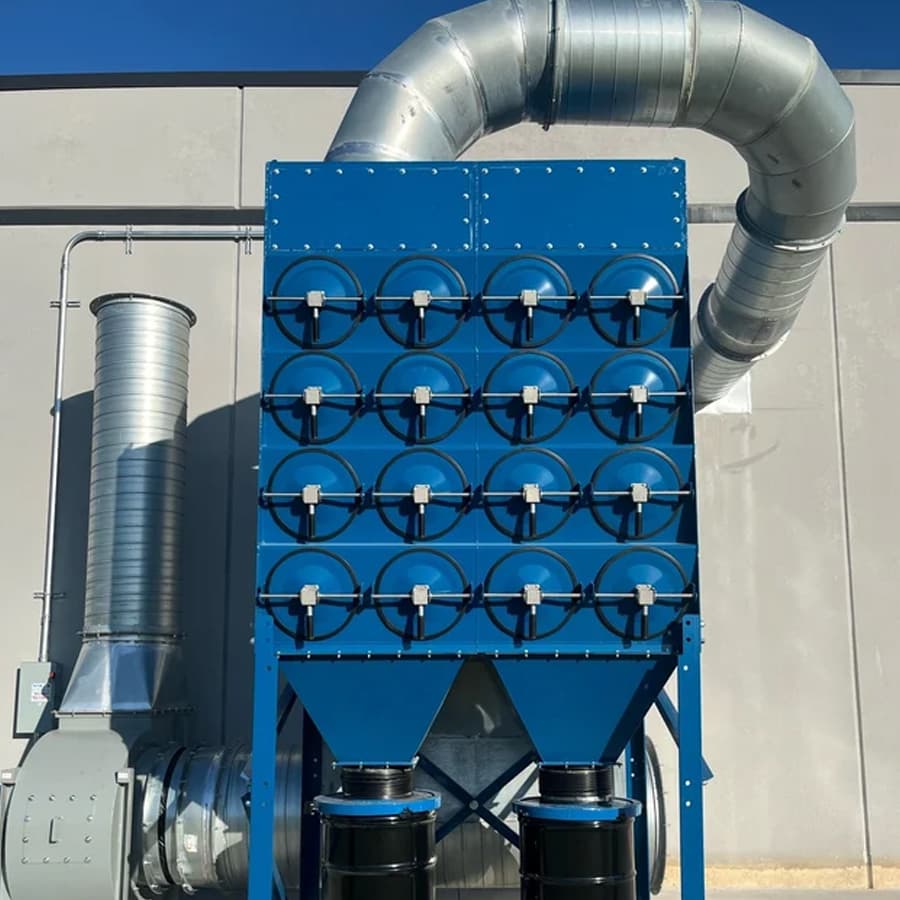
Every manufacturing floor is different. The right dust collection system depends on your specific processes & applications, and the amount of particulate each one produces. Systems with high‑efficiency MERV 15 cartridge filters are well‑suited for these environments because they capture fine particles effectively while maintaining steady airflow.
Spark control is also critical in metalworking applications. Options such as spark arrestors and spark‑quenching designs help limit fire risk by stopping hot particles before they reach the filters. Combined with sturdy construction, pulse‑cleaning technology, and thoughtful service access, these systems deliver reliability with minimal maintenance.
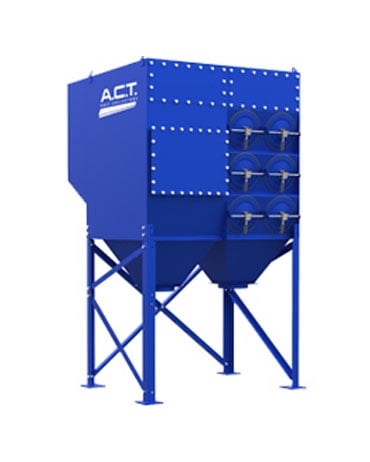
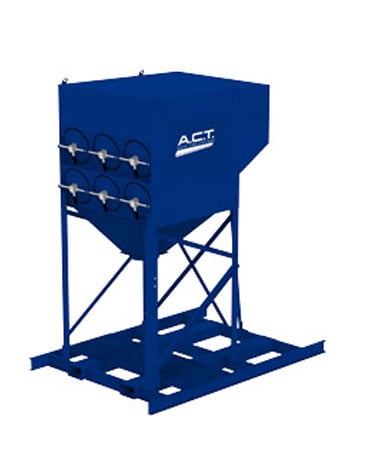
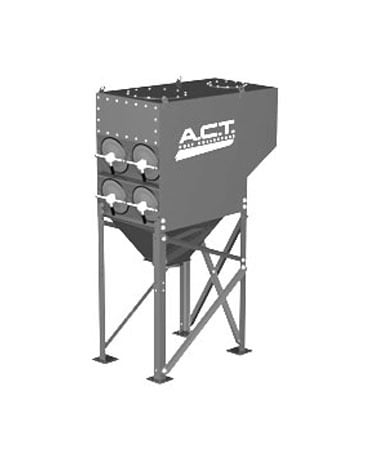
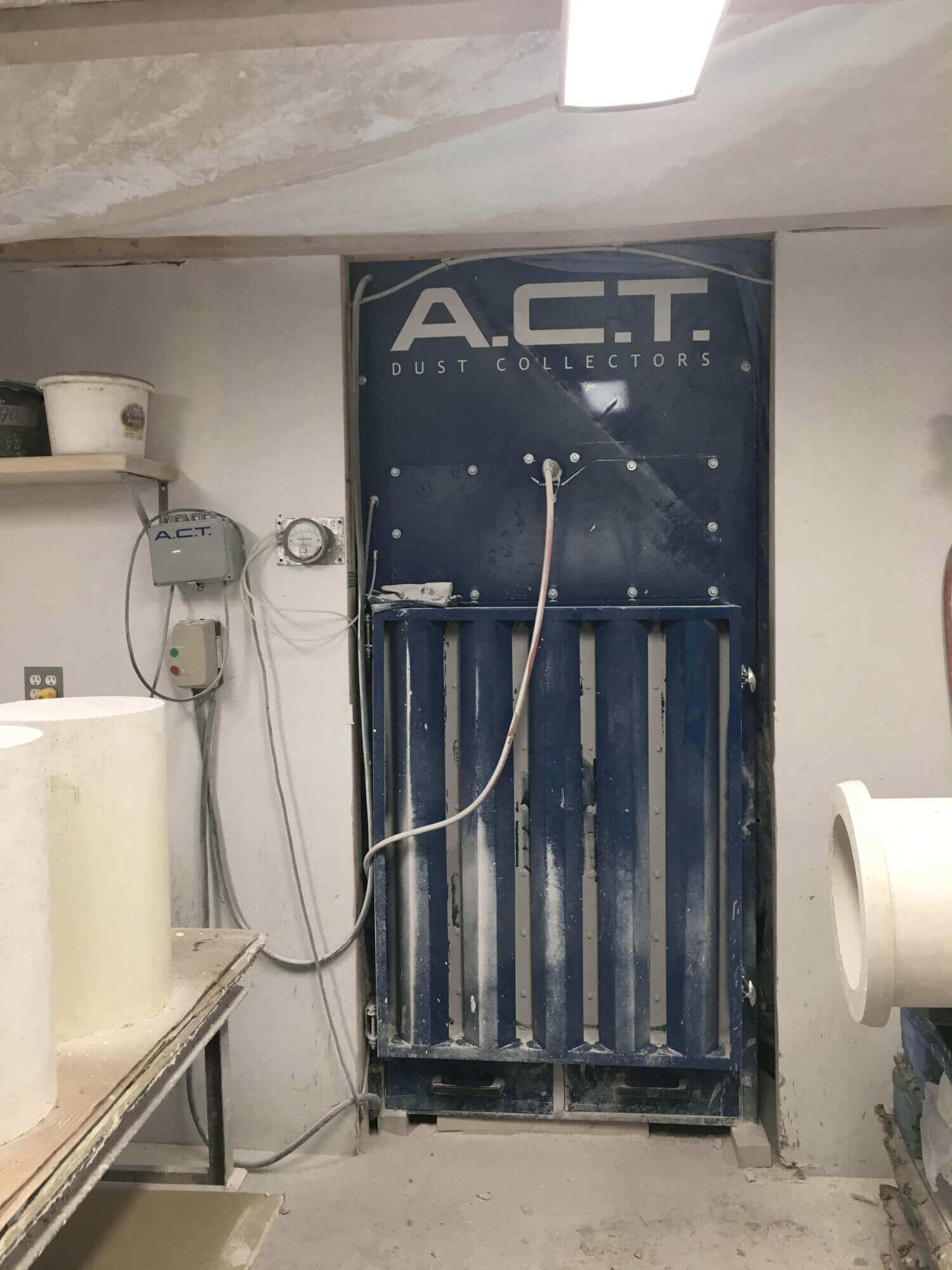
A.C.T. Dust Collectors provides systems engineered for these demanding environments - built for durability, long filter life, and the consistent performance manufacturers need.
WeldPack Dust Collectors for Welding Fume Control
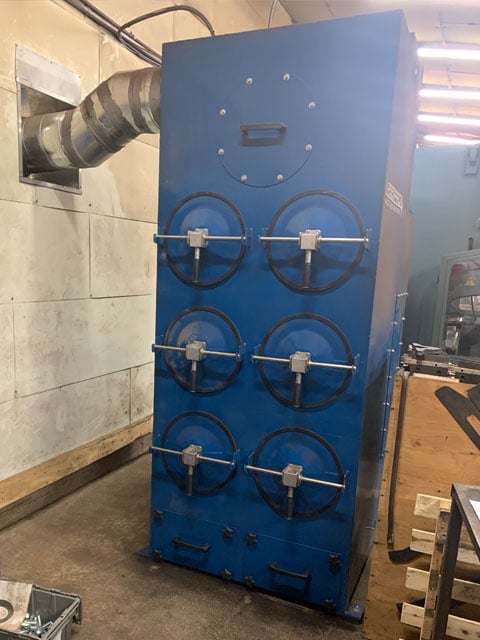
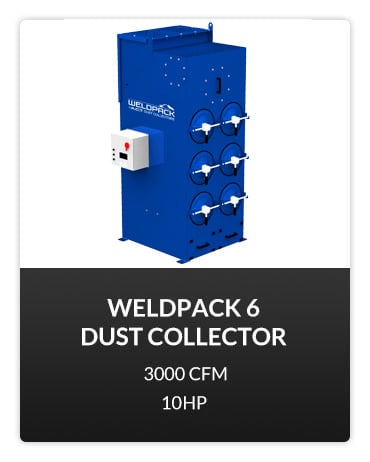
Welding produces fine metallic fumes that can quickly spread through a facility without proper capture. The WeldPack series pulls fumes and particulates away, supporting a healthier workspace in both manual welding booths and high‑volume robotic cells.
Its compact and modular design makes it simple to integrate into existing layouts, and source‑capture hoods or arms ensure efficient particulate removal. Pulse‑cleaning and high‑efficiency cartridge filters help maintain performance with routine, straightforward maintenance.
LaserPack Dust Collectors for Laser Cutting
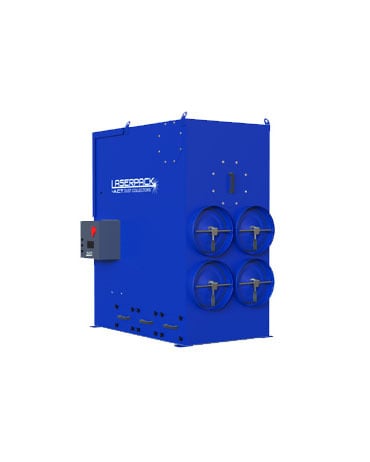
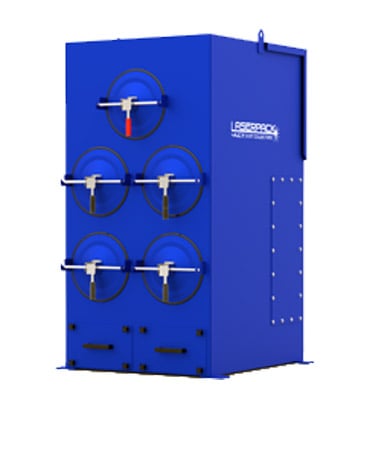
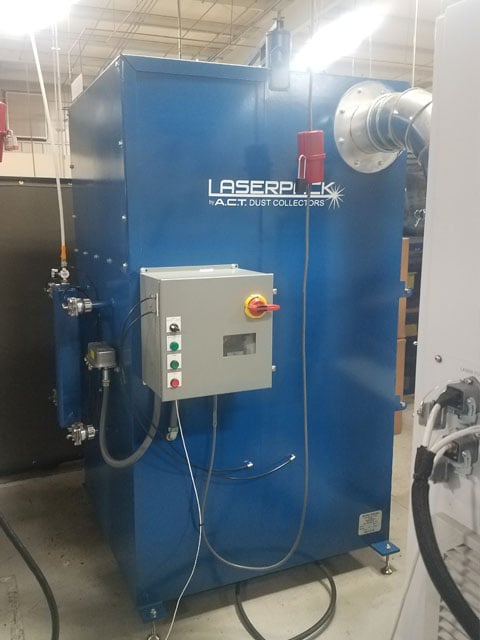
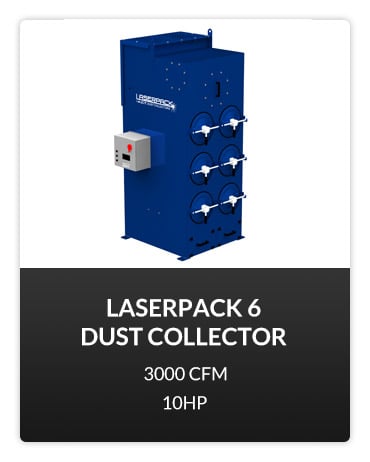
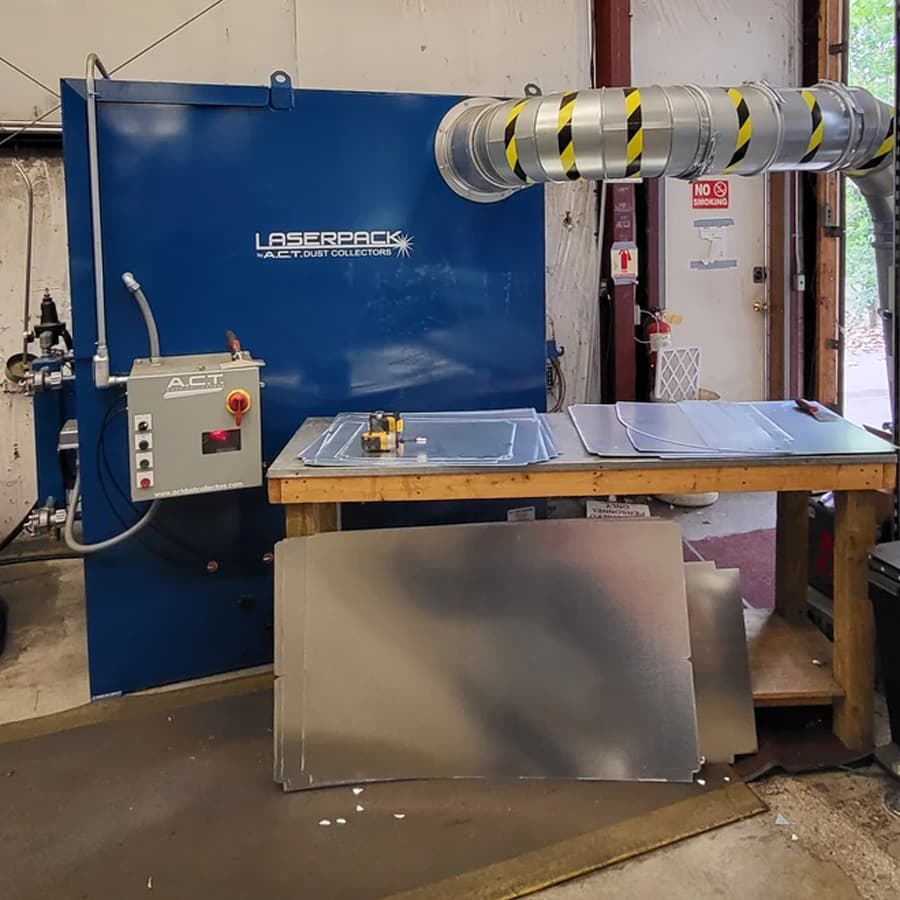
Laser cutting creates extremely fine particulates that can harm workers and equipment if left uncontrolled. The LaserPack dust collector is purpose-built for these demands, combining efficient filtration with spark‑management features designed to reduce fire risk in cutting applications.
Connected directly to laser tables or robotic cells, the LaserPack series captures fumes where they form, keeping optics cleaner, supporting consistent cut quality, and helping maintain safe air throughout the facility.
See the LaserPack in action:
Ambient Dust Collectors for Open Production Areas
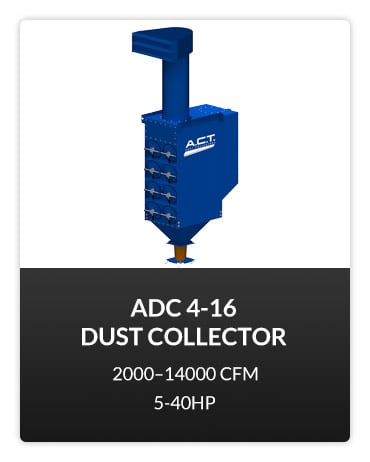
Some dust sources can be controlled at the machine, but others disperse into the surrounding workspace. Ambient dust collection helps manage this background particulate by pulling air from the general environment, filtering it, and returning cleaner air to the building.
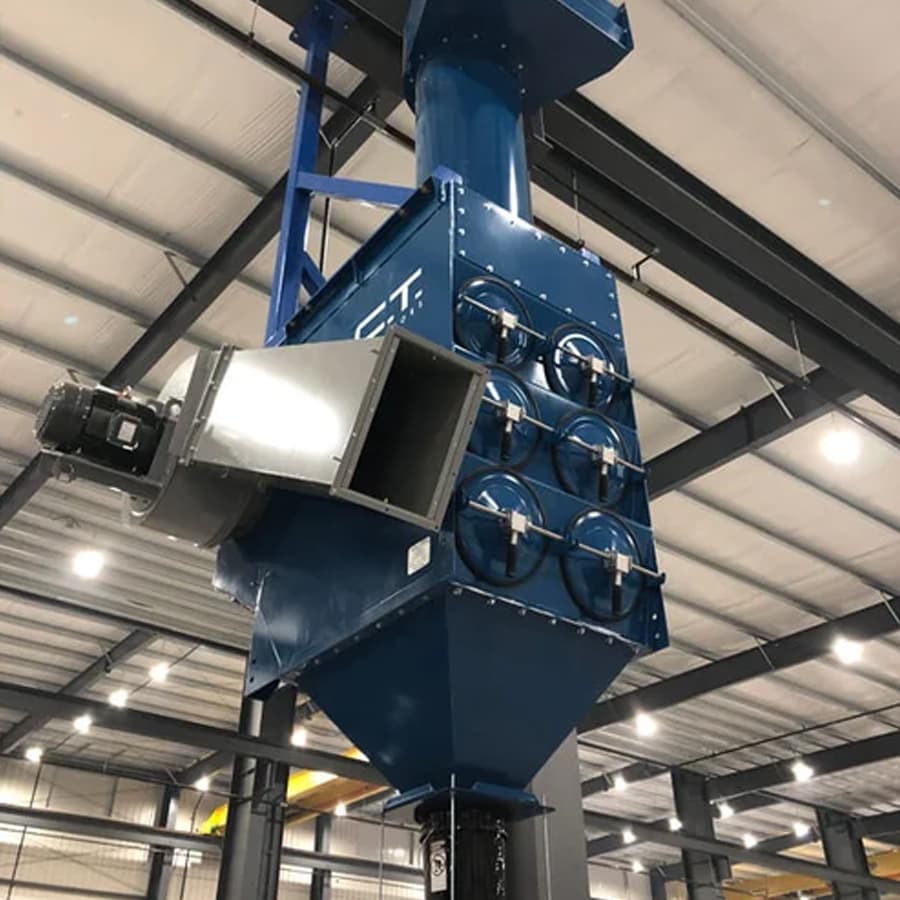
Options include overhead cartridge collectors, booth‑style collectors, or ducted systems mounted in the ceiling. Ambient solutions are especially useful in facilities with multiple open workstations, changing layouts, or processes that release fine particulate into shared spaces.
By reducing the overall dust load, ambient systems support general air quality and improve comfort for employees moving throughout the production floor.
Custom Dust Collectors for Complex Requirements
Many facilities operate in buildings with limited floor space, overhead cranes, or a mix of new and legacy equipment. In these cases, a customized dust collection system may be the most effective approach.
A.C.T. designs systems around airflow needs, hood placement, duct routing, filter choice, fan sizing, and safety features like silencers or isolation dampers. This ensures the system works with your production layout rather than competing with it.
If your operation has unique materials, challenging layouts, or processes that create heavy or high‑temperature dust loads, a custom solution ensures you get reliable, code‑compliant performance.
Ready to upgrade your dust collection system? Contact us today to request a quote or schedule a consultation.
Common Dust Collection Applications
Construction equipment manufacturers often need dust collection across several processes, including:
If you’re unsure where to begin, start by identifying areas with visible haze, heavy dust settlement, or frequent cleanup. These locations typically benefit most from upgraded dust collection.



.svg)


















%20Collectors%20Image.png?width=143&height=143&name=ADC%20(Ambient)%20Collectors%20Image.png)


.png?width=240&height=91&name=ACT%20Dust%20Collectors%20Logo%20Solid%20White%202020%20(1).png "ACT Dust Collectors Logo Solid White 2020-2")
.png?width=148&height=149&name=usa-manufactured-dust-collectors%20(1).png "United States Flag")