Why Dust Collection Matters in Automotive Manufacturing
Automotive plants run multiple dust and fume-generating processes simultaneously, often in close proximity to one another. Managing these contaminants is imperative as it affects worker health, regulatory compliance, equipment longevity, and production consistency. Here is a closer look at each of these areas:
Worker Safety
Welding fumes in particular contains dangerous compounds that present respiratory risks with repeated exposure. OSHA maintains permissible exposure limits (PELs) for these substances, and automotive facilities are subject to inspection under OSHA's air contaminant standards. Source capture at the point of generation is the most effective way to limit worker exposure.
OSHA Compliance
Facilities are required to take active steps to control airborne hazards through engineering controls. For welding operations, OSHA's guidance on ventilation controls, including local exhaust ventilation and dust collection, applies directly. Facilities without adequate controls in place face potential citations, fines, and the cost of emergency remediation.
Equipment Protection
Dust and fumes that settle on CNC equipment, robotic arms, sensors, and control panels cause wear, interfere with calibration, and can lead to unplanned downtime. This is a practical concern that plant managers often do not prioritize until it becomes a problem. Keeping particulates out of sensitive equipment extends service intervals and reduces repair costs.
Production Consistency
In automated welding cells and precision cutting operations, contamination on optics, nozzles, or workpiece surfaces directly affects weld quality and cut accuracy. A well-designed dust collection system helps maintain the clean, stable operating conditions that consistent output requires.
Reduced Downtime
When dust is managed properly, filters that are correctly sized and maintained keep airflow stable. That means collectors run longer between service intervals and production is not interrupted by clogged systems or premature filter failures.
Controlling dust and fumes protects employees while supporting overall plant performance. These are two goals that go together, not competing priorities.
Welding Fume: The Primary Safety Concern in Automotive Plants
Of all the dust and fume sources in automotive manufacturing, welding consistently presents the most significant health and compliance challenge. The fume generated during welding contains a mixture of fine metallic particles and chemical compounds. Here is what facility managers need to know:
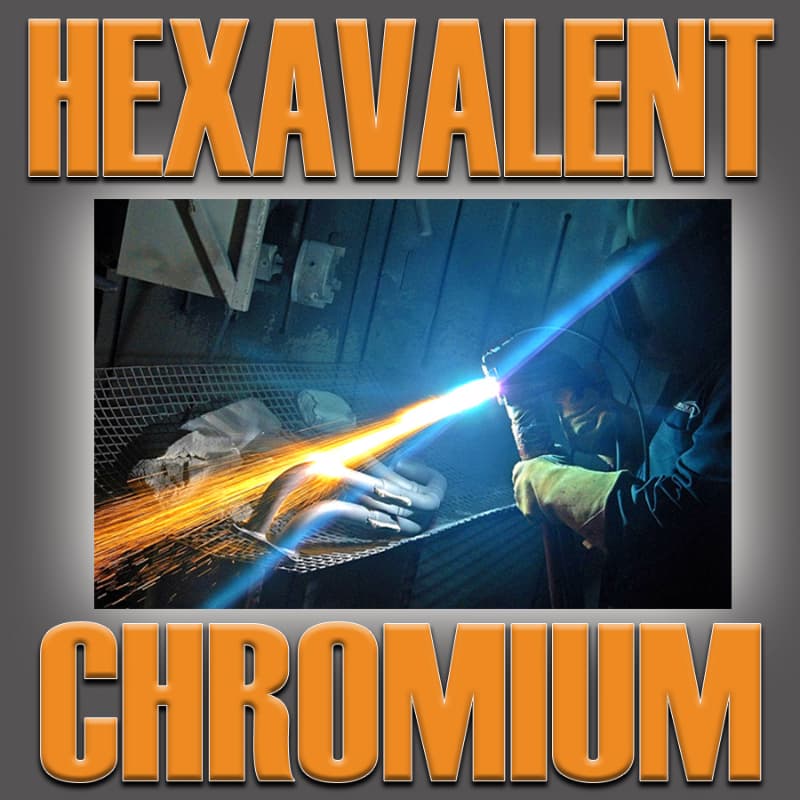
- Hexavalent chromium is a key concern: When welding on stainless steel or chromium-coated materials, the process releases hexavalent chromium - a known carcinogen regulated by OSHA under 29 CFR 1910.1026. Even on mild steel, welding fumes contain manganese and iron oxide particulates that require active ventilation controls.
- Fume becomes a hazard when it is not captured at the source: Without local exhaust ventilation, welding fume disperses into the general plant air, increasing the exposure risk for welders and nearby workers. OSHA identifies source capture as the preferred engineering control.
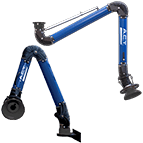
- Source capture options vary by workstation type: Manual welding stations typically use fume arms or weld hoods positioned close to the arc. Robotic welding cells often use enclosures with integrated collection to handle the higher, more consistent fume volumes produced in automated, high-cycle operations.
- Cartridge dust collectors are well suited for welding fumes: High-efficiency filter media captures fine metallic particulate from the air stream, while a pulse-cleaning system periodically clears accumulated dust from the filter surface to keep airflow consistent over long production runs.
- Filter media selection matters for chromium applications: For facilities welding on chromium-containing materials, appropriate filter efficiency ratings and safe dust disposal procedures should be factored into the system design from the start.
What Type of Dust Collector Works Best for Automotive Manufacturing?
The right dust collector for an automotive facility depends on the process, the dust characteristics, the available floor space, and whether you need a dedicated unit for a single workstation or a central system serving multiple points. Here is a brief overview of the collector types most commonly used in automotive environments:
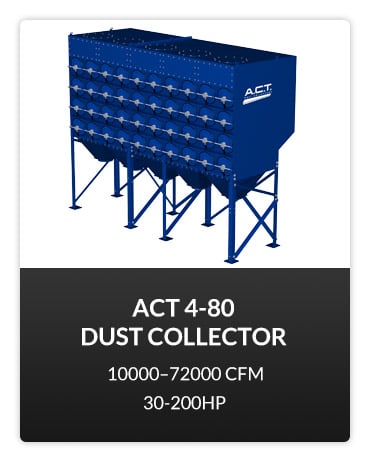
Cartridge Dust Collectors
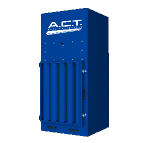
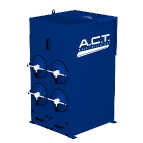
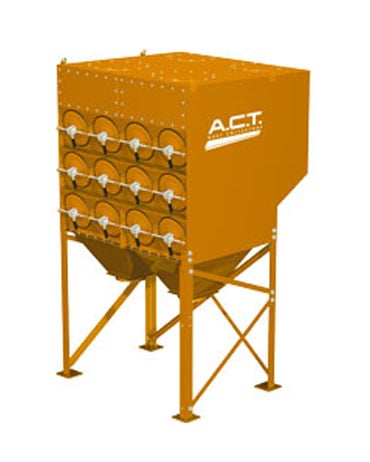
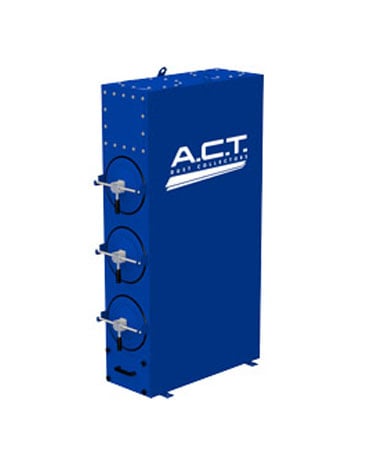
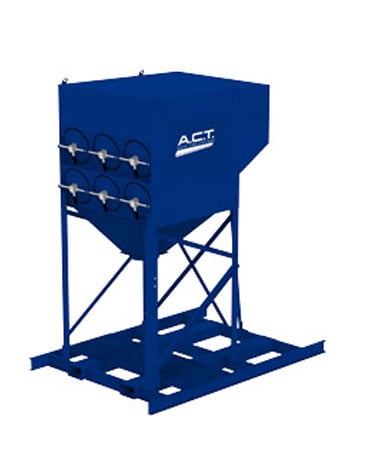
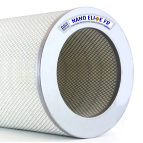
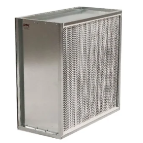
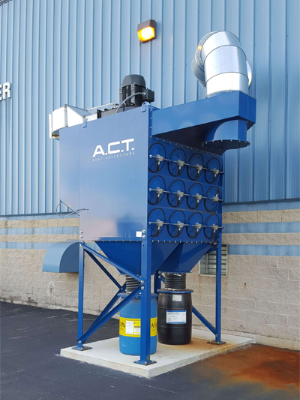
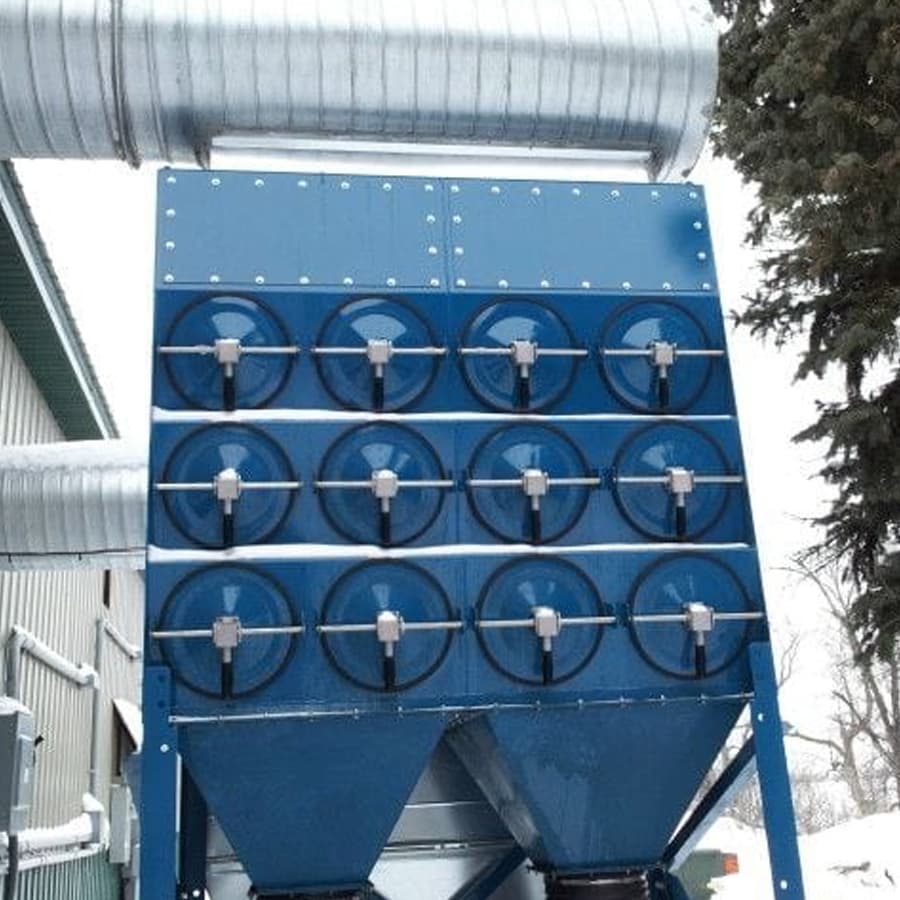
Cartridge dust collectors are compact, high-efficiency units that use pleated filter cartridges to capture fine particulate and fume. They are well suited for welding, laser cutting, grinding, and plasma cutting applications where fine particles and fumes need to be captured close to the source.
Two specifications matter most when sizing a cartridge collector: the air-to-cloth ratio (how much air volume moves through each square foot of available filter media) and the differential pressure (the resistance that builds across the filter as it loads with dust). Both affect how efficiently and how long the system operates between filter services.
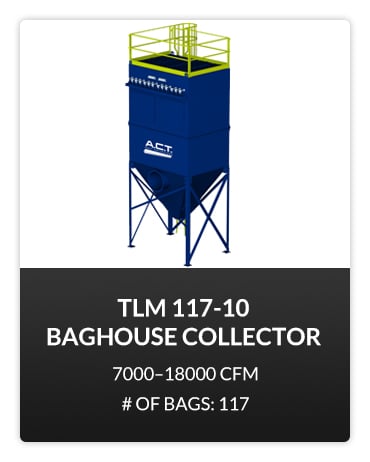
Baghouse Dust Collectors
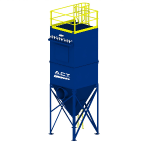
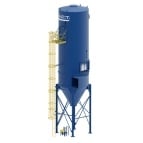
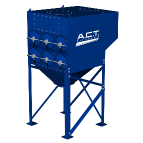
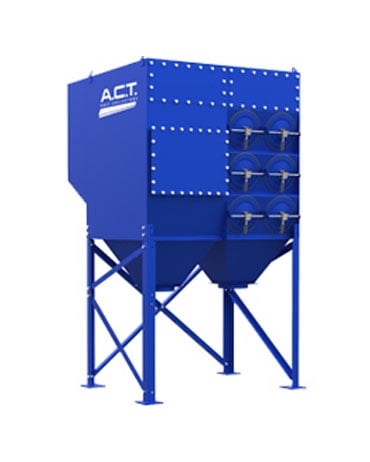
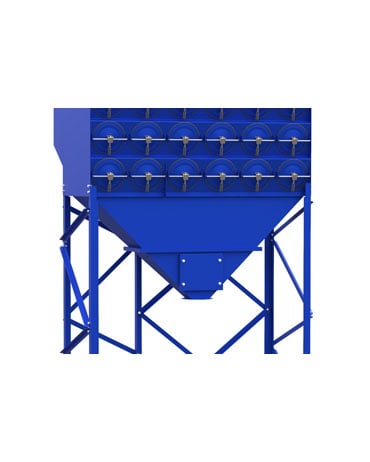
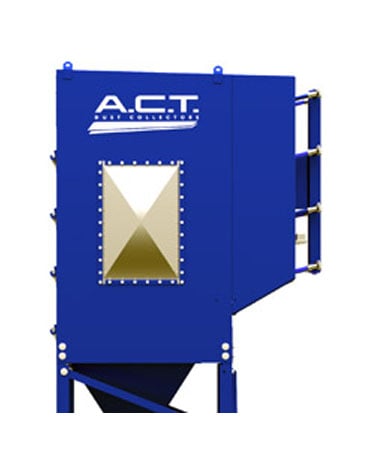
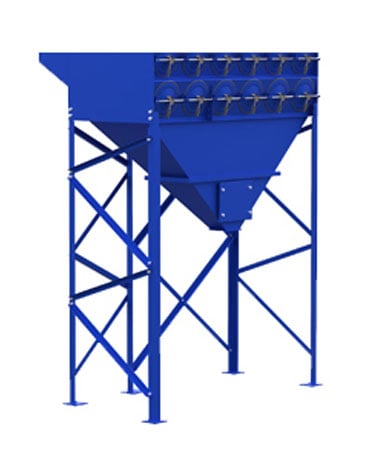
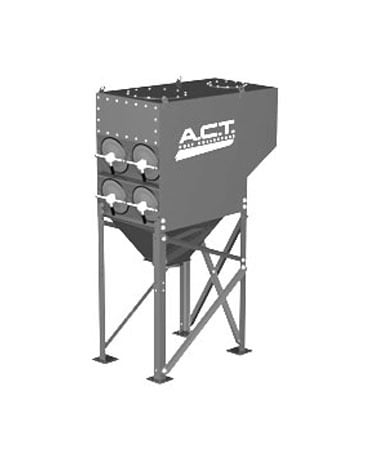
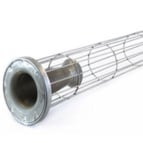
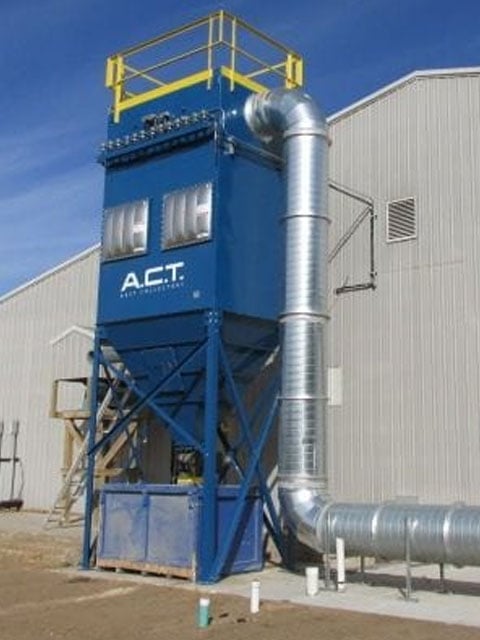
Baghouse dust collectors use fabric filter bags rather than cartridges and are better suited for higher-volume applications or processes that produce heavier, coarser dust loads. In automotive facilities, baghouses are often used for central collection systems that serve multiple workstations or processes simultaneously, or for applications like blasting and heavy grinding where dust volumes are high. They are built for continuous-duty operation and can handle larger airflow volumes than most cartridge units. A.C.T. offers both standard and round baghouse collectors depending on facility layout and space constraints.
Many automotive manufacturers use a combination of both types: cartridge collectors at individual process points for source capture, and a baghouse for central or high-volume collection where multiple operations feed into one system.
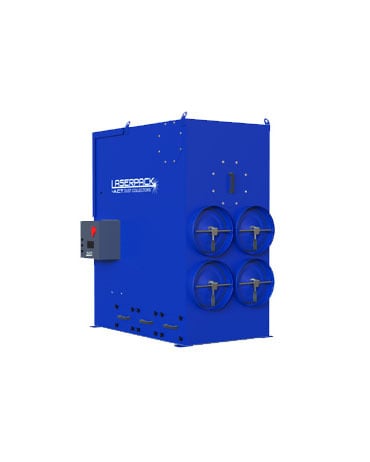
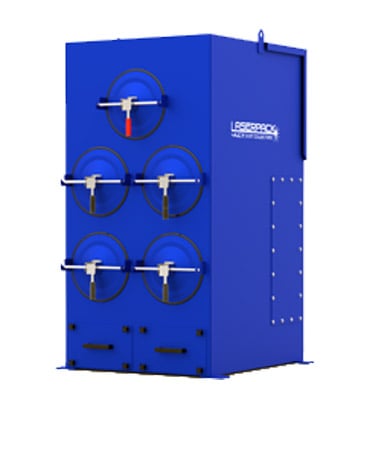
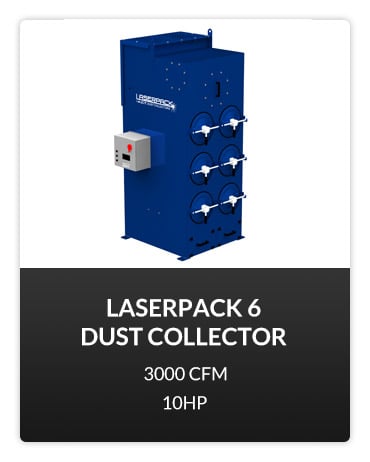
LaserPack Dust Collectors
The LaserPack series is designed specifically for laser cutting and plasma cutting applications, where the dust and fume characteristics differ from welding. Laser cutting generates very fine, often sticky particulates along with combustible fumes that can create fire risk if sparks reach the filter media.
The LaserPack addresses this with a spark-quenching design that intercepts sparks before they reach the filter, reducing fire hazard and supporting NFPA compliance for facilities that handle combustible dust. It is also effective for plasma cutting operations, which produce metallic fumes and fine oxide particulates.
WeldPack Dust Collectors
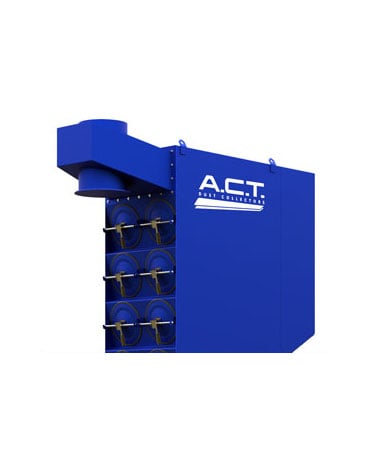
The WeldPack series is built around the demands of production welding environments, including both manual and robotic welding applications. These units use a pulse-cleaning system that periodically pulses compressed air through the filter cartridges to dislodge accumulated dust cake, maintaining consistent airflow performance over long production runs without requiring the system to be taken offline. WeldPack collectors can be paired with weld hoods and fume arms for source capture at individual weld stations, or configured to serve robotic welding cells where higher fume volumes require dedicated collection capacity.
Custom Dust Collectors
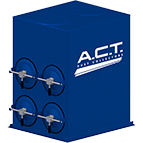
Some automotive facilities have process requirements, floor layouts, or airflow demands that standard configurations do not address. A.C.T. offers custom-engineered dust collectors designed around your facility's specific needs. This can include modified hopper configurations, non-standard inlet or outlet sizing, special filter media for specific dust types, or integration with existing ductwork and collection infrastructure. Our engineering team works through the application details with you to arrive at a system that fits your layout and meets your airflow requirements.
Common Dust Collection Applications in Automotive Manufacturing
-
Automotive plants run a wide range of processes, each with its own dust and fume profile. Here is a look at the most common applications and what dust collection typically involves for each:
-
Blasting: Abrasive blasting for surface preparation generates heavy particulate loads that can include media, rust, and coating fragments. These applications often require higher-capacity collection and inlet designs that can tolerate abrasive dust.
-
Laser and plasma cutting: Both processes produce fine metallic particulates and fumes that require high-efficiency filtration. Spark control and fire risk are also important considerations in enclosed cutting environments.
-
Grinding and deburring: Manual and automated finishing operations release metal dust across a range of particle sizes. These areas typically use source capture hoods, booths, or dedicated collection points near the workstation.
-
Metalworking: Machining, stamping, and related metalworking operations can release fine dust or particulates that benefit from properly sized industrial dust collectors and stable airflow.
-
Welding: Manual MIG, TIG, and other welding operations are often served by source capture using fume arms, weld hoods, or downdraft-style collection tied to a dedicated dust collector.
-
Robotic welding: Automated welding cells generate a concentrated and repeatable fume load, which makes dedicated capture and continuous-duty filtration especially important.
-
Powder coating: Powder overspray is typically collected with dedicated booth collectors or cartridge systems designed to capture and contain fine dry powder.
OSHA and NFPA Compliance in Automotive Facilities
Automotive manufacturing facilities are subject to OSHA's air contaminant standards, which set permissible exposure limits for substances generated across welding, cutting, grinding, and blasting operations. For facilities that weld on stainless steel or chromium-containing materials, OSHA's hexavalent chromium standard (29 CFR 1910.1026) requires engineering controls - not just respiratory protection - as the primary means of exposure reduction. Dust collection combined with source capture is how most facilities meet that requirement in practice.
Combustible dust is a separate but related consideration. Grinding, blasting, and cutting operations can generate metal dust with combustible properties. NFPA 652 and the consolidated NFPA 660 require facilities handling potentially combustible materials to conduct a Dust Hazard Analysis (DHA). Where combustible dust risk is confirmed, the collection system may need explosion venting, spark detection, isolation dampers, or grounding and bonding - features that should be specified at the design stage, not added after the fact.
Dust collection is a foundational engineering control that supports compliance across multiple OSHA and NFPA requirements. If you have questions about what your facility's processes require, our team is glad to discuss your application.
How Dust Collection Systems Improve Air Quality and Productivity
The connection between air quality and plant productivity is straightforward: when contaminants are controlled at the source, the downstream effects are reduced across the board. Here is what that looks like in practice in an automotive manufacturing environment:
- Cleaner robotic systems: Dust and fumes that accumulate inside robotic welding cells or on laser cutting optics affect precision and require more frequent cleaning cycles. Effective source capture keeps these environments cleaner and reduces interference with automated processes.
- Reduced equipment wear: Airborne particulates that settle on CNC machines, conveyor systems, and control panels cause wear and can damage sensitive components. Removing contaminants from the air before they settle extends the service life of production equipment.
- Lower maintenance downtime: A properly sized and maintained dust collection system runs longer between service intervals. Filters that are correctly matched to the dust load and cleaned on schedule do not restrict airflow prematurely, so production is not interrupted by collector maintenance.
- Stable airflow performance: Consistent airflow through the collection system means consistent capture efficiency at each workstation. Variations in airflow, typically caused by overloaded or clogged filters, reduce capture effectiveness and allow more contaminants to escape into the facility.
- Employee retention: Workers notice the quality of the environment they work in. Facilities with visibly poor air quality have a harder time retaining skilled trades workers. A clean, well-ventilated plant is a more attractive place to work, and that matters in a tight labor market.



.svg)



















%20Collectors%20Image.png?width=143&height=143&name=ADC%20(Ambient)%20Collectors%20Image.png)


.webp?width=1512&height=2016&name=Auer%20Precision%20(1).webp)


.png?width=240&height=91&name=ACT%20Dust%20Collectors%20Logo%20Solid%20White%202020%20(1).png "ACT Dust Collectors Logo Solid White 2020-2")
.png?width=148&height=149&name=usa-manufactured-dust-collectors%20(1).png "United States Flag")