Industrial Welding Fume Extractor Application faqs:
How do I choose the right welding fume extractor for my shop?
The right welding fume extractor for your shop depends on your welding process, materials, airflow requirements, and facility layout. Applications involving galvanized steel, stainless steel, or other coated metals produce more hazardous fume and require higher filtration efficiency. Next, calculate the airflow needed based on the number of welding stations, booth size, and how fume-intensive the work is, since some shops need capabilities up to 100,000 cubic feet per minute (CFM) or more. Also decide whether you want to recirculate filtered air back into the workspace to save on heating costs or exhaust it outside for added ventilation. A properly sized extractor protects worker health while keeping your operation running efficiently.
How does a welding fume extractor capture smoke and fumes?
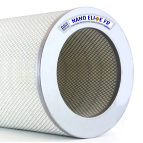
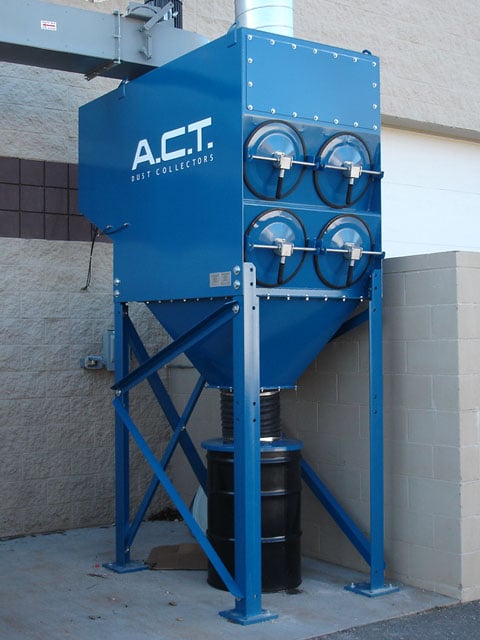
A welding fume extractor pulls contaminated air into the collector using downward airflow technology, which helps separate dust and fume particles from the airstream before they reach the filter media. The air then passes through high-efficiency filters, such as Nano-Elite media, that trap fine particulate down to sub-micron sizes. Once cleaned, the air is either exhausted outdoors or returned to the workspace. This process removes visible smoke as well as the fine particulate that can linger in the air long after welding stops, keeping the shop floor cleaner and easier to breathe in.
Is welding fume hazardous, and does it require special filtration?
Yes. Welding fumes are hazardous and typically require high-efficiency filtration. Depending on the welding process and materials, welding fumes can contain manganese, hexavalent chromium, nickel, and zinc compounds. High-efficiency cartridge filters, including MERV 15 Nano-Elite media, capture up to 99.9% of airborne particulate to improve workplace air quality.
How efficient is Nano-Elite filter media for welding fume collection?
Nano-Elite filter media is built specifically for the fine particulate produced by welding and cutting processes. It carries a MERV 15 efficiency rating, meaning it captures 99.9% of particulate from the air passing through it, including the ultra-fine smoke particles common in welding fume. This level of filtration allows shops to safely recirculate cleaned air back into the workspace, which is especially valuable during colder months when conserving heat matters. Because the media handles fine particulate so effectively, filters typically maintain performance longer between service intervals, reducing downtime and maintenance demands.
Should I recirculate filtered air or exhaust it outside?
Whether you should recirculate filtered air or exhaust it outside depends on your facility, climate, and welding application.
Recirculating air:
- Returns filtered air to the workspace
- Helps conserve heat during colder months
- Works well when filtration efficiency is high enough to ensure clean air quality
- Reduces heating and cooling costs over time
Exhausting outside:
- Vents filtered air out of the building entirely
- Adds an extra layer of ventilation for fume-heavy applications
- May be preferred in facilities with limited space for recirculation ductwork
- Can be required by local codes in certain applications
Many facilities choose recirculation when Nano-Elite filtration is used, since 99.9% particulate capture makes it a practical way to save on energy costs without sacrificing air quality.



.svg)


















%20Collectors%20Image.png?width=143&height=143&name=ADC%20(Ambient)%20Collectors%20Image.png)



.png?width=240&height=91&name=ACT%20Dust%20Collectors%20Logo%20Solid%20White%202020%20(1).png "ACT Dust Collectors Logo Solid White 2020-2")
.png?width=148&height=149&name=usa-manufactured-dust-collectors%20(1).png "United States Flag")