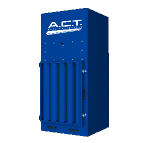
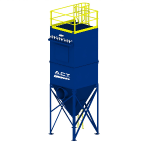
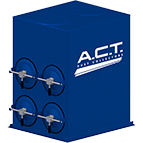
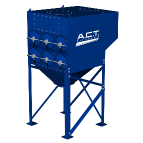
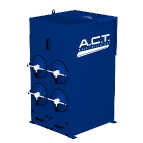
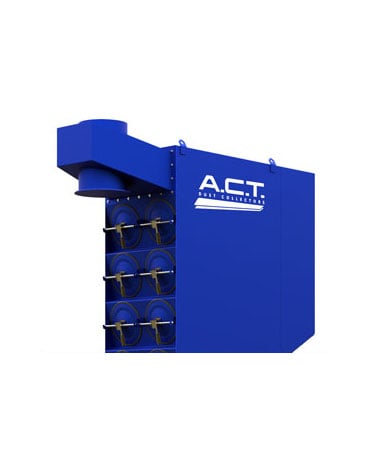
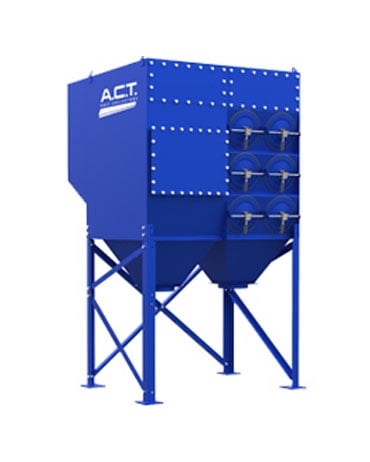
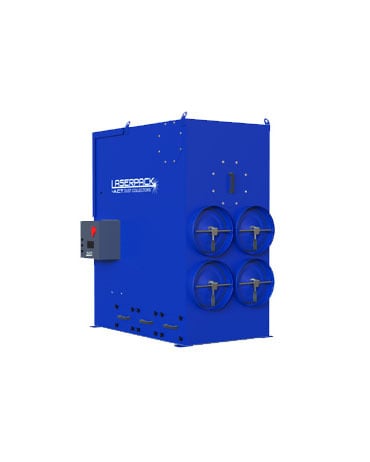
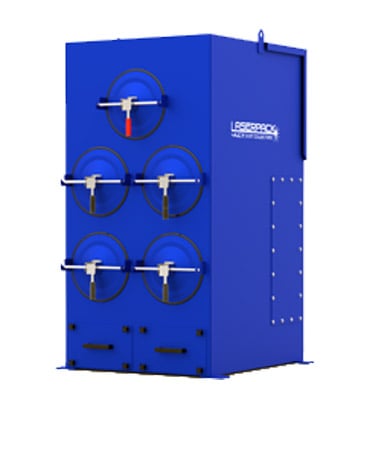
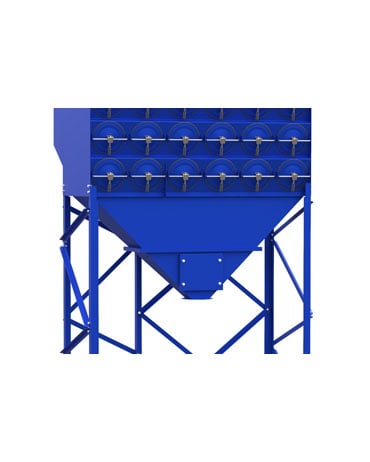
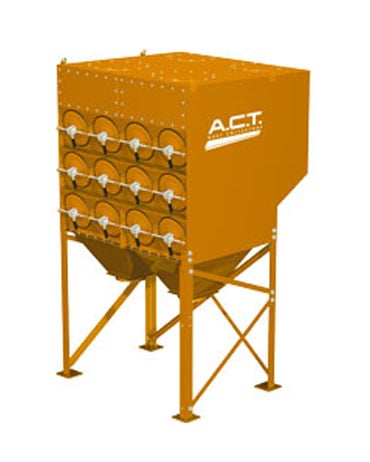
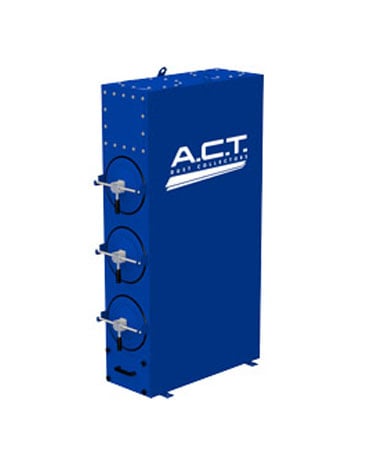
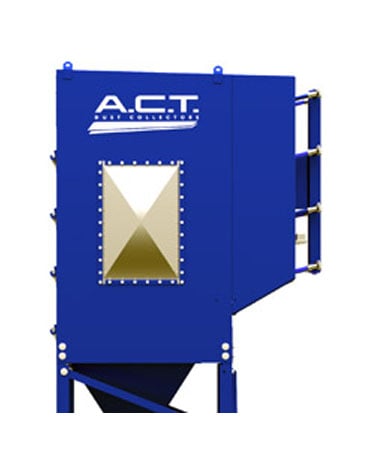
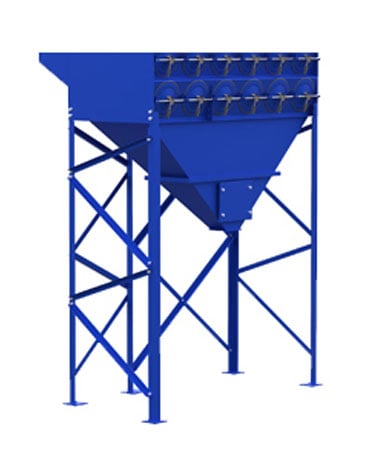
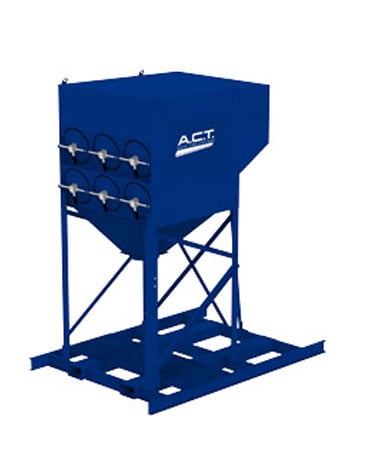
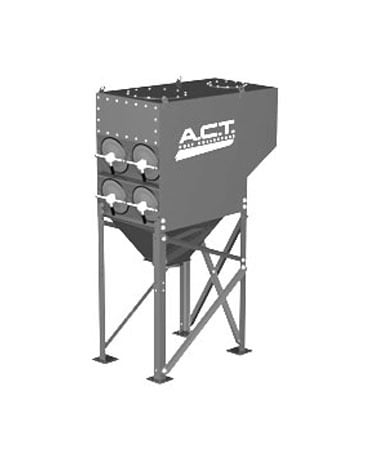
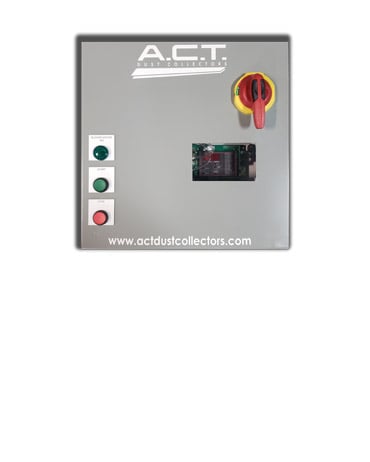
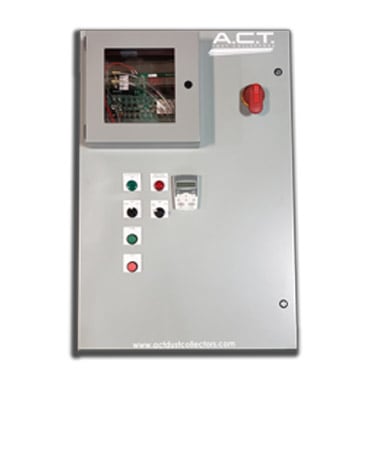
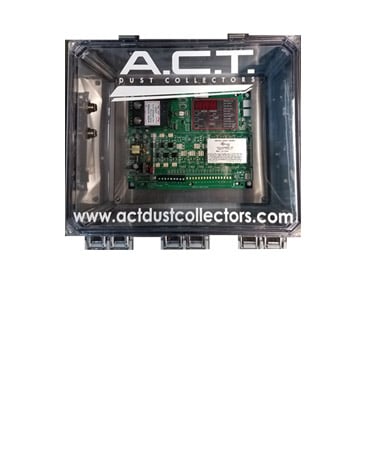
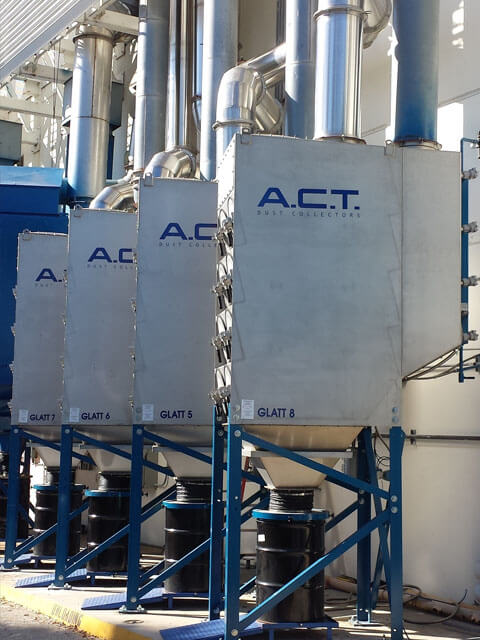
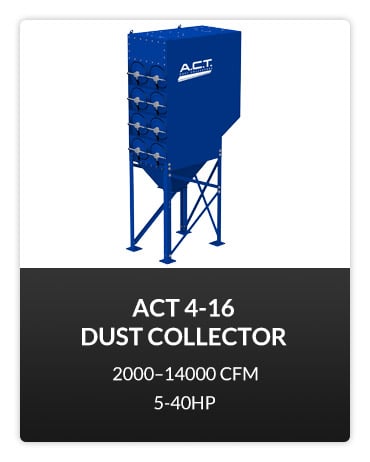
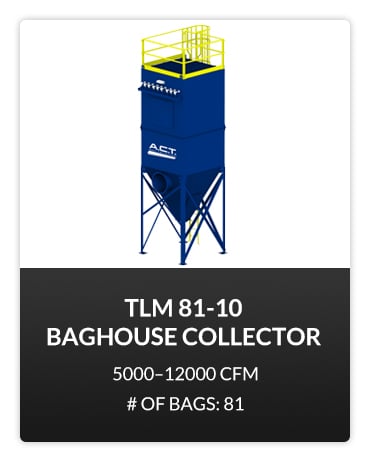
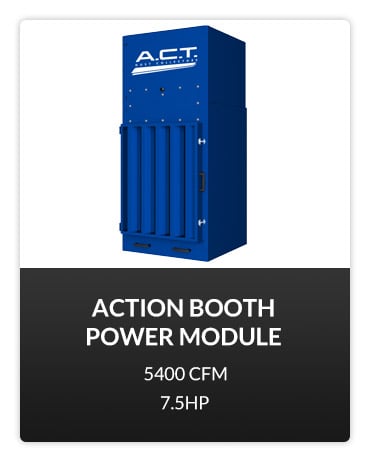
Pharmaceutical dust collectors capture fine airborne particles generated throughout pharmaceutical manufacturing, from active pharmaceutical ingredient (API) production to tablet pressing, pill coating, powder blending, and fluid bed drying. Because these processes often involve potent compounds or combustible dust, pharmaceutical dust collection requires specialized containment, high-efficiency filtration, and safe filter handling that go beyond the needs of most industrial dust collection applications. Effective pharmaceutical dust collection helps protect product quality, prevent cross-contamination, reduce employee exposure, and maintain cleaner manufacturing environments.
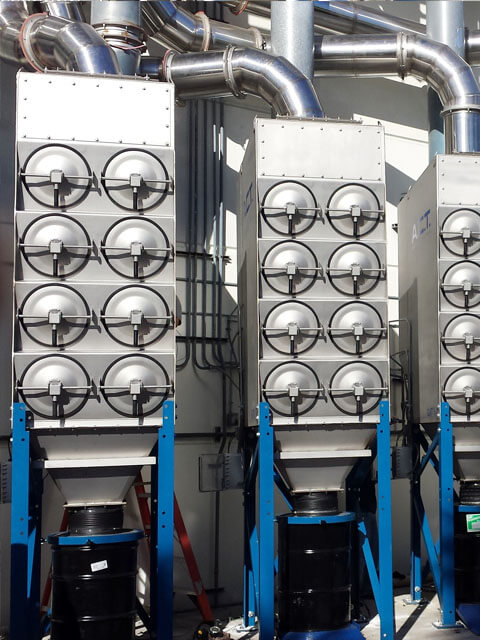
A.C.T. Dust Collectors designs pharmaceutical dust collection systems with ultra-high-efficiency Nano-Elite filter media for sub-micron particle capture, with HEPA after-filters available when an additional stage of filtration is required. Systems are manufactured from stainless steel for corrosion resistance and sanitary processing and can be engineered with explosion protection features for applications involving combustible dust. A.C.T. Dust Collectors has installed pharmaceutical dust collection systems worldwide and stocks ready-to-ship replacement parts and filters to help keep production running.
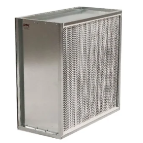
Pharmaceutical dust collectors capture airborne particulate at the point of generation before it spreads through the production environment. Contaminated air is drawn through ductwork into high-efficiency cartridge filters that remove fine and sub-micron particles before clean air is exhausted or recirculated, depending on the application. When additional containment is required, HEPA after-filters provide a secondary stage of filtration, while contained filter changeout systems help protect employees during maintenance.
Some pharmaceutical powders, including certain APIs and excipients, are combustible dust hazards under NFPA guidelines. Facilities handling these materials need dust collection systems designed with explosion venting and other protective measures built in, not added after the fact. The A.C.T. Dust Collectors engineering team designs each system around the specific materials and containment requirements of the process, so explosion protection is part of the system design rather than a separate consideration.
Standard filter changeout works for many pharmaceutical applications, but high-potency compounds and toxic dust require more controlled handling to protect employees and prevent cross-contamination between batches. A.C.T. Dust Collectors offers Bag-In-Bag-Out (BIBO) filter housings for these applications, allowing filters to be removed and replaced inside a sealed bag so operators never come into direct contact with collected dust. This matters most in facilities working with compounds that carry strict occupational exposure limits, where even minimal exposure during maintenance needs to be controlled.
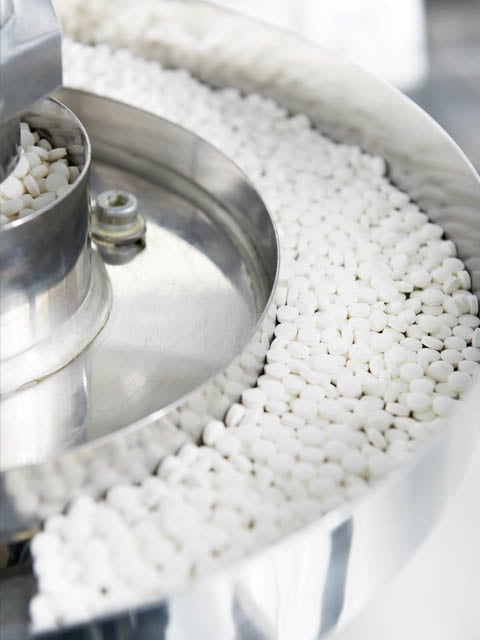
Pharmaceutical dust collectors are used across tablet pressing and compression, pill coating, powder blending, fluid bed drying, and granulation processes, wherever these production processes generate airborne particulate that needs to be captured before it affects product quality or employee safety. Some captured dust can be reclaimed and reused within the manufacturing process, while other applications require the dust to be handled and disposed of as a hazardous material, depending on the compound involved.
The right pharmaceutical dust collector depends on the manufacturing process, the materials being handled, and the facility's containment requirements. Applications such as fluid bed drying, tablet compression, pill coating, and powder handling generate fine airborne particulates that require high-efficiency filtration. Stainless steel construction is commonly used to meet sanitary processing requirements, while HEPA after-filters may be added when product purity or containment demands an additional level of filtration.
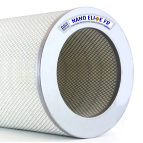
A pharmaceutical dust collector captures sub-micron particles by pulling contaminated air through high-efficiency cartridge filters designed for fine particulate. Nano-Elite filter media removes the dust generated during tablet manufacturing, pill coating, powder blending, and fluid bed drying before cleaned air is exhausted or recirculated. When additional containment is required, a HEPA after-filter provides a secondary stage of filtration to capture any remaining sub-micron particulate.
Pharmaceutical dust collection systems must be designed to safely manage the specific materials used in the manufacturing process. Depending on the product, facilities may require stainless steel construction, containment measures, explosion protection, or specialized dust handling procedures. Some pharmaceutical powders can be combustible, while high-potency compounds may require contained filter changeout systems to protect employees and prevent cross-contamination.
Filter changeout procedures depend on the hazard level and containment requirements of the pharmaceutical dust being collected. Standard pharmaceutical dust collection systems can often be serviced using routine maintenance procedures, while hazardous or high-potency compounds may require contained filter changeout systems that minimize employee exposure and prevent product cross-contamination. Monitoring differential pressure also helps determine when filters should be replaced, allowing facilities to schedule maintenance before collection performance declines.
Whether a pharmaceutical dust collection system needs a HEPA after-filter depends on the manufacturing process and containment requirements. High-efficiency Nano-Elite cartridge filters capture fine airborne particulate generated during pharmaceutical production, while a HEPA after-filter provides a secondary stage of filtration for applications requiring additional protection against sub-micron particle release. Facilities manufacturing high-potency compounds or operating under stricter cleanliness requirements often benefit from the added level of filtration, while many standard pharmaceutical applications can be effectively served with cartridge filtration alone.
Phone: 763-557-7162
Toll Free: 800-422-1316
Locations: