



.svg)



















%20Collectors%20Image.png?width=143&height=143&name=ADC%20(Ambient)%20Collectors%20Image.png)


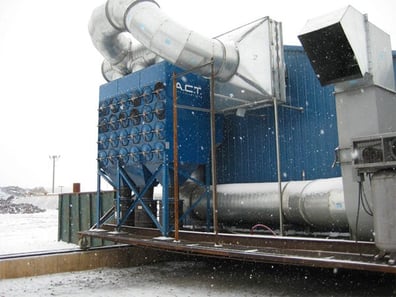
When temperatures drop and facility doors close to conserve heat, your dust collection challenges multiply overnight. Natural ventilation that once helped clear airborne particles disappears. Industrial dust lingers longer in stagnant indoor air. Meanwhile, your outdoor dust collector faces ice formation, motor overloads, and condensation problems that can shut down operations entirely.
An economical way to improve overall air quality in your facility while saving energy costs during the winter months is with a properly winterized industrial dust collector. Outdoor dust collectors need specific cold weather preparation to maintain reliable performance when your facility needs them most. This guide walks you through the essential steps to winterize outdoor dust collectors, protect equipment from costly freeze damage, and ensure consistent indoor air quality throughout even the harshest winter conditions.
Why Air Quality Matters More in Winter
Cold weather fundamentally changes facility ventilation patterns.
Natural airflow from open doors and windows disappears when heating costs rise. Make-up air systems reduce flow rates to minimize energy loss. The result is reduced air circulation that allows industrial dust to build up faster than summer conditions.
This creates a compounding problem. Higher dust concentrations require more aggressive collection, precisely when outdoor equipment faces its greatest operational challenges. Workers experience reduced air quality while the systems protecting them operate under maximum stress.
Smart facility management addresses this through strategic dust collection that recirculates filtered air rather than exhausting it outdoors. This approach maintains air quality while reducing heating costs - clean air returns to the workspace instead of being lost to the atmosphere along with expensive conditioned air. Better indoor air quality also improves worker productivity and helps maintain compliance with occupational safety regulations that become more challenging to meet when natural ventilation is limited.
Common Winter challenges for Outdoor Dust Collectors
Ice Crystals in the Compressed Air System
Pulse-jet dust collectors depend on consistent compressed air delivery to maintain filter cleaning cycles. When warm compressed air travels through outdoor lines to cold equipment, temperature differentials create moisture condensation. If the air's pressure dew point exceeds ambient temperature, this moisture freezes into ice crystals that block valves, clog tubing, and disable solenoid functions.
The consequences extend beyond immediate equipment failure. Compromised pulse cleaning allows differential pressure to climb rapidly, forcing filters to work harder and fail sooner. System efficiency drops while maintenance requirements spike.
Solution: Install dedicated compressed air drying systems targeting pressure dew points at least 20°F below expected minimum temperatures. Desiccant dryers provide reliable moisture removal for sub-freezing applications. Add solenoid valve heaters for exposed components to maintain operational temperatures above freezing points.
Reduced Fan Performance in Cold Air
Cold air density increases significantly as temperatures drop - air at 0°F weighs approximately 15% more than 70°F air. This creates higher mass flow rates that increase motor startup amperage and operational loads beyond equipment design parameters.
Motor starters may trip during cold startups not because of equipment failure, but because dense air requires more power to achieve design flow rates. Many maintenance teams misdiagnose these situations as fan problems rather than weather-related operational challenges.
Solution: Implement Variable Frequency Drives (VFDs) or soft-start systems that gradually ramp motor speed rather than demanding full power immediately. Configure startup sequences with controlled damper positions to reduce initial loads, allowing systems to reach operational parameters without overloading protective devices.
Hopper and Housing Temperature Issues
Cold outdoor temperatures turn dust collector housings and hoppers into condensing surfaces. When processed air contacts these cold walls, moisture forms and mixes with collected dust to create an adhesive cake that disrupts normal dust flow patterns.
This caking can bridge across hopper discharge points, effectively blocking dust removal and forcing system shutdown. The problem intensifies with temperature swings that create repeated condensation cycles.
Solution: Apply insulation to vulnerable housing areas, particularly hoppers and lower sections where dust accumulates. Install heating elements or heat tracing on critical surfaces in severe climate applications. Maintain active discharge systems to prevent dust accumulation that amplifies caking problems. Also, use this dust collector maintenance checklist to keep your system operating smoothly.
How to Prevent Cold Weather Damage
Compressed Air System Preparation
Establish pressure dew points safely below minimum expected ambient temperatures. Verify drying equipment capacity matches system requirements and install automatic drainage for moisture removal. Inspect and service all compressed air components before cold weather arrives.
Equipment Inspection and Maintenance
Replace dust collector filters approaching capacity limits to avoid mid-winter changeouts in harsh conditions. Verify all access panel gaskets and door seals maintain tight closure to prevent bypass air that reduces collection efficiency. Check differential pressure monitoring systems for accurate winter baseline readings.
Thermal Protection Implementation
Insulate exposed ductwork and housing sections susceptible to condensation formation. Install heat tracing on drain lines and hopper discharge areas where moisture accumulation creates operational risks. Program heating systems for automatic activation based on temperature thresholds.
Motor and Control System Winterization
Configure VFD parameters for cold-weather startup sequences. Verify motor protection settings account for increased startup loads from dense air. Protect control panels and electrical systems from snow and ice accumulation that can cause component failures.
Safety System Verification
Inspect explosion relief vents, isolation dampers, and fire suppression systems for ice or snow obstruction potential. Verify combustible dust safety procedures account for winter operational changes. Confirm emergency shutdown systems remain accessible and functional in cold conditions.
Regulatory Compliance Coordination
Review NFPA 660 combustible dust requirements as they apply to winter operations. Coordinate winterization procedures with existing Process Hazard Analysis protocols. Ensure Authority Having Jurisdiction requirements are maintained throughout seasonal operational changes.
Must Read: How to Keep Your Factory Warm When Using Industrial Dust Collectors
Common FAQs About Dust Collectors in Cold Weather
How do you prevent outdoor dust collectors from freezing in winter?
Maintain compressed air dew points below ambient temperatures, insulate condensation-prone surfaces, and implement controlled startup procedures. These measures address the three primary freezing mechanisms that affect outdoor dust collectors.
What is the best way to prevent condensation in a dust collection system?
Control moisture sources through proper air drying, reduce cold surface exposure through insulation, and maintain steady operational temperatures. Targeting dew point margins of 20°F below ambient provides reliable condensation prevention.
Does cold weather affect dust collector filter life?
Cold weather affects filter cleaning effectiveness rather than filtration performance directly. When pulse systems weaken due to moisture or freezing, filters cannot shed collected dust properly, leading to premature loading and higher differential pressures.
Can I run my dust collector in extreme cold temperatures?
Yes, with appropriate winterization measures. Facilities throughout northern climates operate dust collectors reliably in sub-zero temperatures. Success requires systematic preparation of compressed air systems, thermal protection, and startup procedures designed for cold conditions.
A.C.T. Dust Collectors supports customers across challenging winter climates, including throughout the Great Lakes region where reliable cold-weather operation is essential. Our engineering experience includes systems designed specifically for harsh winter environments.
Maintaining Operational Excellence Year-Round
Effective winterization delivers measurable benefits: reduced emergency service calls, stable differential pressure readings, extended filter service life, and consistent air quality regardless of outdoor conditions. These improvements translate directly to lower operational costs and higher productivity.
A.C.T. Dust Collectors provides comprehensive solutions for winter dust collection challenges. Whether upgrading existing systems or implementing new installations designed for cold-weather reliability, our engineering team develops application-specific solutions that perform consistently across all operating conditions.
For immediate equipment needs, our Ready-to-Ship inventory provides quick delivery when winter weather won't wait. Explore our complete product catalog for comprehensive dust collection solutions, review application-specific guidance, or consult our FAQ resources for detailed maintenance information. When you’re ready, talk to our team for a site-specific plan.

.png?width=240&height=91&name=ACT%20Dust%20Collectors%20Logo%20Solid%20White%202020%20(1).png "ACT Dust Collectors Logo Solid White 2020-2")
.png?width=148&height=149&name=usa-manufactured-dust-collectors%20(1).png "United States Flag")