



.svg)



















%20Collectors%20Image.png?width=143&height=143&name=ADC%20(Ambient)%20Collectors%20Image.png)

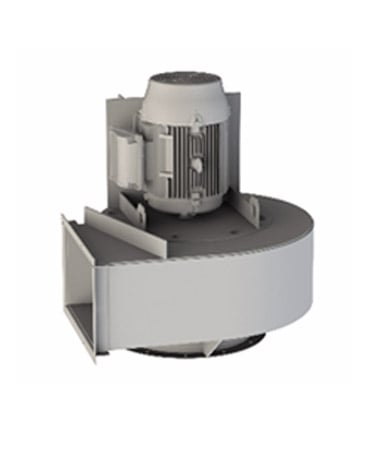
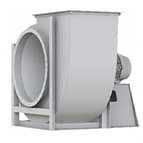

When people think about a dust collection system, they often focus on the collector itself - the filters, the housing, the hopper. But there is one component that drives the entire system, and that is the dust collector fan. Without the right fan, even a well-designed system will underperform, waste energy, or wear out faster than it should.
The fan is responsible for creating the airflow that pulls dust away from your work area, moves it through the ductwork, and pulls the air through the filters. Every part of that journey depends on the fan doing its job correctly. A fan that is too small for your system pressure will leave you with poor capture at the hood or pickup point. A fan that is too powerful for your application will burn through energy and put unnecessary stress on your filters.
In this post, we will walk through:
- How dust collector fans work
- What factors matter most when selecting one
- The most common fan types used in industrial dust collection systems
- How to match the right fan to your application
Whether you are designing a new system or upgrading an existing one, this guide will help you make a more confident decision.
What is a Dust Collector Fan and Why It Matters
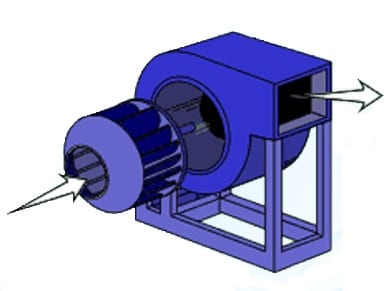
A dust collector fan, often called a blower, is the mechanical heart of your dust collection system. Its job is to generate the airflow needed to capture and transport dust from the source to the collector. It does this by creating a pressure difference that draws contaminated air in at the hood, pulls it through the ductwork and into the filters, and then exhausts the cleaned air through the fan outlet.
Two concepts are central here: the fan wheel and the fan inlet. The fan wheel is the rotating component that actually moves the air. Its shape, blade angle, and size directly determine how much air the fan can move and at what pressure. The fan inlet is where air enters the fan housing. How smoothly air can enter the fan significantly affects efficiency and performance. We will come back to both of these in more detail below.
What is important to understand from the start is that not all fans are built the same way. The type of fan wheel inside your blower determines how it handles pressure, how efficiently it uses horsepower, and whether it is suited for the kind of dust your facility generates.
Key Factors That Affect Dust Collector Fan Selection
Airflow and Pressure Requirements
Before you can select a fan, you need to understand what the system actually demands of it.
Airflow is typically measured in cubic feet per minute (CFM) - essentially, how much air volume the fan needs to move. Pressure, measured in inches of water gauge (in. WG), represents the resistance the fan has to overcome to pull that air through the system.
Think of it this way: the longer your duct runs, the more bends and fittings in the system, and the finer your filters, the more resistance there is. A system with long ductwork, multiple collection points, and high-efficiency filters will require a fan capable of generating higher static pressure than a simpler, shorter system. Choosing a fan based on airflow alone, without accounting for system pressure, is one of the most common sizing mistakes.
Fan Wheel Design and Efficiency
The design of the fan wheel has a direct impact on how efficiently the fan converts motor horsepower into useful airflow. Some wheel designs are well-suited for high-pressure applications but sacrifice efficiency. Others are highly efficient but have limitations when the air stream carries heavy or abrasive material.
This is why fan selection cannot be reduced to a single number. The wheel type needs to match both the pressure demands of your system and the characteristics of the air it is moving. Understanding the differences between wheel designs makes it much easier to narrow down your options.
Dust Type and Application Environment
The material your system is collecting matters just as much as the airflow numbers. Different dust types call for different fan wheel designs, and where the fan sits in your system plays a role too.
- Heavy, abrasive, or coarse dust: Think about metal grinding, shot blast media, wood chips and recycling debris, for which a radial blade fan is the safer choice. Its straight, open blades can handle impact and resist the kind of erosion that damages more aerodynamic wheel designs.
- Light dust and fumes: This includes welding fume, fine powder, finishing dust etc. Backward inclined or backward curved fans work well here, especially when the fan is positioned on the clean air side of the collector where filtered air is all it sees.
- Sticky or fibrous materials: These can build up unevenly on certain blade profiles and throw the wheel out of balance over time. Open, simpler blade geometry handles these conditions more reliably.
- Clean, dry air: This typically encompasses post-filtration, pharmaceutical, food processing dust - when the fan only handles air that has already passed through filters, an airfoil fan is worth considering where energy efficiency and low noise are the priority.
Not sure which fan wheel or inlet style you need? Our team can help - contact us here.
Common Types of Dust Collector Fans Used in Industrial Systems
Most industrial dust collectors use centrifugal fans, which accelerate air by spinning it outward through a rotating wheel. Within that category, there are four main fan wheel designs you will encounter. Each one has a different performance profile, and each suits a different range of applications.
Radial Blade Fan
The radial blade fan uses straight blades that extend outward from the center of the wheel, perpendicular to the direction of rotation - similar in concept to the paddles on a paddle wheel. Some designs include side rims for additional structural support; others do not.
This wheel is built for durability. The straight blade geometry is less prone to material buildup and can stand up to heavy, abrasive, or chunky particulates that would damage more aerodynamically shaped wheels. It is commonly used in material handling applications - conveying systems, recycling operations, or any situation where the air stream carries significant amounts of coarse material.
The trade-off is efficiency. Of the four common centrifugal fan wheel types, the radial blade fan is generally the least efficient, meaning it requires more horsepower to move a given volume of air. For applications where durability is the priority, that trade-off is usually well worth it.
Backward Inclined Fan
The backward inclined (BI) fan uses flat blades that lean away from the direction of the wheel's rotation. That blade angle changes how the fan handles air, resulting in a notably better efficiency profile than the radial blade design.
One of the most useful characteristics of the BI fan is its non-overloading horsepower curve. This means that as the system resistance changes, the fan's power demand does not spike unexpectedly. That stability makes the BI fan a practical and cost-effective choice for a wide range of general industrial dust collection applications where efficiency matters but the air stream is relatively clean.
Backward Curved Fan
The backward curved fan is closely related to the backward inclined design, but with one key difference: the blades are gently curved rather than flat. That curvature improves the aerodynamic flow of air through the wheel, which translates into higher efficiency, quieter operation, and the ability to handle higher static pressures compared to a BI fan.
Like the BI fan, the backward curved design has a non-overloading horsepower curve, which provides operational stability. For facilities that need strong, consistent performance across a range of airflow conditions, the backward curved fan is often a step up worth considering.
Airfoil Fan
The airfoil fan takes the efficiency and quiet operation of the backward curved design even further. Its blades are hollow and shaped in the profile of an airfoil - the same cross-sectional geometry used in aircraft wings. This shape allows air to flow over and through the blade with minimal turbulence, making the airfoil fan the most energy-efficient and quietest centrifugal fan wheel type available.
The airfoil fan is a strong choice for applications where energy savings are a priority and where the system is handling clean or lightly loaded air. The hollow blade construction, however, means it is not appropriate for applications with abrasive, heavy, or sticky dust. Abrasive particles can erode or penetrate the hollow blades over time, leading to imbalance and premature failure. For clean air applications, though, it is difficult to beat on efficiency.
Comparing Dust Collector Fan Types at a Glance
Here is a simple way to think about the main fan wheel types used in dust collection:
|
Fan type |
Efficiency |
Pressure capability |
Dust/material handling |
Typical use case |
|
Radial blade |
Lower |
High |
Excellent for heavy / abrasive |
Dirty air, material handling, high dust loading |
|
Backward inclined |
Medium-high |
Medium-high |
Light dust, mainly clean air |
Clean-air side of dust collectors, general industrial air |
|
Backward curved |
High |
Medium-high |
Moderate dust, some material |
Higher-pressure systems where efficiency matters |
|
Airfoil |
Highest |
Medium-high (clean air only) |
Poor with abrasive / sticky dust |
Clean, filtered air where energy and noise are priorities |
This table is a starting point. Actual fan curves, construction details, and system requirements still need to be matched carefully. All four are centrifugal fans with non-axial airflow, and all are commonly found in industrial dust collection systems. The right choice depends entirely on your specific application, system pressure, and the nature of the material being collected.
How Fan Inlet Design Impacts Performance
While most of the attention in fan selection goes to the wheel, the fan inlet plays an important role in overall system performance that is easy to overlook.
The inlet is where air enters the fan housing before it reaches the rotating wheel. When air can enter smoothly and evenly, the fan operates more efficiently and more quietly. When the inlet creates turbulence because of poor duct transitions, sharp bends immediately upstream, or an undersized opening, the fan has to work harder to achieve the same airflow. That turbulence reduces efficiency, increases noise, and can add unnecessary wear to the fan bearings and housing over time.
Proper inlet design means providing a straight, unobstructed approach to the fan and ensuring the duct diameter at the inlet matches what the fan is designed for. It sounds simple, but inlet conditions are frequently overlooked during system installation, and the performance loss can be significant.
Choosing the Right Dust Collector Fan for Your Application
When a Radial Blade Fan Makes Sense
A radial blade fan is often the right fit when:
- The airstream contains heavy, abrasive dust such as metal grindings or blasting media
- The fan must be mounted on the dirty air side of the collector
- You expect occasional impacts, chunks, or sparks
In these situations, durability and material handling are more important than peak efficiency. The simple, straight blades of a radial wheel are easier to keep turning under tough conditions.
When a Backward Inclined or Curved Fan is a Better Fit
Backward inclined and backward curved fans make sense when:
- The fan is located on the clean air outlet of the dust collector
- Your dust is mostly captured on filters before reaching the fan
- You want a good balance between efficiency, noise, and cost
Backward inclined wheels are often a solid, cost-effective choice for many cartridge or baghouse systems. Backward curved wheels are a natural step up when you need a bit more efficiency or higher pressure without jumping to a larger motor.
When an Airfoil Fan is the Right Choice
The airfoil fan is best suited to applications where the air stream is clean and energy efficiency is a high priority. An airfoil fan is worth considering when:
- The airstream is clean and dry, such as after high-efficiency filtration
- Energy consumption and long-term operating cost are major concerns
- Noise reduction is important for operators or nearby spaces
In these cases, the higher efficiency of an airfoil wheel can mean real savings over the life of the system. However, if there is any risk of abrasive dust reaching the fan, another wheel type is usually safer.
Common Mistakes When Selecting a Dust Collector Fan
Choosing based on cost alone: A less expensive fan that is poorly matched to your system will cost more in the long run through higher energy bills, shorter component life, and inconsistent performance.
Ignoring system pressure requirements: Selecting a fan that can move enough CFM but cannot overcome your system's static pressure will leave you with inadequate airflow at the capture points. Always size for both airflow and pressure.
Using an airfoil fan in dirty air: The hollow blades of an airfoil fan are not designed to handle abrasive or heavy particulates. Using one in the wrong application leads to premature wear and potential blade failure.
Not planning for future expansion: If you anticipate adding collection points or expanding your ductwork down the road, factor that into your fan selection now. Undersizing at the start to save money can mean replacing the fan entirely when the system grows.
How the Right Fan Improves Dust Collector Performance and Efficiency
A well-selected dust collector fan does more than move air. It helps you:
- Maintain proper capture velocities at hoods so dust is captured at the source instead of escaping into the workspace.
- Extend filter life by keeping airflow and air-to-cloth ratios within design limits, which supports more stable differential pressure.
- Control energy use by matching an efficient wheel and motor to the real system resistance, rather than oversizing “just in case.”
All of this contributes to a better-performing system overall, and supports your broader efforts around worker air quality, regulatory compliance, and meeting your facility's ventilation requirements.
Explore Available Dust Collector Fans and Blowers
A.C.T. offers a range of blowers and fans designed for industrial dust collection applications, from top mount configurations to ground mount units suited for higher horsepower requirements. Whether you are specifying a new system or replacing an existing fan, our team can help you identify the right wheel type, inlet size, and horsepower for your application.
Browse our 3 HP - 40 HP Top Mount Fans and 30 HP - 50 HP Ground Mount Fans to explore available options, or reach out to discuss your specific system requirements.
Ready to find the right dust collection blower for your facility? Talk to our team today or request a quote to find detailed information relevant to your application and dust collection needs.
.png?width=240&height=91&name=ACT%20Dust%20Collectors%20Logo%20Solid%20White%202020%20(1).png "ACT Dust Collectors Logo Solid White 2020-2")
.png?width=148&height=149&name=usa-manufactured-dust-collectors%20(1).png "United States Flag")