



.svg)



















%20Collectors%20Image.png?width=143&height=143&name=ADC%20(Ambient)%20Collectors%20Image.png)
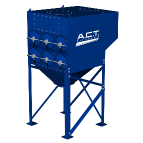
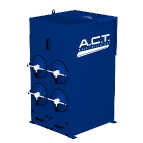

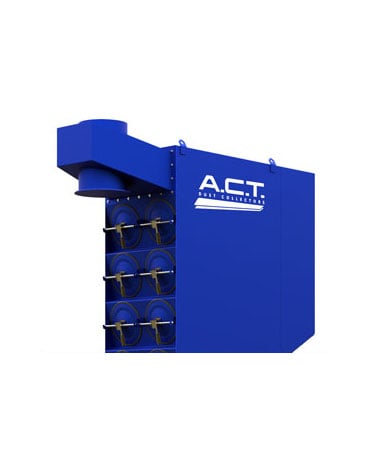
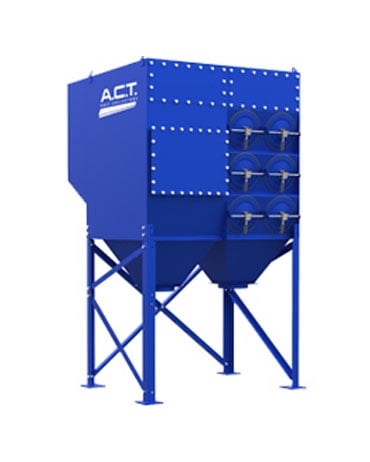
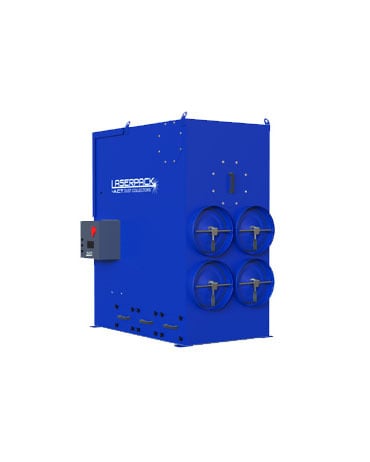
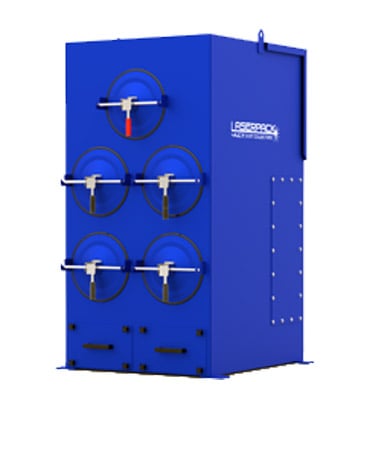
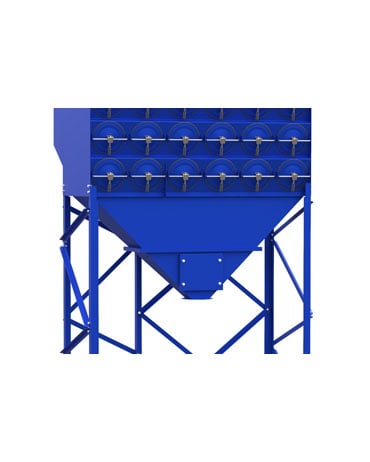
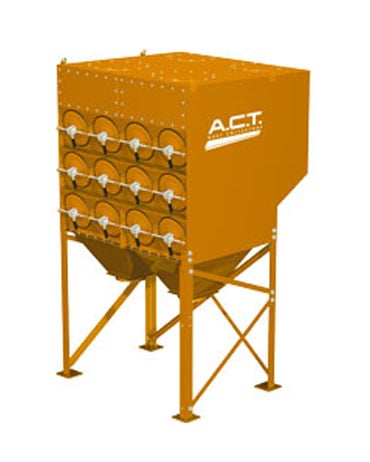
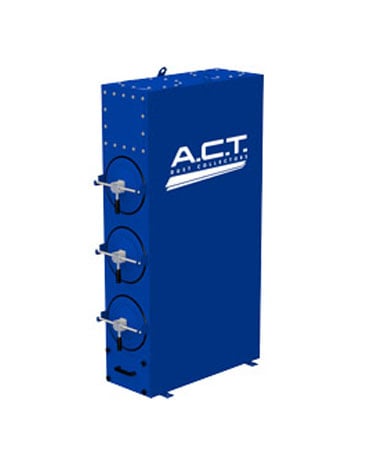
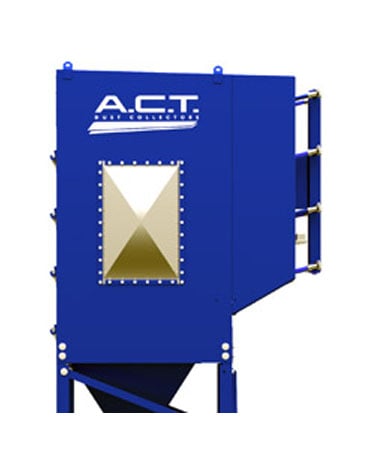
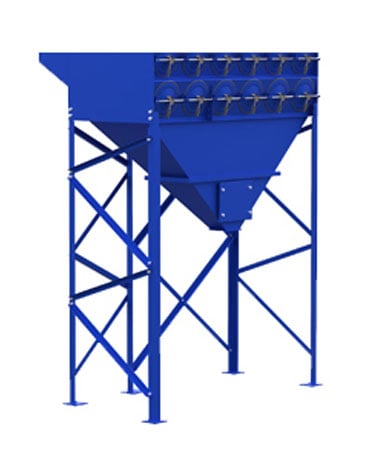
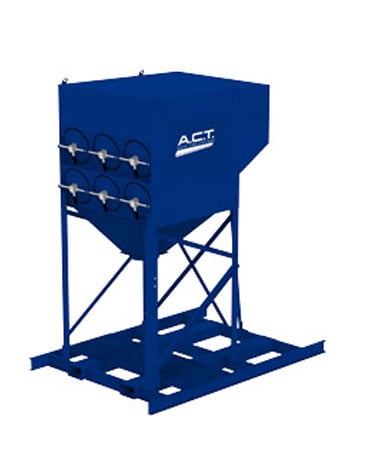
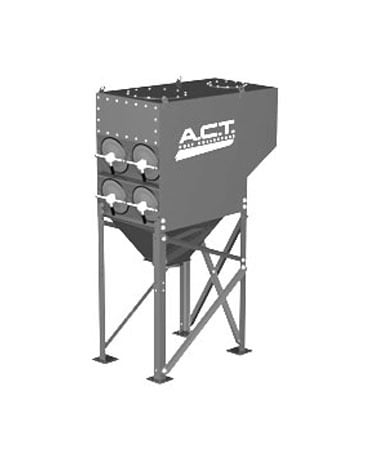

A growing manufacturer of industrial nameplates needed a dust collection solution that could support expanding laser cutting operations while improving facility efficiency. After years of adding individual dust collectors alongside each new laser, the company reached a point where a centralized system offered greater flexibility for future growth.
A.C.T. Dust Collectors designed a central dust collection system that increased capacity, reduced energy consumption, lowered noise levels, and created room for additional laser cutting equipment.
Project Snapshot
Industry: Metal fabrication and nameplate manufacturing
Application: Laser cutting dust collection
Location: Texas
Challenge: Supporting facility growth while improving efficiency
Dust Type: Fine metal dust and laser cutting smoke
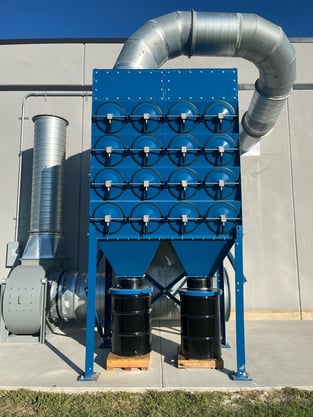
System Installed: ACT 4-32 cartridge dust collector
Outcome: Increased capacity, reduced energy usage, and room for expansion
The Challenge: Outgrowing Individual Dust Collectors
Texas Nameplate, a 76-year-old family company, had experienced significant growth as laser cutting became a larger part of its production process. Over time, the company added multiple laser cutting systems, each paired with its own dedicated dust collector.
Laser cutting is a manufacturing process that uses a focused laser beam to cut metal with high precision. During cutting, fine metal particulates and smoke are generated and must be captured to protect equipment, maintain air quality, and support production quality.
In this operation:
- Multiple laser cutting systems operated simultaneously
- Individual dust collectors consumed valuable floor space
- Noise levels increased as more collectors were added
- Electrical consumption continued to grow
- Future expansion plans included additional lasers
The company needed a dust collection strategy that could support long-term growth while improving operational efficiency.
The Solution: Centralized Cartridge Dust Collection
After evaluating the facility's current and future production plans, A.C.T. Dust Collectors recommended transitioning from multiple standalone collectors to a centralized system.
The system included:
- ACT 4-32 cartridge dust collector
- Centralized ducting for multiple laser cutting machines
- Outdoor collector placement
- Capacity designed to accommodate future equipment additions
The system was selected for its:
- Ability to support multiple lasers from a single collector
- Reduced facility noise levels
- Improved energy efficiency
- Expansion capacity for future growth
A.C.T. also simplified the transition process by purchasing the customer's existing LaserPack units, making the upgrade easier to implement.
Installation & Performance
The ACT 4-32 was installed outside the facility and connected to the laser cutting production line.
Outcomes:
- Capacity available for additional laser cutting systems
- Reduced facility noise levels
- Lower electrical consumption
- Simplified dust disposal and maintenance
- Improved cleanliness throughout the production area
The facility reported an average reduction of approximately 150 amps of electrical usage compared to operating multiple standalone collectors simultaneously.
The new system also improved conditions in nearby manufacturing areas by reducing the possibility of fine dust migrating into other production processes.
Why a Central Dust Collection System Made Sense
As manufacturing facilities grow, there is often a point where multiple standalone collectors become less efficient than a centralized system.
Benefits of central dust collection systems can include:
- Greater expansion flexibility
- Reduced equipment footprint
- Lower energy consumption
- Simplified maintenance
- Centralized dust disposal
- Reduced facility noise
For facilities operating multiple laser cutting systems, a properly sized central collector can often provide significant operational advantages.
Work with A.C.T. Dust Collectors
If your facility is growing and considering the transition from individual collectors to a central dust collection system, A.C.T. Dust Collectors can design a solution tailored to your operation. Contact our team to discuss the right system for your facility.
Frequently Asked Questions
What is a central dust collection system?
A central dust collection system is a single dust collector that serves multiple machines or production processes through a connected ductwork network. Instead of installing a separate collector for each machine, a central system captures dust from multiple collection points and filters it through one larger unit. Central dust collection systems are commonly used in manufacturing facilities with multiple workstations or production lines.
When should a facility switch from individual dust collectors to a central system?
A facility should consider switching from individual dust collectors to a central system when production growth creates challenges related to space, maintenance, energy consumption, or future expansion.
Common reasons for transitioning include:
- Adding additional machines
- Running out of available floor space
- Increasing electrical consumption
- Simplifying maintenance requirements
- Reducing equipment noise
- Planning for future growth
A properly sized central system can often provide long-term operational advantages.
How can a central dust collection system reduce energy consumption?
A central dust collection system can reduce energy consumption by replacing multiple smaller collectors with a single, properly sized unit. In many facilities, one larger collector operates more efficiently than several individual systems running simultaneously.
Potential energy-saving benefits include:
- Fewer motors operating at the same time
- More efficient airflow management
- Reduced overall electrical demand
- Better use of variable frequency drives (VFDs)
- Lower long-term operating costs
Why is dust control important in laser cutting operations?
Dust control is important in laser cutting operations because laser cutting generates extremely fine metal particulate and smoke that can affect equipment performance, product quality, and facility cleanliness.
Effective dust collection helps:
- Protect sensitive laser equipment
- Improve air quality
- Reduce dust accumulation
- Support cleaner manufacturing processes
- Minimize maintenance requirements
Proper filtration is critical for maintaining reliable laser cutting performance.

.png?width=240&height=91&name=ACT%20Dust%20Collectors%20Logo%20Solid%20White%202020%20(1).png "ACT Dust Collectors Logo Solid White 2020-2")
.png?width=148&height=149&name=usa-manufactured-dust-collectors%20(1).png "United States Flag")