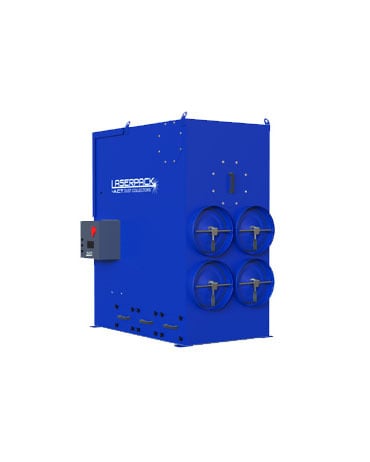
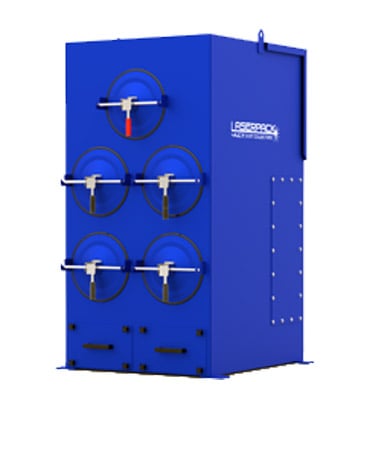
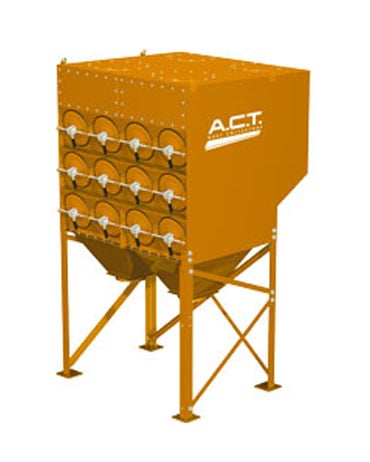
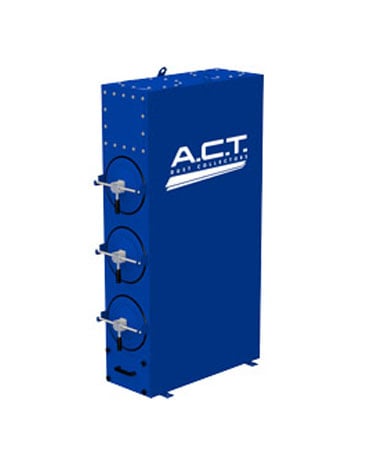
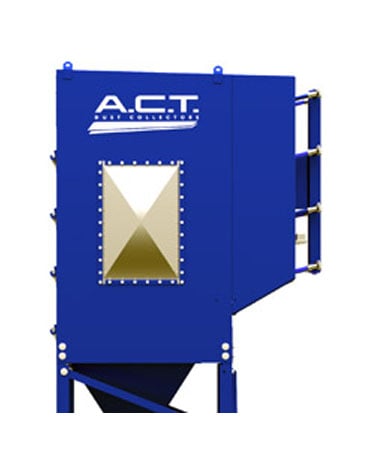
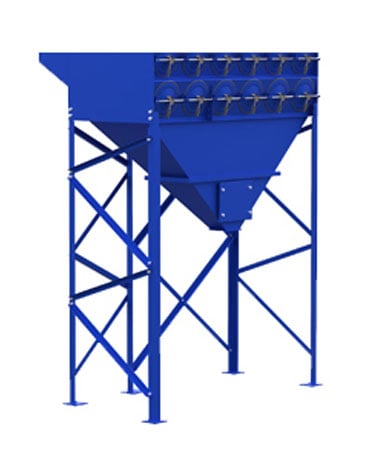
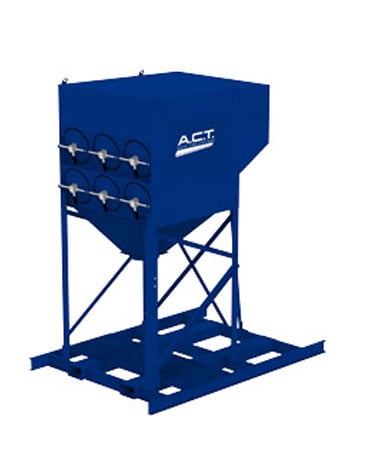
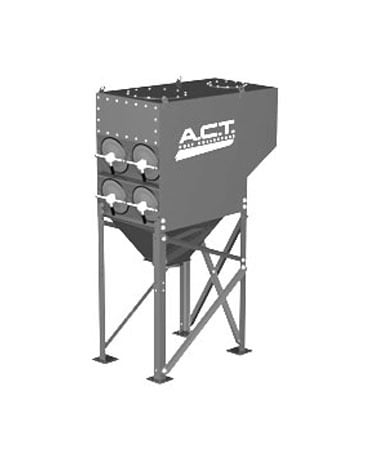
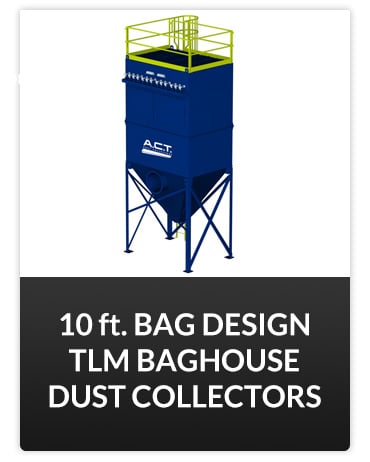
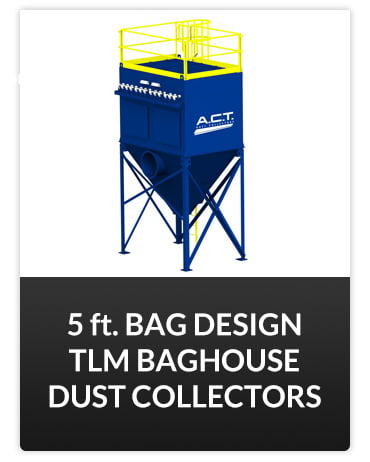
Baghouse dust collectors are designed for industrial applications with heavy particulate matter, larger particulate, and higher operating temperatures. A.C.T. Dust Collectors' TLM series uses pulse-jet cleaned fabric filter bags to maintain airflow in demanding manufacturing environments such as woodworking, grain processing, and metalworking.
In many heavy dust applications, baghouse filter bags typically last longer than cartridge filters, which means fewer filter replacements in high-volume dust collector applications like woodworking and grain handling. For facilities generating temperatures above 250°F, a baghouse dust collector is often the better fit for maintaining consistent air quality without the added filter wear that comes with finer media.
How a Baghouse Dust Collector Works
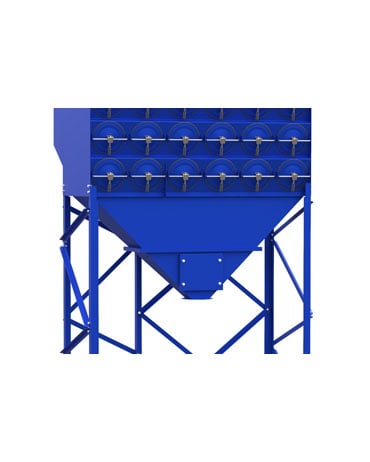
A baghouse dust collector pulls dust-laden air through a series of fabric filter bags. As air passes through, dust collects on the outside of the bags and forms a layer called a dust cake, which actually improves filtration efficiency over time, while cleaned air is released back into the facility. A pulse-jet cleaning system periodically releases a burst of compressed air inside each bag, knocking the accumulated dust loose so it drops into a hopper below. This cleaning cycle runs automatically during operation, so the system keeps filtering without requiring a shutdown.
Baghouse vs. Cartridge Collectors: Which Fits Your Facility
Both are common dust collection methods, and the right choice comes down to what's moving through your system.
|
Factor
|
Baghouse
|
Cartridge Collector
|
|
Particulate size
|
Best for larger particulate
|
Best for fine particulate
|
|
Dust loading
|
Handles heavy, continuous loading
|
Better suited to lighter loading
|
|
Operating temperature
|
Rated for 250°F+
|
Typically lower temperature range
|
|
Filter service life
|
Longer filter life, fewer replacements
|
Shorter filter life, more frequent changes
|
|
Footprint
|
Larger footprint
|
More compact
|
For facilities running high-volume operations like woodworking, grain handling, or metalworking with heavy dust generation, a baghouse typically holds up better over time. For lighter, finer dust applications, a cartridge system may be the better fit. Learn more in our Baghouse vs. Cartridge Dust Collectors comparison to understand which system fits your application.
Is a Baghouse Dust Collector Right for Your Facility?
TLM baghouse collectors are built for facilities where dust loading is constant and particulates are coarse. Common applications include woodworking operations running multiple machines on one system, grain and feed facilities managing high-volume airborne particulate, and metalworking environments where heat and heavier debris rule out finer filtration media. Facilities scaling across multiple stations or production lines benefit from the baghouse's higher dust-holding capacity, since it reduces how often the system needs servicing relative to cartridge alternatives.



.svg)



















%20Collectors%20Image.png?width=143&height=143&name=ADC%20(Ambient)%20Collectors%20Image.png)


.png?width=240&height=91&name=ACT%20Dust%20Collectors%20Logo%20Solid%20White%202020%20(1).png "ACT Dust Collectors Logo Solid White 2020-2")
.png?width=148&height=149&name=usa-manufactured-dust-collectors%20(1).png "United States Flag")