Why Air Filtration Matters in the Aerospace Industry
The environments that fall under the aerospace umbrella each bring their own air quality demands, and they are not interchangeable. What makes this industry different from many other manufacturing sectors is the range of materials involved and the precision that work requires.
Depending on your facility type and operations, airborne contaminants may include:
- Carbon fiber and fiberglass dust from cutting, drilling, and sanding composite structures - fine respirable fibers that remain airborne for extended periods and are difficult to control without proper source capture
- Aluminum and titanium dust from machining and grinding operations - fine metal particulate that can present combustible dust hazards at sufficient airborne concentrations
- Metallic fume and particulate from welding, torch cutting, and plasma or laser cutting operations
- Chemical aerosols from surface coating, paint application, and stripping work, some of which fall under specific OSHA permissible exposure limits
Many aerospace facilities deal with multiple contaminant types at the same time. Each has different particle sizes, capture requirements, and safety considerations. That complexity makes proper system design essential, not optional.
A dust collection system should be selected based on your full process, not a single application.
Dust Collection for Aerospace and Aviation Environments
Our role in aerospace applications is facility-level: we design and supply systems that capture airborne dust and fumes at or near the source, or that filter and recirculate air throughout a workspace.
Aircraft Maintenance and Repair Operations (MRO)
MRO work often involves sanding, grinding, and composite repair. Localized collection helps limit cross-contamination between work areas and reduces cleanup demands.
Hangars and Ground Support Areas
Large open spaces, equipment movement, and changing airflow patterns make it harder to contain airborne dust. Systems in these areas need to be planned around volume, airflow direction, and how work is carried out throughout the day.
Welding, Cutting, and Fabrication
Fabrication work introduces fumes and fine particulates that require consistent capture. Welding smoke, cutting dust, and grinding debris can build up quickly in enclosed or semi-open areas. A properly designed system helps keep these contaminants from circulating through nearby work zones.
Surface Prep, Coatings, and Finishing
Surface preparation and coating processes can release fine particulate and chemical aerosols. Source capture helps limit their spread and supports cleaner finishing conditions.
Aerospace Dust Collection Systems Designed for Facility Conditions
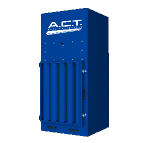
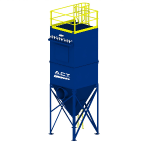
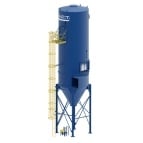
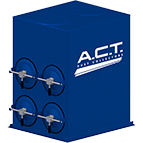
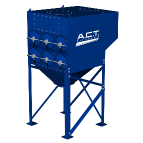
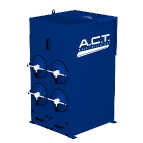
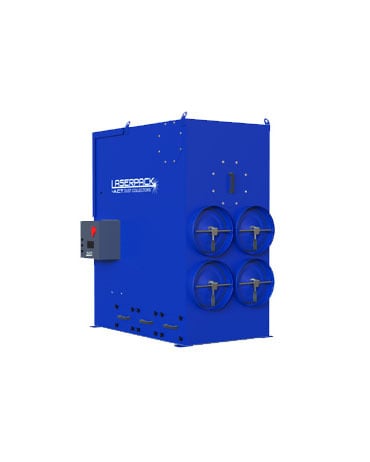
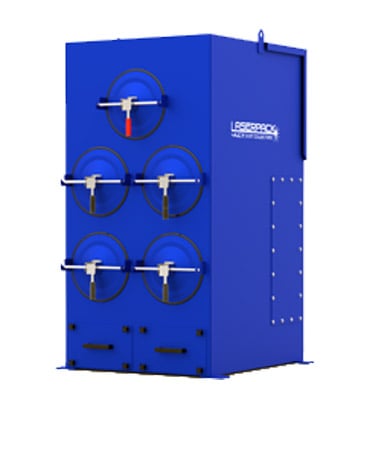
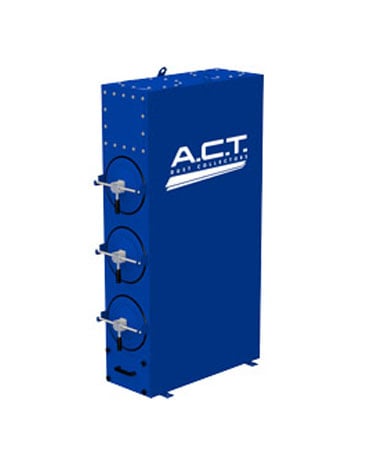
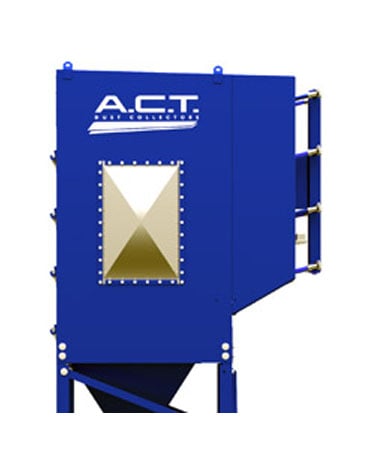
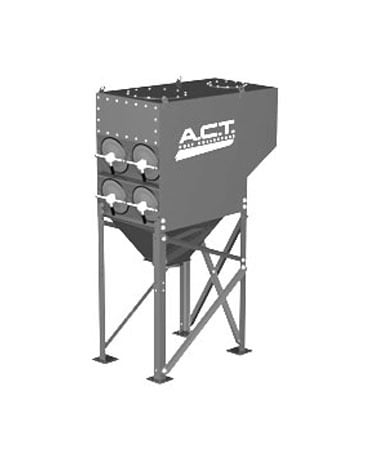
The right collector type depends on your dust characteristics, the volume of air your processes require, and how your facility is laid out. A.C.T. offers cartridge collectors, baghouse systems, and ambient dust collectors, each suited to different conditions and applications.
Cartridge Dust Collection Systems
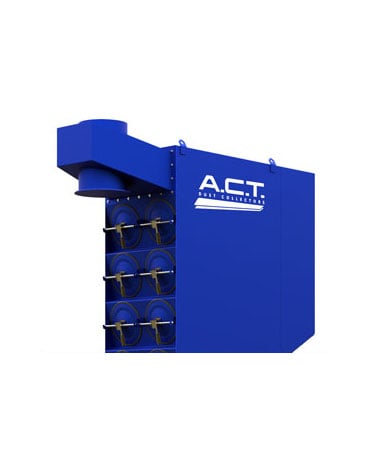
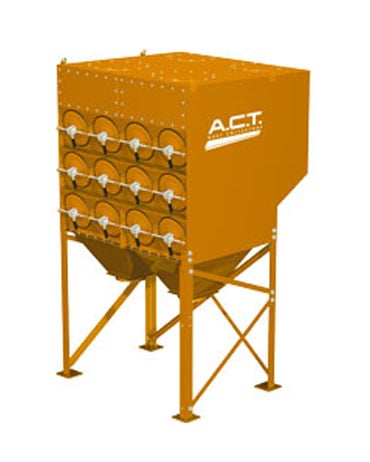
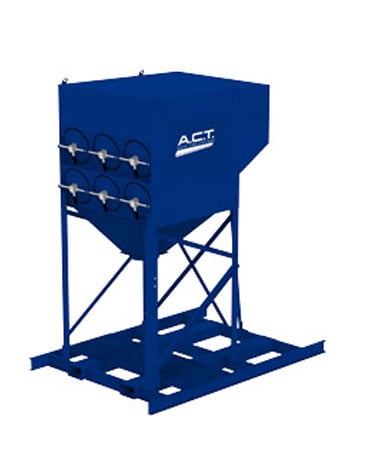
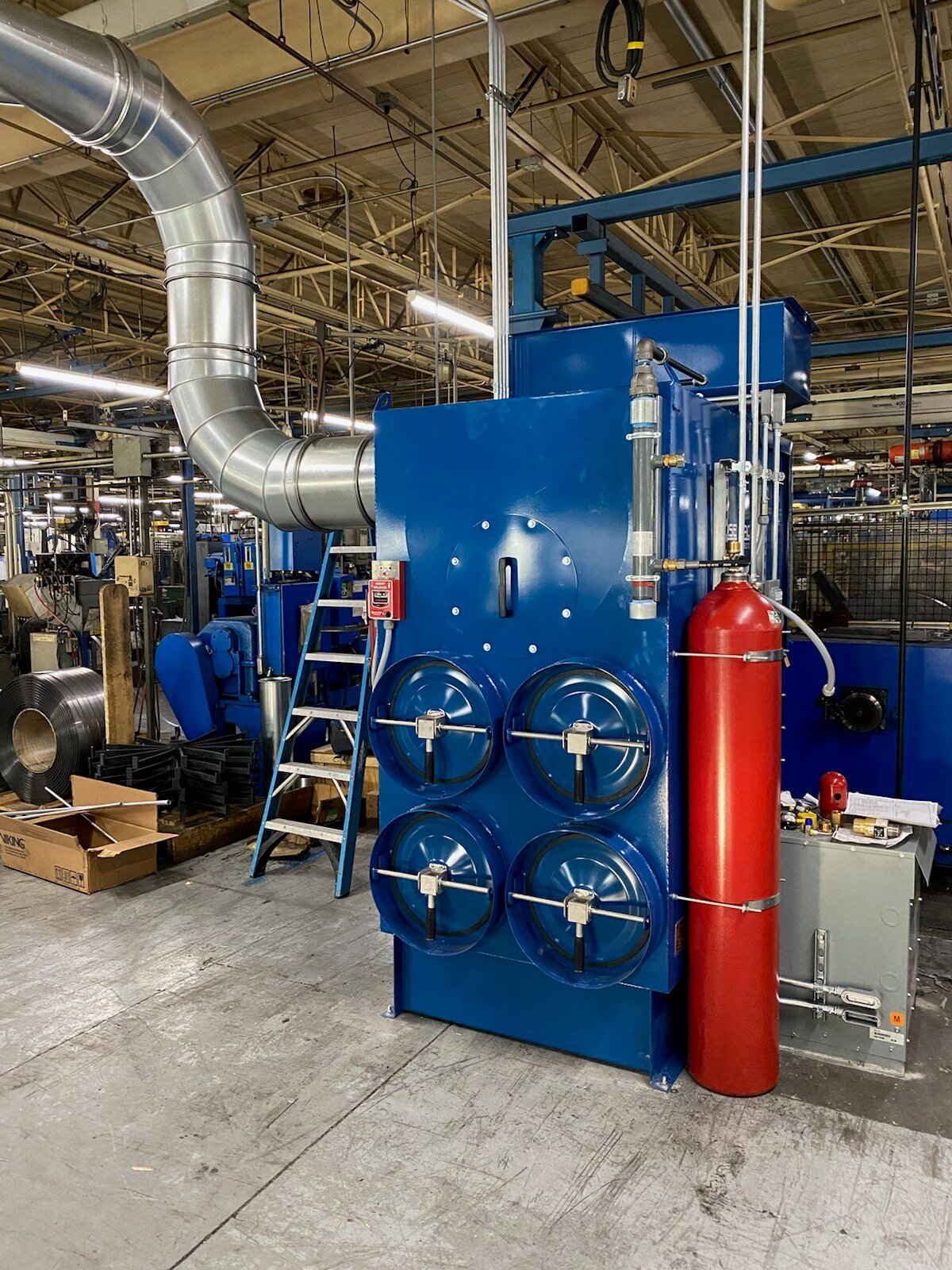
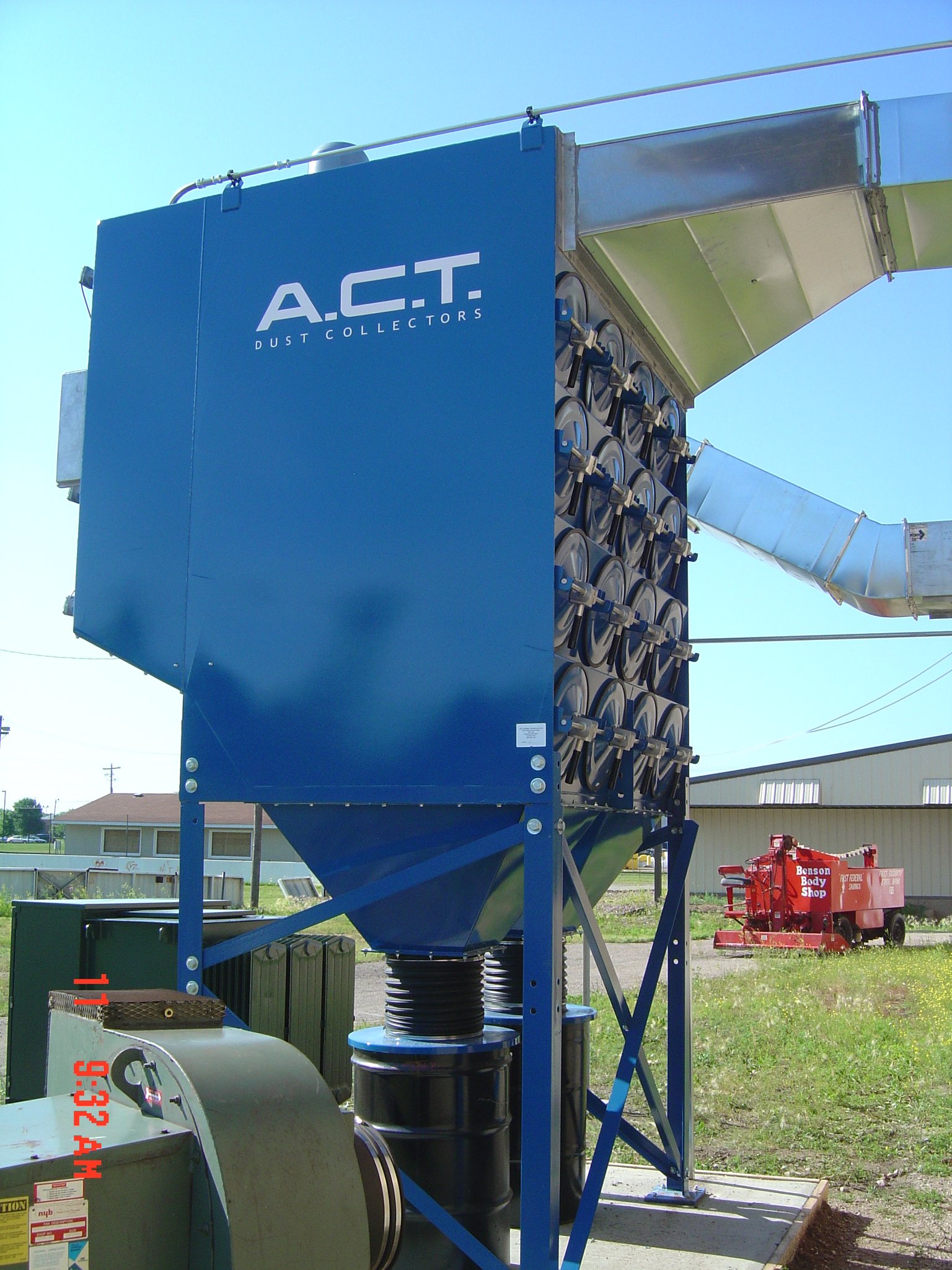
Cartridge dust collectors are commonly used for fine dust and fume applications. Their pleated filter design provides a high filtration surface area within a compact footprint. This makes them suitable for grinding, sanding, and finishing processes where space may be limited.
Baghouse Filtration Systems
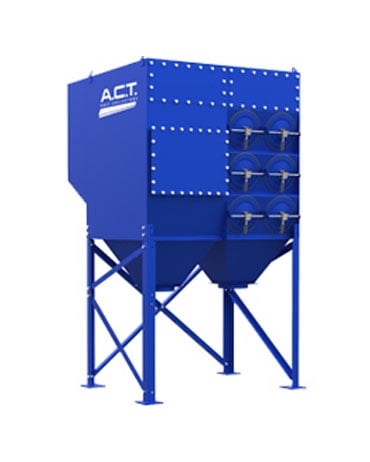
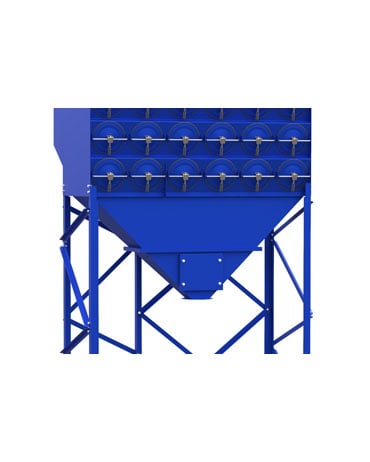
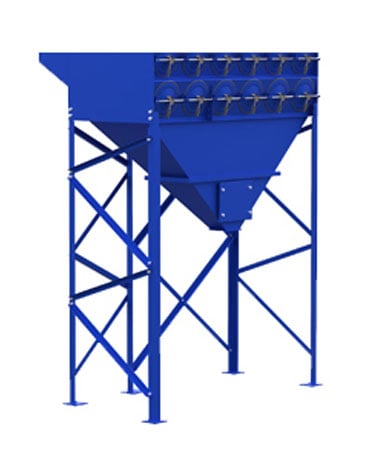
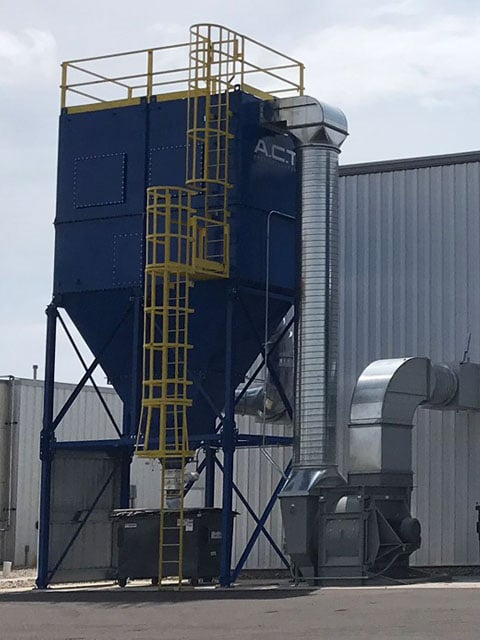
Baghouse systems are typically used where dust loads are higher or airflow volumes are larger. They rely on fabric filter bags and are often selected for more demanding applications where durability and performance are priorities.
Source Capture and Airflow Control
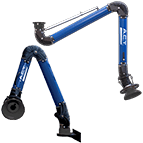
Source capture controls dust and fumes before they spread through the facility. Hoods, arms, and enclosures pull contaminants directly into the dust collection system at the point of generation.
Aerospace Air Filters and System Performance
Your dust collection system is only as reliable as the filters running inside it. The right filter media, properly monitored and replaced on time, keeps your system performing at the airflow and efficiency levels it was designed for.
Filter Media and Why It Matters
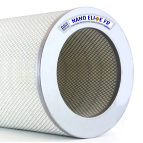
Nanofiber filter media, like the Nano-Elite cartridge filters used in A.C.T. systems, release captured dust more cleanly during pulse-jet cleaning cycles. This slows pressure buildup across the media and extends filter service life.
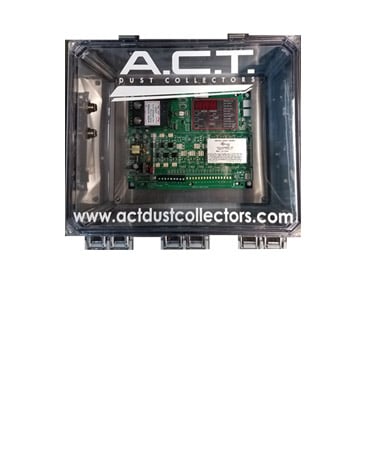
As filters load with dust, the pressure drop across the media increases. Monitoring this with a magnehelic gauge or digital pressure monitor gives your maintenance team an early warning before airflow is noticeably affected. It also lets you replace filters based on loading conditions rather than a fixed schedule.
Matching Your Filter to Your Application
For operations handling composite dust, metallic fume, or coating overspray, the filter media specification matters. Matching the filter to your specific dust types and particle sizes affects both capture efficiency and how quickly the media loads under normal operating conditions.
If you are comparing systems for your facility, talk to our team about your application. We can help you identify the right system configuration for your environment.
Supporting Compliance, Safety, and Clean Air Standards
OSHA's general industry standards set permissible exposure limits for many of the substances generated in aerospace and aviation work. For facilities that handle aluminum, titanium, or other combustible metal dusts, OSHA's Combustible Dust National Emphasis Program and NFPA 660, the current consolidated standard for combustible dust hazard management, set additional requirements around hazard analysis and protection system design.
Fine metal dust from machining and grinding can become combustible at certain concentrations. Managing this risk requires proper system design, including grounding, airflow control, and explosion protection where needed.
A properly sized and maintained dust collection system reduces the accumulation of combustible dust in your facility, which is one of the most practical steps available for managing that risk. Learn more about dust collector explosion causes and prevention.
Your EHS team and qualified safety advisors are responsible for determining which regulatory requirements apply to your specific facility and processes.
How to Choose the Right Aerospace Dust Collection System
Selecting a dust collection system for an aerospace or aviation facility is a process. Working through it in sequence helps you arrive at a configuration that fits your operation rather than one that is simply close enough.
- Identify Dust and Fume Sources: List all processes that generate airborne contaminants, including maintenance, fabrication, finishing, and support operations.
- Evaluate Airflow and Facility Size: Determine airflow needs based on how far contaminants travel and the size of your facility.
- Plan for Maintenance and Filter Life: Ensure maintenance is practical by considering filter access, dust removal, and service frequency.
- Ensure Compliance Requirements Are Met: Review OSHA, NFPA, and internal safety requirements to confirm the system supports compliance.
Why Choose A.C.T. Dust Collectors for Aerospace
A.C.T. Dust Collectors is a U.S.-based manufacturer of industrial dust collection systems built for reliable performance in demanding environments. We offer cartridge collectors, baghouse systems, ambient units, and application-specific systems for welding and laser cutting.
Our team works with you to understand your processes, facility layout, and maintenance needs to recommend a system that fits your operation.
Select models are available through our ready-to-ship program, which reduces lead times when an air quality issue needs to be addressed quickly.



.svg)



















%20Collectors%20Image.png?width=143&height=143&name=ADC%20(Ambient)%20Collectors%20Image.png)


.png?width=240&height=91&name=ACT%20Dust%20Collectors%20Logo%20Solid%20White%202020%20(1).png "ACT Dust Collectors Logo Solid White 2020-2")
.png?width=148&height=149&name=usa-manufactured-dust-collectors%20(1).png "United States Flag")