



.svg)

















%20Collectors%20Image.png?width=143&height=143&name=ADC%20(Ambient)%20Collectors%20Image.png)


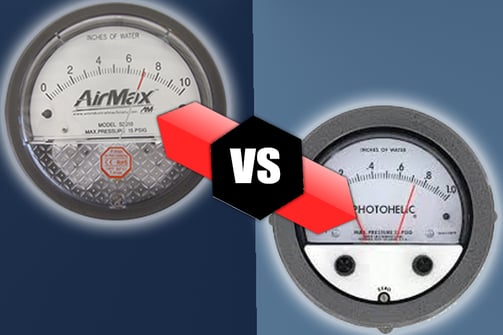
If you walk past a dust collector and see a round analog gauge on the door or side panel, it is telling you something important about how that system is breathing. That small dial is measuring differential pressure - the pressure drop across your filters - which is one of the best day‑to‑day indicators of dust collector health.
In most industrial systems, that gauge is either a magnehelic gauge or a photohelic gauge. They look similar and they both measure differential pressure, so it is no surprise they often get mixed up. The key difference is this:
- A magnehelic gauge measures pressure so people can make decisions.
- A photohelic gauge measures pressure and also tells equipment what to do.
Understanding that distinction matters when you are trying to keep airflow stable, protect filters, and avoid surprises with your industrial dust collection systems.
In this post, we will break down how each gauge works, how they relate to differential pressure and filter resistance, and how to decide which one fits your application.
What is a Magnehelic Gauge and How Does It Measure Pressure?
A magnehelic gauge is a mechanical differential pressure gauge. In simple terms, it compares the pressure at two points in your system and shows the difference on a dial.
On a dust collector, those two points are usually:
- The dirty side of the filters (incoming air)
- The clean side of the filters (outgoing air)
Inside the gauge, a flexible diaphragm moves as the pressure difference changes. That diaphragm shifts a magnet, which turns a small helix connected to the needle on the front. There is no direct mechanical linkage between the diaphragm and the needle, which helps the gauge stay accurate and repeatable over time.
You do not need power for a magnehelic gauge. It simply responds to the pressure in the small air lines connected to the gauge and gives you a real‑time reading. In dust collection, that reading tells you how much filter resistance the fan is working against.
A few practical points for day‑to‑day use:
- Readings are typically shown in inches of water column (in. w.c.), the common unit for low‑pressure air systems.
- Every gauge has a defined full scale - for example, 0-5 or 0-10 in. w.c. That is the maximum value the dial can show.
- If your collector normally runs between 2 and 4 in. w.c., choosing a 0-5 in. w.c. gauge will give you more useful detail than a 0-30 in. w.c. gauge where all your readings sit at the bottom of the scale.
When differential pressure across the filters climbs, it usually means the filters are loading up and airflow is harder to maintain. When it drops suddenly, it may point to a torn filter, open door, or another change in the system.
If you would like a deeper dive into how differential pressure affects filters, you can also read A.C.T.'s article on how differential pressure affects baghouse filter performance.
What is a Photohelic Gauge and How It Works
A photohelic gauge starts with the same idea as a magnehelic gauge - it measures differential pressure using a diaphragm and magnetic movement - and then adds a built‑in pressure switch.
The front still looks like a standard differential pressure gauge. You see a dial, a pointer, and a scale in inches of water column. The difference is that there are also two adjustable pointers or knobs for set points:
- One for a high pressure limit
- One for a low pressure limit
Inside the housing, the position of the main needle is monitored by a light‑sensing (photoelectric) system. When the actual pressure needle reaches your high or low set point, the gauge changes the state of an internal relay. That relay can be wired to start or stop equipment, trigger alarms, or signal a controller.
A simple way to picture it: A magnehelic gauge is like a thermometer - it tells you the temperature, while a photohelic gauge is like a thermostat - it reads the temperature and turns heating or cooling on and off.
On a dust collector, that often means the photohelic gauge is telling the cleaning system when to pulse and when to stop, or telling a fan or alarm when pressure is outside the normal band.
Key Differences Between a Magnehelic and Photohelic Gauge
From a distance, these gauges can look almost identical. The differences show up in what they can do for your system.
Measurement vs Control Capabilities
At a simple level, both gauges are looking at the same thing (differential pressure) but they play different roles in how you manage the system. Here’s a simple breakdown:
|
Parameter |
Magnehelic |
Photohelic |
|
Primary role |
Measurement only |
Measurement + control |
|
What you get as a user |
Clear dial reading checked during rounds |
Dial reading plus adjustable high/low set points |
|
What the system can do with it |
Nothing by itself - people must take action |
Can turn cleaning, fans, or alarms on/off automatically based on pressure |
Put another way:
- With a magnehelic gauge, someone has to look at the number, decide what it means, and then take action.
- With a photohelic gauge, you can still look at the number, but the gauge can also be wired so the collector reacts on its own when pressure moves outside the band you choose.
If your system only needs people to see the pressure and log trends, a magnehelic gauge is usually enough. If you want the system to take action automatically when pressure changes, a photohelic gauge (or a similar pressure transmitter with switches) is the more natural fit.
Set Points and Pressure Switch Functions
The set points on a photohelic gauge define the pressure band where you want the system to operate. You can choose a high point where you want something to turn on and a low point where you want it to turn off.
Imagine a cartridge dust collector that normally runs between 2 and 4 in. w.c.
- You might set the high set point at 4.5 in. w.c.
- You might set the low set point at 2.5 in. w.c.
As production runs and dust loads the filters, differential pressure slowly rises. When it hits 4.5 in. w.c., the photohelic gauge turns on the pulse‑jet cleaning system. Cleaning continues until the pressure drops to 2.5 in. w.c., then the gauge turns the cleaning off.
Instead of cleaning constantly on a fixed timer, the system cleans when it is needed and rests when it is not, which can extend filter life and reduce compressed air use.
A magnehelic gauge, by contrast, cannot switch anything on its own. You would need to add a separate pressure switch or an electronic controller if you want the system to respond automatically.
Complexity, Cost, and System Integration
There is also a practical difference in how simple each device is to install and maintain.
Magnehelic gauges are straightforward. They require only pressure tubing, a mounting location, and occasional inspection. There is no wiring, no relay, and no programming.
On the other hand, photohelic gauges cost more and require electrical wiring and some thought about how their contacts will tie into your control panel or PLC. In return, you get automation without a separate dedicated pressure controller.
For a small collector that runs a steady process with regular manual checks, the simplicity of a magnehelic gauge can be a smart choice. For a central system that serves multiple production lines and runs nearly 24/7, the added automation of a photohelic gauge often pays off in stability and uptime.
How Each Gauge is Used in Dust Collection Systems
In every dust collection system, filter resistance changes over time. As dust builds up on the filter media, airflow faces more resistance, and the differential pressure across the filters goes up. That is normal and expected; what matters is how you monitor and respond to those changes.
A common real‑world scenario:
- A fabrication shop has a dust collector pulling from multiple welding stations.
- Early in the shift, differential pressure is around 2 in. w.c.
- As production picks up and dust loads the filters, the reading gradually rises.
If the collector uses a magnehelic gauge, a supervisor or technician will check those readings during rounds. If they see pressure trending higher than usual over several days, they might schedule filter inspection, adjust the cleaning cycle, or look for airflow restrictions.
If the same collector uses a photohelic gauge, the gauge can be wired so that once differential pressure reaches a high set point, it automatically increases cleaning frequency or triggers a “check filters” alarm. When cleaning brings the pressure back down, the gauge returns the system to its normal setting.
In both cases, the goal is the same: keep differential pressure within a healthy band so the fan can do its job without wasting energy or letting capture performance slip.
When to Use a Magnehelic Gauge vs. a Photohelic Gauge
Choosing between these two gauges is really about how you intend to use pressure information and how your plant actually runs day to day. Instead of thinking in terms of "which one is better," it helps to look at a few simple decision factors.
How you use pressure data
Choose a magnehelic gauge when you mainly need a visual reading that operators can log and review during routine rounds. It works well when decisions about cleaning, filter changes, or troubleshooting are made by people looking at the gauge and comparing it to your normal operating range.
Choose a photohelic gauge when you want the system to react automatically when pressure moves out of range. In that case, the gauge is not just a reference - it becomes a control input that can start cleaning, trigger alarms, or adjust equipment without waiting for someone to walk by.
Dust collection system complexity
Choose a magnehelic gauge when you have a single collector or a relatively simple system with predictable loading and a straightforward cleaning setup. Visual monitoring plus a timer board or basic controller is often enough in these environments.
Choose a photohelic gauge when you run a central or more complex system tied to multiple processes or lines. In those systems, pressure at the collector can change quickly as different branches open or close, and automated control helps the collector keep up without constant manual input.
Uptime and production impact
Choose a magnehelic gauge when occasional checks and brief interruptions are acceptable. If a rise in differential pressure means you can pause, investigate, and restart without major consequences, manual monitoring can be a practical, low‑cost approach.
Choose a photohelic gauge when unplanned downtime is costly, and you want early, pressure‑based intervention. Being able to trigger cleaning or alarms automatically as pressure climbs can help you correct issues before they affect production or compliance.
Staffing and oversight
Choose a magnehelic gauge when you have reliable hands‑on oversight - for example, a maintenance or production team that already walks the area, notes readings, and responds quickly to changes.
Choose a photohelic gauge when staff time is limited and gauges may not be checked as often as you would like. Letting the gauge act as both an indicator and a control device means the system can respond to pressure changes even when no one is standing in front of it.
Required level of control
Choose a magnehelic gauge when cleaning runs on a fixed timer or a separate controller you already trust, and you do not need pressure‑based control from the gauge itself.
Choose a photohelic gauge when you need clean‑on‑demand, pressure‑based alarms, or fan and damper adjustments tied directly to differential pressure. In those cases, the built‑in set points and switch contacts in a photohelic gauge give you a simple way to link pressure to action.
Future automation or expansion plans
Choose a magnehelic gauge when you expect the system to stay relatively simple over the long term, with no major changes in capacity, pickup points, or control strategy.
Choose a photohelic gauge when you plan to grow or automate and want pressure‑based control built in from the start. Investing in a gauge that can both measure and switch can save time and rework later when additional automation is added.
In short, a magnehelic gauge is often the right choice for simpler systems with strong manual oversight, while a photohelic gauge fits better where automation, uptime, and changing conditions make automatic pressure‑based responses more valuable.
When a Photohelic Gauge Makes More Sense
A photohelic gauge becomes more attractive when you:
- Need automatic pressure‑based control of cleaning or alarms
- Operate in a plant where uptime is critical and unscheduled stops are expensive
- Run variable‑load processes where filter conditions change throughout the day
- Have limited staff available for frequent manual checks
In these situations, the ability to link set points, pressure switch outputs, and system responses can help keep the collector in its best operating range with less manual intervention.
Beyond Analog: Digital Differential Pressure Monitoring
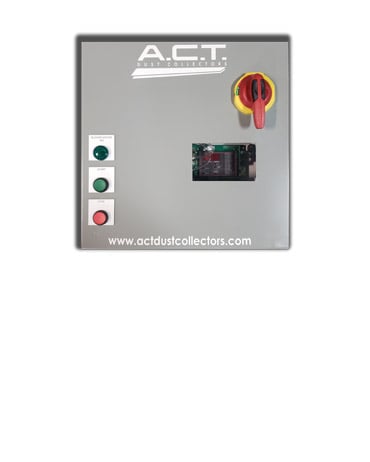
Magnehelic and photohelic gauges have been used in dust collection for decades, and they still do their jobs well. But as systems become more automated, many operations are moving toward digital differential pressure monitors that combine pressure measurement, set point control, and cleaning timers into a single device. Instead of reading an analog dial and adjusting set points with knobs, you get a digital display that shows pressure readings clearly and lets you program set points with buttons. It is a more precise, easier-to-read approach, especially in environments where multiple people need to check the system quickly.
This is the direction A.C.T. Dust Collectors team has taken. Rather than relying on separate analog gauges, A.C.T. equips its collectors with digital differential pressure monitors that handle real-time pressure readings, programmable set points, and on-demand cleaning control in one place. These systems display differential pressure digitally, which removes the guesswork that can come with reading a needle on a dial, and they consolidate what used to require a gauge, a timer board, and a pressure switch into a single, streamlined setup.
If you are working with an existing system that uses magnehelic or photohelic gauges, the concepts covered in this article still apply. But if you are evaluating a new collector or upgrading an older one, it is worth knowing that digital pressure monitoring is where the industry is heading, and A.C.T.'s systems are already built around it.
Common Mistakes When Selecting a Pressure Gauge
Even in well‑run plants, a few recurring issues show up when gauges are selected in a hurry.
- Choosing based on price alone: A magnehelic gauge is cheaper, but if your system really needs automated responses, skipping a photohelic can cost more later in extra hardware, retrofits, and premature filter failures.
- Ignoring the full-scale range: If your system runs around 2-4 in. w.c. and you install a 0-30 in. w.c. gauge, most readings will sit at the bottom of the dial, making trends hard to see. Pick a range that matches your normal operating band.
- Overengineering simple systems: Not every collector needs pressure-based automation. If the process is stable, gauges are checked daily, and timer-based cleaning works well, extra control layers may add complexity without much real benefit.
- Underestimating future control needs: If you expect higher production, more pickup points, or more automation, it can be smarter to build in pressure-based control now rather than rewire panels and add hardware later.
If you are unsure where your system sits on that spectrum, it can help to talk it through with a dust collection specialist. You are welcome to talk to our team about your dust collection system and walk through your options.
How Proper Pressure Monitoring Improves Dust Collector Performance
Selecting the right gauge is not just an instrumentation decision. It has a direct impact on how your dust collector performs over months and years.
Consistent, accurate pressure monitoring helps you:
- Plan maintenance instead of reacting: Watching differential pressure trends over time makes it easier to decide when filters genuinely need to be changed and when a problem may lie elsewhere, such as a blocked duct or a sticking damper.
- Protect energy use: As filter resistance climbs, the fan has to work harder to move the same amount of air. Keeping differential pressure in a reasonable band helps the fan operate closer to its design point, which can reduce power consumption.
- Extend filter and component life: When cleaning is based on pressure rather than a fixed timer, you can avoid over‑cleaning, reduce wear on valves and diaphragms, and help filters last closer to their intended service life.
In other words, the small gauge on the front of your dust collector provides some of the most valuable data you have about system health. Whether you use it only for visual checks or as a control signal, treating pressure as a key performance indicator often pays off in reliability and operating cost.
Frequently Asked Questions About Magnehelic and Photohelic Gauges
What does a magnehelic gauge measure?
A magnehelic gauge measures differential pressure - the difference in pressure between two points, such as the dirty and clean sides of a dust collector filter. In practice, it tells you how much resistance the filters are adding to the airstream, which helps you judge filter loading and airflow performance.
Does a photohelic gauge replace a pressure switch?
In many systems, yes. A photohelic gauge combines a differential pressure gauge with built‑in switching and adjustable set points. That means one device can both display the pressure and act like a pressure switch, turning cleaning equipment, fans, or alarms on and off when pressure crosses your chosen limits.
What differential pressure indicates a dirty filter?
There is no single universal number, because acceptable pressure depends on the collector design, filter type, and application. However, a steady climb above your normal operating range - for example, well above the typical 2-5 in. w.c. band many cartridge systems use as a guideline - usually suggests that filters are becoming plugged or that something has changed in the system. The key is to monitor trends over time rather than chase one exact "good" number.
Are there alternatives to analog gauges for monitoring differential pressure?
Yes. Many modern dust collection systems now use digital differential pressure monitors that display readings on a screen rather than an analog dial. These controllers can also include built-in set points and cleaning control, replacing the need for separate gauges and timer boards. A.C.T. Dust Collectors, for example, uses a digital pressure module like the Dwyer DCT1006-DCP100A on its systems, which provides a digital readout, programmable set points, and on-demand cleaning control in one unit.
Do dust collectors need automated pressure controls?
Not every system needs automation. Smaller or simpler collectors with consistent dust loading often run reliably with a magnehelic gauge and a timer‑based cleaning system, as long as someone is regularly checking readings. As systems grow more complex, run longer hours, or support critical production, automated pressure controls using a photohelic gauge or similar device can help maintain airflow, protect equipment, and reduce unplanned downtime.
Choosing between a magnehelic gauge and a photohelic gauge does not have to be complicated. It comes down to how your system operates today, how you expect it to change, and how much you want the system itself to react to pressure changes.
If you would like help matching pressure monitoring and controls to your dust collection application, you can talk to our team about your dust collection system and discuss what makes the most sense for your plant.
.png?width=240&height=91&name=ACT%20Dust%20Collectors%20Logo%20Solid%20White%202020%20(1).png "ACT Dust Collectors Logo Solid White 2020-2")
.png?width=148&height=149&name=usa-manufactured-dust-collectors%20(1).png "United States Flag")