Plasma Dust Collector FAQs
What type of dust collector is best for laser and plasma cutting?
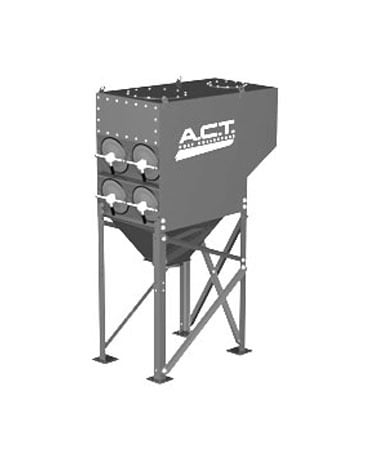
A cartridge dust collector paired with a downdraft table is typically the best fit for laser and plasma cutting because these processes generate fine metal fumes and, in plasma cutting, hot sparks and slag. The system needs high-efficiency cartridge filters to capture submicron particulate, spark arrestance to protect the filters and ductwork, and enough airflow to pull fumes down and away from the operator. Sizing depends on the number of tables, plate thickness, material type, and cutting speed. Aluminum and other combustible metals may also require added protection such as explosion venting or isolation. Match the collector to your specific metals and production volume for reliable, long-term performance.
How does a downdraft table capture fumes during laser and plasma cutting?
A downdraft table pulls fumes and smoke through perforated or slotted plate sections beneath the workpiece and routes it through ductwork to a dust collector. As the torch cuts, rising fumes are drawn downward before it reaches the operator's breathing zone, rather than escaping into the shop air. The collector's cartridge filters then remove particulates from the airstream before clean air is exhausted or recirculated. Zoned or segmented tables allow airflow to concentrate only where cutting is active, improving capture efficiency and reducing energy use. This source capture approach keeps fume out of the general workspace and off nearby equipment.
Is laser and plasma cutting fumes hazardous, and what safety standards apply?
Yes. Laser and plasma cutting fumes contain fine metal particulates that can include manganese, chromium, nickel, and zinc oxide depending on the base metal, and exposure falls under OSHA's general industry standards for welding and metal fumes. Cutting stainless steel raises hexavalent chromium concerns, governed by 29 CFR 1910.1026, which sets strict exposure limits. Cutting aluminum or other combustible metals introduces additional fire and explosion risk addressed under NFPA 484. A properly sized collection system with adequate capture velocity, filtration, and where needed spark arrestance and explosion protection helps keep exposure levels and fire risk within safe limits.
What is air-to-cloth ratio, and why is it important for laser dust collection?
Air-to-cloth ratio measures how much air passes through a dust collector's filter media. It's one of the most important factors affecting filtration efficiency, filter life, and system performance. If too much air moves through too little filter media, filters load more quickly and require more frequent cleaning or replacement. A properly engineered air-to-cloth ratio allows the dust collector to maintain consistent airflow while extending filter life and reducing maintenance. Selecting the correct ratio helps maximize the performance of laser and plasma dust collection systems.
How often do filters need replacing in a laser or plasma cutting dust collector?
Filter life depends on cutting volume, material type, and duty cycle, but most cartridge filters in these applications last 12 to 24 months under normal use. Differential pressure monitoring is the most reliable way to track filter condition. As particulate loads the cartridges, pressure drop across the filters rises, and a pulse cleaning cycle dislodges dust to extend filter life. Cutting galvanized or coated metals tends to shorten filter life due to heavier particulate loads and zinc oxide buildup. Tracking pressure trends over time, rather than relying on a fixed replacement schedule, gives a far more accurate picture of when filters actually need changing.
Should I use an integrated laser dust collector or a centralized dust collection system?
The right choice depends on the number of cutting machines, your facility layout, and future production plans.
|
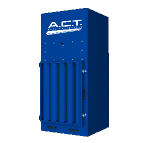
Integrated Dust Collector
|
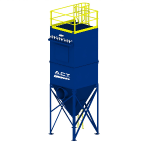
Centralized Dust Collection System
|
|
Dedicated to a single laser or plasma table
|
Serves multiple cutting systems
|
|
Compact footprint
|
Supports facility-wide expansion
|
|
Simple installation
|
Centralized maintenance
|
|
Independent operation
|
Ideal for multiple machines or larger operations
|
Integrated dust collectors are often the best choice for standalone cutting systems, while centralized systems provide greater flexibility for facilities operating multiple laser or plasma cutting tables. Evaluating your workflow and production goals helps determine which approach offers the greatest long-term value.



.svg)



















%20Collectors%20Image.png?width=143&height=143&name=ADC%20(Ambient)%20Collectors%20Image.png)


.webp?width=1512&height=2016&name=Auer%20Precision%20(1).webp)
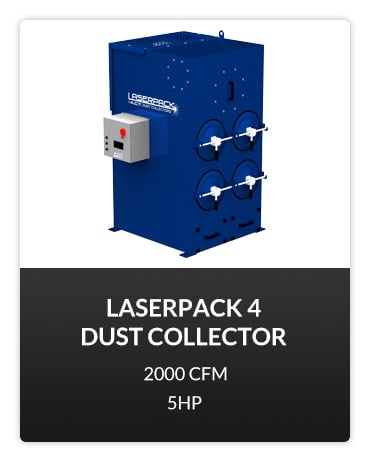
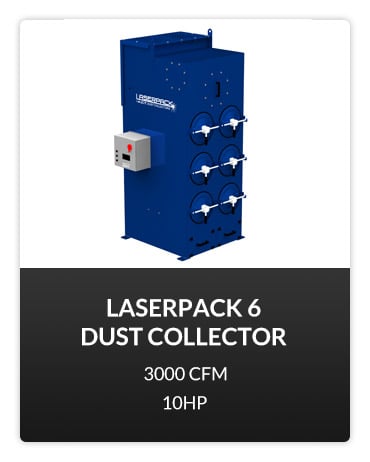
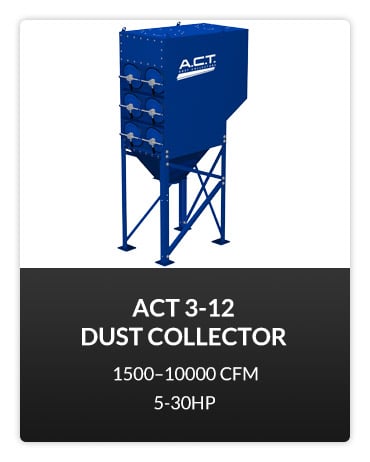



.png?width=240&height=91&name=ACT%20Dust%20Collectors%20Logo%20Solid%20White%202020%20(1).png "ACT Dust Collectors Logo Solid White 2020-2")
.png?width=148&height=149&name=usa-manufactured-dust-collectors%20(1).png "United States Flag")