



.svg)


















%20Collectors%20Image.png?width=143&height=143&name=ADC%20(Ambient)%20Collectors%20Image.png)


-2.jpg)
A power transformer manufacturer needed a dust collection system to support a new in-house sandblasting operation. The company previously outsourced sandblasting, which increased costs and extended production turnaround times.
A.C.T. Dust Collectors designed a high-capacity dust collection system that allowed the manufacturer to bring the blasting process into its facility while working within tight space constraints.
Project Snapshot
Industry: Power transformer manufacturing
Application: Sandblasting dust collection
Location: Minnesota
Challenge: Tight installation space and outsourced blasting costs
Dust Type: Sandblasting dust and abrasive particulate
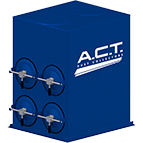
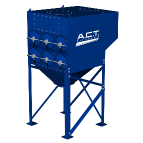
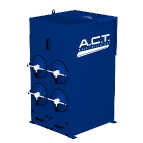
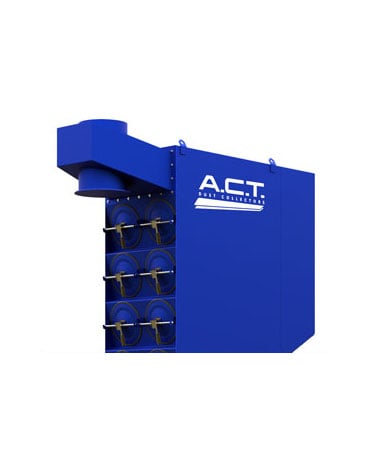
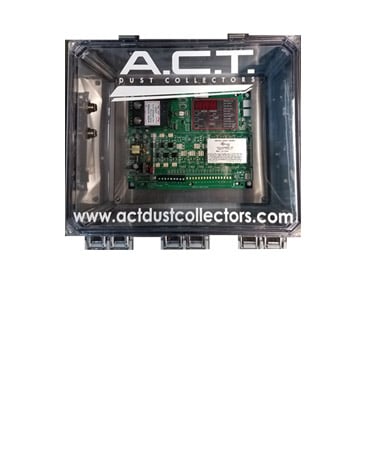
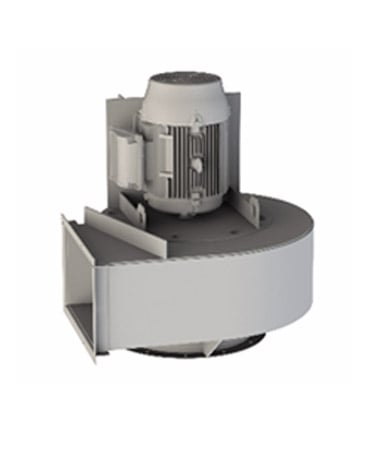
System Installed: ACT 4-64 dust collector with 75 HP fan
Outcome: Improved production efficiency and reduced turnaround time
The Challenge: Bringing Sandblasting In-House
The manufacturer specialized in redesigning and remanufacturing large power transformers. To improve efficiency, the company decided to move its sandblasting process in-house instead of relying on outside vendors.
Sandblasting is a surface preparation process that uses abrasive media propelled at high speed to remove coatings, rust, or contaminants from metal surfaces. This process generates large volumes of airborne dust and particulate that require effective filtration.
In this operation:
- Outsourced sandblasting increased operating costs
- Turnaround times were longer than desired
- A large blast booth needed high-capacity dust collection
- Available installation space was extremely limited
The customer needed a system that could maintain airflow performance while fitting into a compact area near the blast booth.
The Solution: High-Capacity Dust Collection System for a Compact Space
After evaluating the application, A.C.T. Dust Collectors recommended a system designed specifically for large-scale blasting operations.
The system included:
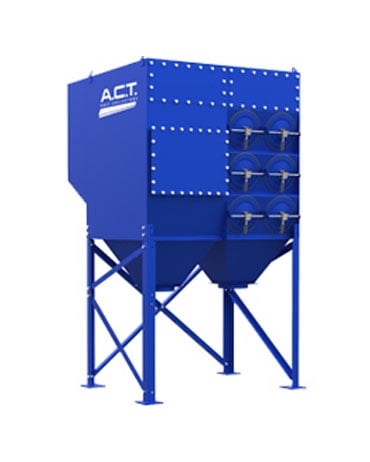
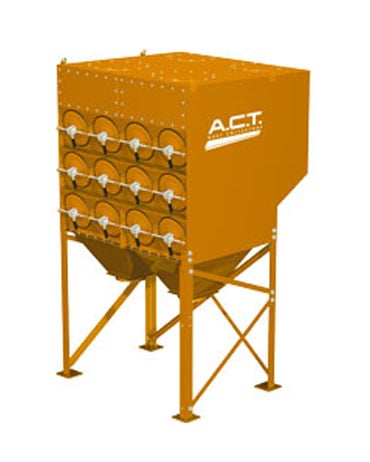
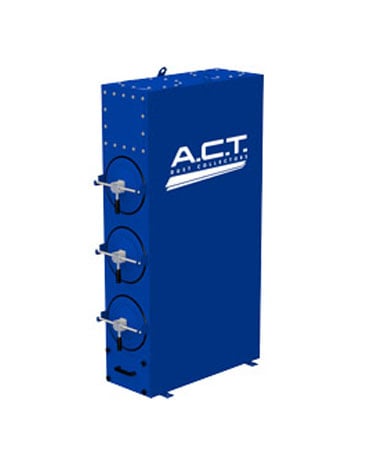
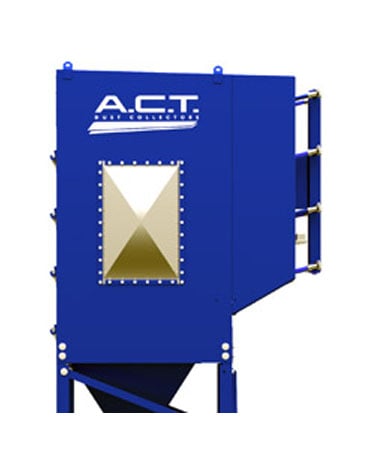
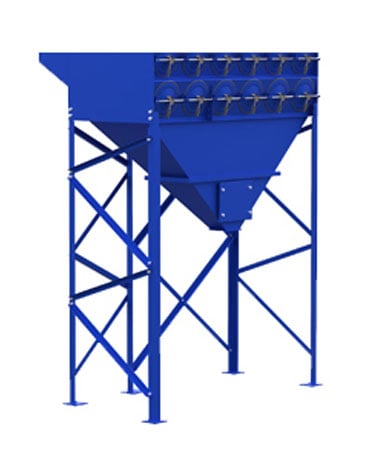
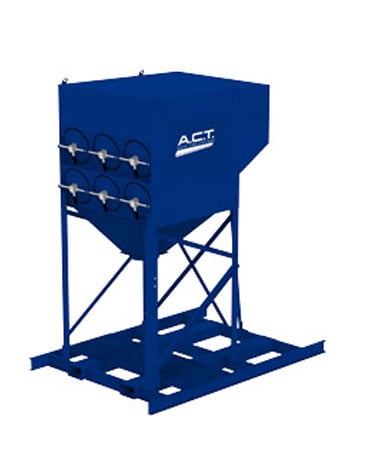
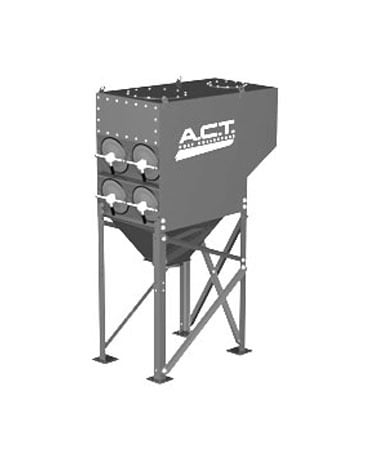
- ACT 4-64 dust collector
- Twin City Fan 75 HP BCS365 fan
- Approximately 30,000 CFM airflow capacity
- Integration with a 30' x 20' x 56' blast booth
The system was selected for its:
- High airflow capacity for blasting applications
- Ability to effectively capture abrasive particulate
- Compact design engineered for limited installation space
- Reliable operation in continuous industrial environments
A.C.T. Dust Collectors engineered the system layout to fit within a narrow aisleway adjacent to the blast booth without compromising performance.
Installation & Performance
The dust collection system was installed alongside the new blast booth and integrated into the in-house sandblasting process.
Outcomes:
- Reduced dependence on outsourced sandblasting
- Faster turnaround times for customer projects
- Improved control over blasting operations
- Effective dust capture within the blast booth
The customer reported strong satisfaction with both the system performance and the ability to operate the blasting process internally.
Dust Collection for Sandblasting Applications
Sandblasting operations require dust collection systems that can:
- Handle large volumes of abrasive particulate
- Maintain strong airflow throughout the blast booth
- Support continuous industrial operation
- Fit within existing facility layouts and space constraints
High-capacity dust collectors are commonly used in blasting applications because they provide the airflow and filtration needed to maintain visibility and air quality during operation.
Proper system design helps improve productivity while reducing dust accumulation throughout the facility.
Work with A.C.T. Dust Collectors
If your facility needs dust collection for sandblasting or abrasive blasting applications, A.C.T. Dust Collectors can design a system unique to your operation. Talk to our team to find the right solution for your facility.
Frequently Asked Questions
What is a sandblasting dust collection system?
A sandblasting dust collection system is designed to capture and filter airborne dust and abrasive particulate generated during blasting operations. These systems help maintain visibility, improve air quality, and support safer working conditions in industrial environments.
Why is dust collection important in sandblasting operations?
Dust collection is important in sandblasting operations because blasting processes generate large volumes of airborne abrasive particulate. Without proper filtration, dust can reduce visibility, affect air quality, and accumulate throughout the facility.
Effective dust collection helps maintain cleaner air, improve operator safety, and support more efficient blasting performance.
What size dust collector is needed for a blast booth?
The size of dust collector needed for a blast booth depends on factors such as booth dimensions, airflow requirements, and the volume of dust generated during blasting. Larger blast booths typically require high-capacity systems capable of moving large amounts of air continuously.
Proper sizing helps maintain visibility, improve dust capture, and ensure consistent system performance.
Why would a company bring sandblasting operations in-house?
Bringing sandblasting operations in-house can help reduce outsourcing costs, shorten production timelines, and improve process control. Facilities can complete surface preparation internally instead of relying on outside vendors. In-house blasting operations also allow manufacturers to improve scheduling flexibility and overall production efficiency.
How do you design a dust collection system for limited installation space?
Designing a dust collection system for limited installation space involves evaluating facility layout, airflow requirements, and available mounting locations. Engineers may use compact system designs or custom layouts to fit equipment into narrow or constrained areas.
Proper planning helps maintain effective dust collection performance without disrupting facility operations.

.png?width=240&height=91&name=ACT%20Dust%20Collectors%20Logo%20Solid%20White%202020%20(1).png "ACT Dust Collectors Logo Solid White 2020-2")
.png?width=148&height=149&name=usa-manufactured-dust-collectors%20(1).png "United States Flag")