



.svg)



















%20Collectors%20Image.png?width=143&height=143&name=ADC%20(Ambient)%20Collectors%20Image.png)


Shortcuts are tempting. When time is short and budgets are tight, the fastest available option can feel like the most responsible one. That is true in many industries, but it can become costly in demanding manufacturing environments where the wrong dust collection choice starts affecting more than one part of the operation.
Add information overload to the mix, competing product specs, vendor claims, and pressure from multiple directions, and it is easy to see how facilities end up with dust collection systems that were never fully matched to the job. The system runs, procurement boxes are checked, and the problems start showing up later through visible dust, filter wear, airflow loss, housekeeping demands, or safety concerns.
In this post, we will look at why quick-fix dust collection systems often fail in industrial settings such as grinding, blasting, welding, cutting, sanding, and bulk material handling, and what to consider when choosing a system built for real production conditions.
The Hidden Cost of "Quick Fix" Dust Collection Systems
The initial price of a lower-cost collector can look like a win, especially when budgets are stretched or a process needs to be up and running quickly. The issue is that the purchase price is only one part of what a dust collection system actually costs to own and operate. Here is where the hidden costs typically show up:
- Airborne dust accumulation: When a system fails to control airborne dust at the source, that dust settles on floors, beams, equipment, control panels, and finished product. The facility ends up relying on extra cleaning systems and housekeeping to manage a problem the collector should have handled in the first place.
- Accelerated wear on filters and equipment: Filters clog ahead of schedule. Fans run harder against rising resistance. Maintenance teams spend their time on reactive work rather than planned upkeep, and replacement parts come sooner than anyone budgeted for.
- Gradual performance loss: In some cases, the system keeps running without anyone realizing how much performance has dropped, until visible dust around production equipment or worker complaints make it obvious.
- Combustible dust exposure: Facilities that generate combustible dust take on additional risk when fine particles escape capture and accumulate on surfaces throughout the facility. OSHA notes that combustible dust can create explosion hazards when suspended in air under the right conditions. Not every facility carries the same risk level, but understanding your dust is part of making the right system choice.
If your team is comparing options and wants to understand the full cost picture, A.C.T.'s breakdown of industrial dust collector cost covers what actually drives long-term spend.
What "Quick Fix" Really Means in Industrial Dust Collection
A quick fix is not always a bad product. In many cases, it is simply the wrong product for the application. That difference matters because industrial dust collection depends on the dust type, airflow demand, filter performance, system layout, and how the collector will run during normal production.
Here are the most common quick-fix patterns facilities run into:
- Off-the-shelf collectors used in the wrong application: A general-purpose collector may come with a listed airflow rating, but that number does not tell the full story. It may not account for your duct layout, hood placement, dust volume, particle behavior, or how the system performs once filters begin to load. A collector that looks suitable on paper can still fall short on a busy production floor.
- Undersized industrial dust collectors: A smaller system may seem to work when filters are new or production demand is light. As dust load increases, differential pressure can rise and airflow can drop. Once that happens, the collector may struggle to capture dust at the source. Adding capacity later can cost more than choosing the right system from the start would have.
- Mismatched filter media: Filter media selection should be based on the specific characteristics of the dust and the operating conditions within the system. Abrasive dust can wear through lightweight media faster than expected. Moisture-absorbing dust can cling to filter surfaces and cause blinding if the media is not designed to release it properly. High-temperature processes also need media rated for the heat. When the filter does not match the dust type and operating conditions, the system can lose airflow, require more frequent changeouts, and allow fine particles to pass through material that was never suited for the job.
- No airflow or dust behavior analysis: Proper system selection starts with understanding how much air needs to move, where dust capture needs to happen, what the dust load looks like at peak production, and how the cleaning cycle will keep up over time. When these questions are skipped, the system is sized around assumptions rather than actual facility conditions. The gaps usually show up later, during production, when fixing them is more disruptive and more expensive.
Why Quick-Fix Systems Fail in Industrial Conditions
Industrial environments put steady, real-world pressure on dust collection equipment every single day. The system has to capture dust, maintain airflow, keep filters clean, discharge collected dust, and do all of that through full production shifts. When it is not designed around those conditions, the weak points become apparent fast.
Inconsistent Airflow and Poor Dust Capture
A collector can only remove dust effectively when enough air moves through capture points at the right velocity. If the fan is undersized, ductwork is poorly designed, or hoods are placed incorrectly, dust escapes before it reaches the system. The air-to-cloth ratio matters here too. When too much air is pushed through too little filter media, filters load quickly, differential pressure rises, and airflow drops.
The frustrating part for plant and maintenance teams is that the collector may look like it is working. The fan runs. The system pulses. But dust keeps appearing around the process, which is often a signal that the system was never properly matched to the application in the first place.
Filter Media Breakdown and Premature Failure
A bag filter that performs well in one application may not hold up the same way in another. Fine dust, abrasive material, moisture, heat, and heavy loading all affect how filters behave once the system is running through full production shifts.
When the media is not suited to the dust type, filters can clog sooner than expected. Filter life becomes shorter, changeouts become more frequent, and air filtration performance can drop before the planned replacement interval.
In some facilities, the issue is also the amount of filter area available. If the collector does not have enough media area for the dust load, the filters carry more pressure than they should. Differential pressure rises faster, cleaning cycles become less effective, and the system gradually delivers weaker results.
Ineffective Cleaning Systems
Pulse-jet cleaning systems are meant to release dust from the filter surface so airflow can stay stable. When the cleaning system cannot keep up with the dust load, the filters become overloaded and performance starts to fall.
This can happen when the pulse system is too weak, poorly timed, undersupplied with compressed air, or not matched to the collector design. If collected dust does not release cleanly, it can settle back onto the media and cause blinding. Over time, the collector uses more effort to deliver less airflow and weaker dust capture.
Increased Combustible Dust Risk
In facilities that process metal, wood, grain, plastics, food ingredients, or chemicals, dust collection is part of a broader safety picture. Fine particles that escape capture can move beyond the immediate work area and settle on overhead structures, ledges, and equipment surfaces. If those particles become suspended in air near an ignition source, the facility’s risk profile can change.
A quick-fix system that captures dust inconsistently can create maintenance problems and make a difficult safety situation harder to control.
What Properly Designed Industrial Dust Collectors Do Differently
Here are the key things well-designed industrial dust collectors do differently from cheap fixes:
- Application analysis comes before equipment selection: Dust type, particle size, loading rate, temperature, moisture, hood placement, duct layout, and disposal requirements all factor into system design before any equipment is specified. Skipping that step is what turns a reasonable budget decision into an operational problem.
- Filter media is matched to the specific dust being collected: Dust collectors designed around the real application use filter media rated for the dust type, particle size, and operating conditions they will face. That delivers more stable airflow, longer filter life, and fewer unplanned changeouts over the life of the system.
- Sizing accounts for peak production demand: Properly specified systems are built around what the process demands at full output, so they can maintain capture velocity and stable differential pressure through a full shift without struggling under load.
- Airflow is balanced so the system runs energy efficiently: When a system is configured correctly for the application, it moves the right volume of air through the right capture points without overloading filters or fans. That supports energy efficient operation and reduces wear across the whole system over time.
- Cleaning cycles are matched to the dust load and filter type: On well-designed systems, the pulse cycle is calibrated so filter surfaces stay clear and airflow stays stable throughout the production day without requiring manual intervention to maintain performance.
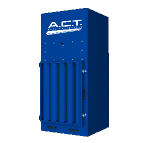
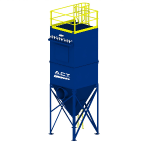
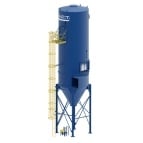
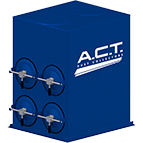
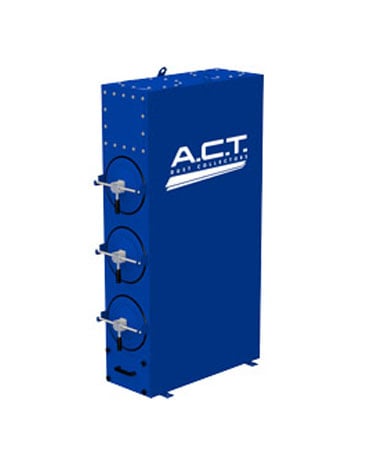
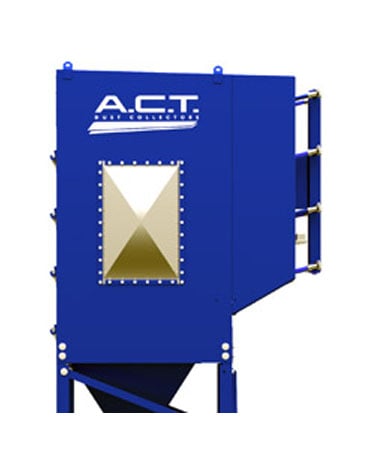
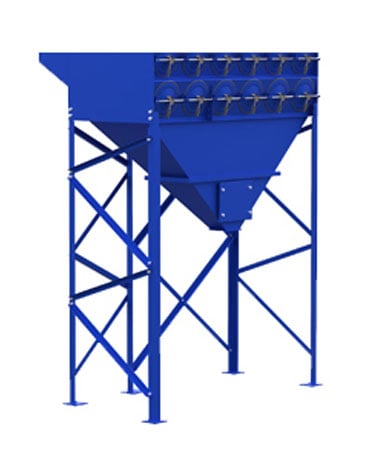
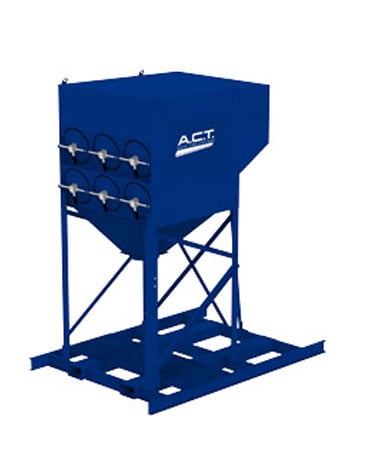
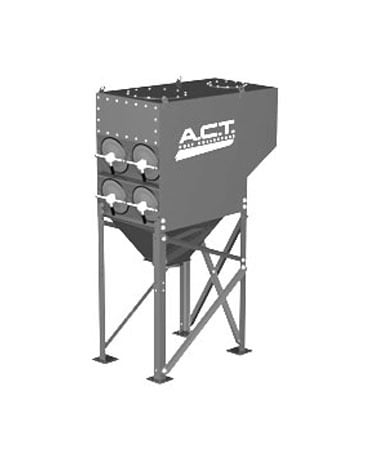
A.C.T. Dust Collectors offers a wide range of dust collection products across cartridge, baghouse, booth, and bin vent configurations, along with application-specific systems for different industries and processes. You can see how that carries across real environments on our applications and industries pages.
When a Baghouse or Cartridge System is the Right Choice
Whether to use a baghouse dust system or a cartridge dust collector is one of the more common questions that comes up during system selection, and the honest answer is that neither is the automatic right choice.
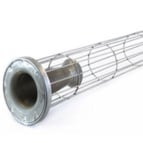
Baghouse systems tend to make sense for heavier dust loading, larger particulates, and applications where fabric bags can deliver long service life under demanding conditions. They are a common fit for heavy metalworking, foundry environments, and bulk material handling.
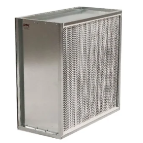
Cartridge systems are generally better suited for finer dust, more compact installations, and processes like welding, grinding, laser cutting, or plasma cutting, where pleated filters provide a large amount of media in a smaller footprint. In those settings, cartridge dust collectors are often preferred because they handle fine particulate well without requiring the floor space of a larger system.
Where one-size-fits-all thinking gets facilities into trouble is in assuming that compact automatically means better, or that heavy-duty automatically means more capable. Different collectors are ideal for different conditions, which is why dust type, airflow demand, available space, and maintenance access should guide the final choice. A.C.T.'s guide on baghouse vs. cartridge dust collectors walks through the differences in more detail if you want to compare before making a decision.
How to Evaluate Your Current Dust Collection System
Dust collection problems often develop gradually. A system that performed well at installation may start to fall behind as production volumes increase, dust types change, or maintenance gets deferred. By the time the issue is obvious, the system may have been underperforming for months.
Across manufacturing facilities in the U.S., the same questions apply. Is the system still capturing dust at the source? Are filters lasting as long as expected? Are workers noticing visible dust or increased irritation? Is housekeeping demand going up? Are production teams starting to work around the collector rather than with it?
This checklist is a useful starting point:
- Is visible dust escaping from hoods, enclosures, transfer points, or production equipment?
- Are filters clogging faster than they used to?
- Is the differential pressure rising shortly after filter changeouts?
- Are maintenance teams spending more time cleaning around the collector than before?
- Is dust settling on floors, beams, control panels, or nearby equipment?
- Has production volume increased since the system was originally installed?
- Has the dust type changed because of new materials or process changes?
- Is the system sized for the current airflow requirement?
- Does the cleaning cycle keep filters stable during normal operation?
- If combustible dust may be present, has a qualified review of the dust hazard been completed?
If several of these raise real concerns, the problem is likely not a single component or a missed maintenance task. It may be that the system as a whole needs to be looked at against what the facility actually demands today.
For a more detailed maintenance review, A.C.T.’s dust collector inspection checklist walks through key areas to check on your system.
Why Long-Term Performance Matters More Than Quick Fixes
Quick-fix dust collection fails because industrial environments demand steady performance over time. A system has to capture dust at the source, maintain airflow, clean filters effectively, manage collected dust, and support safer working conditions through real production cycles.
When a system is chosen based on price or availability alone, the hidden costs often show up later through maintenance, housekeeping, filter changeouts, worker concerns, and inconsistent dust capture.
A system that was right for your facility two years ago may not be right for it today. If production has changed, dust types have shifted, or performance has declined over time, it is worth taking a closer look before the problems get harder to manage. Reach out to our team to talk through your application and find the right fit for your facility.
FAQs About Quick-Fix Dust Collection Systems
Why do low-cost dust collection systems fail in industrial applications?
Low-cost dust collection systems often fail because they are not matched to the actual dust load, airflow requirement, filter type, or operating conditions of the facility. They may work at first, but performance can drop once filters begin loading and production demand increases.
How do I know if my dust collector is too small?
Your dust collector may be too small if visible dust escapes from hoods or production equipment, filters clog faster than expected, differential pressure rises quickly, or the cleaning cycle cannot keep up with the dust load. These signs often mean the system is not maintaining enough airflow for the application.
Are cartridge dust collectors better than baghouse systems?
Cartridge dust collectors are not automatically better than baghouse systems. Cartridge collectors are often a good fit for fine dust and compact spaces, while baghouse systems may be better for heavier dust loading or larger particulates. The right choice depends on dust type, loading rate, temperature, available space, and maintenance needs.
Can poor dust collection increase combustible dust concerns?
Yes. Poor dust collection can allow fine combustible dust to escape, settle on surfaces, and add to the facility’s overall risk profile. Dust collection should be supported by proper housekeeping, dust hazard review, ignition control, and applicable OSHA or NFPA guidance.
.png?width=240&height=91&name=ACT%20Dust%20Collectors%20Logo%20Solid%20White%202020%20(1).png "ACT Dust Collectors Logo Solid White 2020-2")
.png?width=148&height=149&name=usa-manufactured-dust-collectors%20(1).png "United States Flag")