



.svg)



















%20Collectors%20Image.png?width=143&height=143&name=ADC%20(Ambient)%20Collectors%20Image.png)




Dust doesn't look like a compliance risk. It looks like housekeeping. But in manufacturing, metalworking, woodworking, and food processing facilities, airborne and accumulated dust is one of the hazards OSHA scrutinizes most closely — and one of the most expensive to get wrong. During a single inspection, OSHA may identify multiple dust-related violations, including issues with combustible dust, respirable silica, housekeeping, and ventilation.
This post breaks down why OSHA treats dust as a priority hazard, what the current penalty structure actually looks like, which conditions most often trigger a citation, and what a facility can do to reduce that risk.
Why OSHA Pays Close Attention to Industrial Dust
Dust hazards vary depending on the material being handled and the manufacturing process that generates the dust. Some dusts become combustible when suspended in the air, while others create long-term respiratory hazards through repeated worker exposure.
OSHA focuses on dust because these hazards can lead to fires, explosions, chronic illness, and preventable workplace injuries.
For example:
- Combustible dust can ignite when enough particles accumulate and an ignition source is present.
- Respirable crystalline silica exposure has been linked to silicosis, lung cancer, and other irreversible respiratory diseases.
- Metal dust, wood dust, and chemical dust can create both fire hazards and employee health concerns if not properly captured.
OSHA enforces these hazards through standards such as the Respirable Crystalline Silica Standard, the General Duty Clause, and targeted inspection initiatives for combustible dust.
Key takeaway: Dust isn't simply a cleanliness issue. OSHA views effective dust control as an essential part of workplace safety.
The Current OSHA Penalty Structure
As of the most recent adjustment effective January 15, 2026, the maximum civil penalties are:
- Serious or Other-Than-Serious violations: up to $16,550 per violation
- Failure to Abate (not correcting a previously cited hazard): up to $16,550 per day the hazard remains uncorrected
- Willful or Repeated violations: up to $165,514 per violation
Worth noting for anyone tracking this year over year: OSHA did not apply its usual annual inflation increase in 2026, since the Bureau of Labor Statistics data the adjustment depends on wasn't released on schedule. That means 2026 amounts carry over from 2025 rather than climbing further — but the ceiling is still the highest it has ever been, more than double what it was before the 2016 catch-up adjustment.
It's also worth remembering that these are maximums per violation, not per inspection. A single inspection that turns up ten separate serious violations doesn't cap out at $16,550 — it can climb well past $150,000 before willful or repeat findings are even factored in.
What Pushes a Penalty Toward the Maximum
OSHA doesn't apply a flat fine across every violation of the same type. Several factors shift the actual number up or down:
Gravity of the violation. Inspectors weigh how severe the hazard is and how many workers are exposed to it. A dust accumulation issue in an isolated area is treated differently than the same condition near an ignition source in a heavily trafficked part of the plant.
Size of the business. Smaller employers can qualify for penalty reductions, but those reductions shrink or disappear as facility size and violation severity increase.
Good faith efforts to comply. A facility that can show an active safety program, documented inspections, and a track record of addressing hazards before they're cited tends to fare better than one with no paper trail at all.
History of previous violations. A repeat finding, even years later, moves a citation into a much more expensive category and can push a fine toward the $165,000 ceiling.
Failure to provide respiratory protection. This shows up as its own aggravating factor separate from the underlying dust hazard, since it represents a direct gap in protecting workers from exposure that's already been identified as hazardous.
Dust Conditions that Most Often Trigger a Citation
Across inspections, a small set of recurring issues accounts for most dust-related citations:
Excessive combustible dust buildup on floors, rafters, ductwork, and equipment surfaces is the most common finding, largely because it accumulates gradually and can go unnoticed between formal inspections. Inadequate or poorly maintained dust collection and ventilation systems are a close second. A system that was properly sized when installed can fall out of compliance over time if airflow, filtration, or capture points aren't reassessed as production changes. Inconsistent housekeeping practices, a lack of explosion prevention or isolation measures between process areas, and gaps in respiratory protection round out the list.
Several of these are structural, not procedural. They trace back to a collection system that no longer matches the facility's actual dust load or layout. We've written more about how that mismatch shows up operationally, beyond just compliance risk, in our post on production downtime costs from dust, and on the mechanics of how dust collector explosions happen and how to prevent them.
Practical Steps to Reduce Dust-Related OSHA Risks
Reducing compliance risks starts long before an OSHA inspection.
Facilities should routinely:
- Conduct Dust Hazard Analyses when applicable
- Inspect dust collection equipment regularly
- Replace filters according to maintenance schedules
- Maintain consistent housekeeping practices
- Train employees on dust hazards and safe work procedures
- Verify ventilation performance
- Review OSHA and NFPA requirements as operations evolve
Taking a proactive approach helps identify issues before they become safety hazards or regulatory violations.
How A.C.T. Dust Collectors Can Help
Avoiding these citations isn't about scrambling before an inspection. It's about a handful of ongoing practices, several of which are easier to sustain when the underlying dust collection system is doing its share of the work.
Maintaining OSHA compliance requires more than purchasing a dust collector. It requires selecting equipment that's properly matched to your application and keeping it operating efficiently over time.
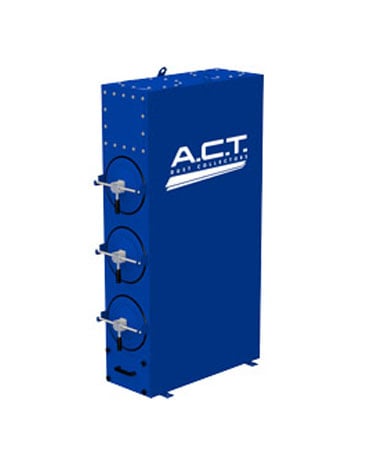
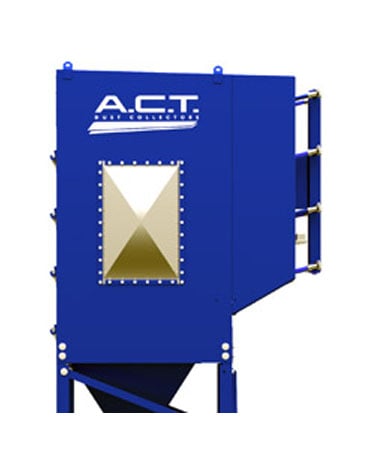
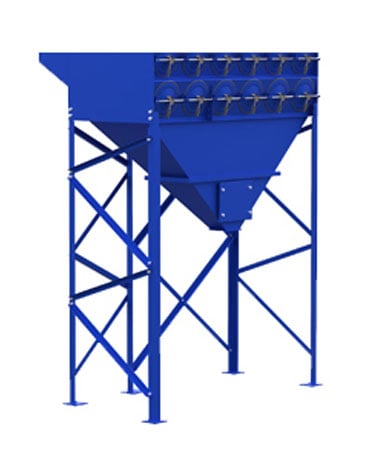
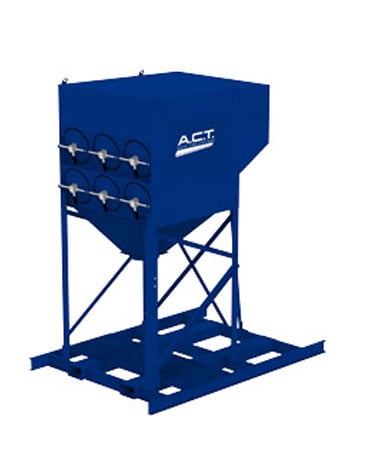
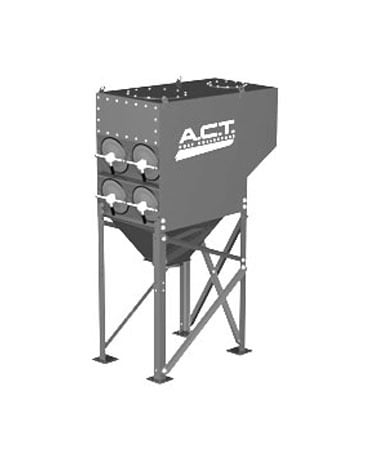
A.C.T. Dust Collectors manufactures industrial dust collection systems for applications including welding, grinding, laser cutting, plasma cutting, woodworking, metal fabrication, and other industrial processes. Our team works with manufacturers to understand their facility, airflow requirements, and production goals before recommending equipment.
Whether you're replacing an aging system, planning for facility expansion, or improving workplace air quality, we can help you identify a dust collection solution that supports safer operations and long-term performance.
Talk to our team about your application or request a quote to find the right dust collection system for your facility.
Frequently Asked question
What counts as a "serious" OSHA violation for dust hazards?
A serious OSHA violation is one where a dust-related hazard creates a substantial probability of death or serious physical harm, and the employer knew or should have known about it. Serious and other-than-serious violations both carry a maximum penalty of $16,550 as of 2026, regardless of whether an incident actually occurred.
What is a Dust Hazard Analysis?
A Dust Hazard Analysis (DHA) is a systematic evaluation that identifies combustible dust hazards within a facility and recommends methods for reducing explosion and fire risks. Many NFPA standards require DHAs for facilities handling combustible dust.
Is a Dust Hazard Analysis (DHA) legally required?
A DHA is required under NFPA combustible dust standards for most facilities that generate or handle combustible particulates, and OSHA inspectors frequently ask for one during a dust-related inspection. Without a documented DHA, a facility has a harder time demonstrating the "good faith" compliance efforts that can reduce a proposed penalty.
Can a dust collection system reduce OSHA citation risk?
A properly sized and maintained dust collection system directly addresses several of the most commonly cited conditions, including excessive accumulation and inadequate ventilation. It doesn't replace a documented safety program, but it reduces how much a facility depends on manual housekeeping and PPE alone to stay compliant.
.png?width=240&height=91&name=ACT%20Dust%20Collectors%20Logo%20Solid%20White%202020%20(1).png "ACT Dust Collectors Logo Solid White 2020-2")
.png?width=148&height=149&name=usa-manufactured-dust-collectors%20(1).png "United States Flag")