



.svg)



















%20Collectors%20Image.png?width=143&height=143&name=ADC%20(Ambient)%20Collectors%20Image.png)

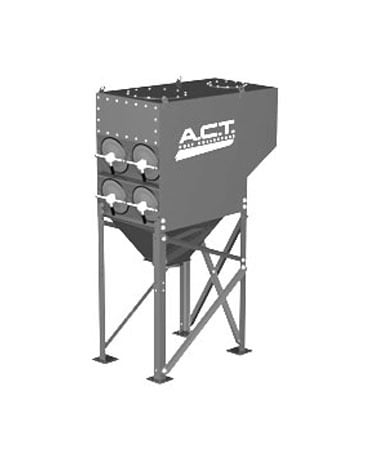
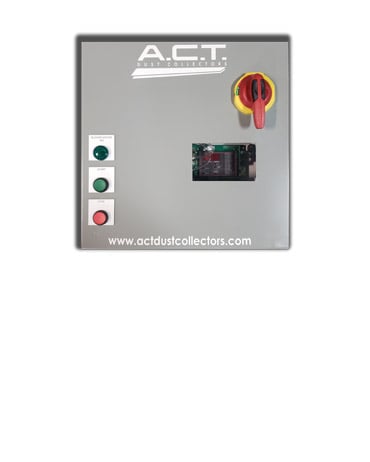
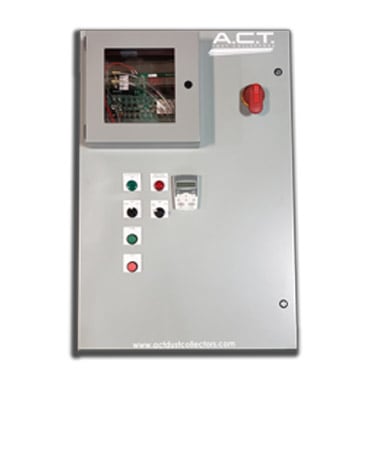
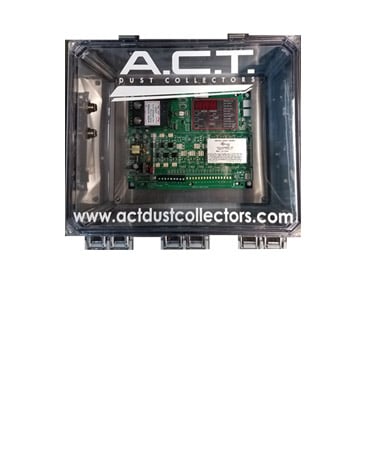

Regular dust collector inspections help identify filter problems, air leaks, dust buildup, and changes in system performance before they lead to larger maintenance issues. A.C.T. Dust Collectors recommends inspecting and maintaining industrial dust collection systems on a bi-weekly, monthly, semi-annual, and annual schedule based on the application and operating conditions.
Some facilities may require daily inspections, particularly when an air permit specifies checks such as hopper conditions or differential pressure readings. Maintenance requirements should always account for the facility's application, dust type, operating schedule, and applicable requirements.
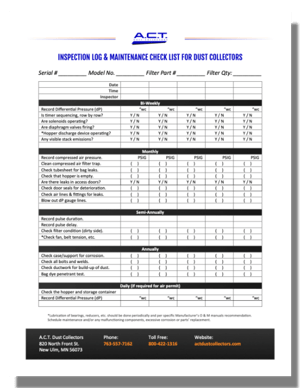
Use this dust collector inspection checklist to establish a regular maintenance schedule and track changes in system performance over time.
How Often Should a Dust Collector Be Inspected?
A.C.T. Dust Collectors recommends bi-weekly, monthly, semi-annual, and annual dust collector inspections, with different components checked at each interval. Some facilities may also require daily checks based on air permits, applications, or operating conditions. Following a documented schedule helps identify changes in system performance over time.
What Should You Inspect on a Dust Collector?
A dust collector inspection should cover the components and operating conditions that affect airflow, filtration, cleaning, and dust removal. Key inspection points include differential pressure, filter condition, compressed air pressure, pulse cleaning components, hopper discharge, access door seals, ductwork, and visible emissions.
Recording these conditions on a consistent schedule makes it easier to identify changes in filter performance or dust collection system operation.
Industrial Dust Collector Inspection and Maintenance Schedule
Bi-Weekly Dust Collector Inspection
Record differential pressure during each bi-weekly dust collector inspection. Tracking differential pressure over time can help identify increasing resistance across the filter media and indicate when filters require attention or replacement.
Filters are critical to dust collection system performance. Filter type, condition, cleaning cycles, and replacement schedules can all affect airflow and filtration.
To make sure your dust collector is operating smoothly, ask yourself the following questions:
- Is the timer sequencing row by row?
- Are the solenoids operating?
- Are the diaphragm valves firing?
- Is the hopper discharge device operating?
- Are there any visible stack emissions?
Changes in differential pressure, visible emissions, or pulse cleaning operation should be investigated before they develop into larger system performance problems.
Monthly Dust Collector Inspection
The monthly dust collector inspection covers several system components, including compressed air, seals, air lines, the hopper, and differential pressure gauge lines.
- Record compressed air pressure.
- Clean the compressed air filter trap.
- Check the tube sheet for bag leaks.
- Confirm the hopper is empty.
- Check access doors for leaks.
- Inspect door seals for deterioration.
- Check air lines and fittings for leaks.
- Blow out differential pressure gauge lines.
Monthly inspections focus on compressed air, leaks, seals, dust removal, and differential pressure monitoring. Recording findings consistently makes it easier to identify changes between inspections.
Semi-Annual Dust Collector Inspection
Every six months, record pulse duration and pulse delay and compare the readings with previous inspection data. Changes can indicate differences in cleaning system performance.
Inspect the filters for wear or loading. Filter replacement intervals vary by application and operating conditions, and systems running multiple shifts may require more frequent filter changes.
The blower should also be inspected for proper operation and lubricated when required.
Annual Dust Collector Inspection
Annual dust collector inspections should focus on general wear and structural condition. Inspect bolts, welds, support steel, and other components for signs of wear or corrosion. Ductwork should also be checked for dust buildup.
Some baghouse dust collectors may require a dye test to identify leaks that allow dust to pass through the system.
Why Is Differential Pressure Important During Dust Collector Inspections?
Differential pressure measures resistance to airflow across dust collector filters. As dust accumulates on the filter media, pressure drop can increase. Recording differential pressure consistently helps facility teams identify changes in filter condition and determine when cleaning, inspection, or filter replacement may be necessary.
A single reading provides limited context. Tracking readings over time provides a clearer picture of changes in dust collector performance.
How Regular Inspections Support Dust Collector Performance
Regular inspection and maintenance help an industrial dust collection system maintain consistent airflow, filtration, and dust removal. A documented maintenance schedule also makes it easier to identify changes before they result in unplanned downtime or more extensive repairs.
Filter condition is especially important. Appropriate filter media, regular cleaning, and timely filter replacement all contribute to dust collector performance. System design also plays a role. A lower air-to-cloth ratio can support longer filter life and lower energy consumption.
A.C.T. Dust Collectors recommends keeping an inspection log so readings and maintenance findings can be compared over time.
Download the Dust Collector Maintenance Checklist to keep inspection points, maintenance tasks, and system readings organized. Talk to our team if you have questions about maintaining your industrial dust collection system.

.png?width=240&height=91&name=ACT%20Dust%20Collectors%20Logo%20Solid%20White%202020%20(1).png "ACT Dust Collectors Logo Solid White 2020-2")
.png?width=148&height=149&name=usa-manufactured-dust-collectors%20(1).png "United States Flag")