



.svg)


















%20Collectors%20Image.png?width=143&height=143&name=ADC%20(Ambient)%20Collectors%20Image.png)
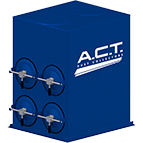
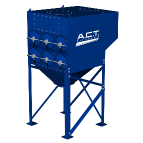
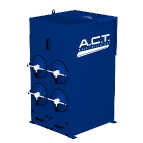

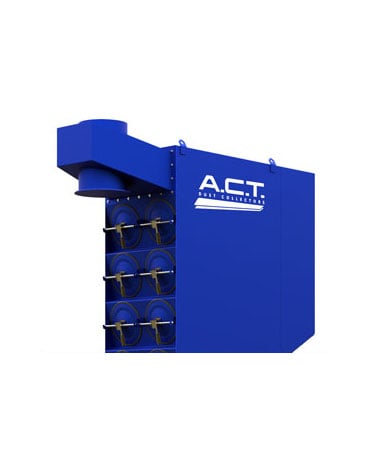


Most industrial businesses do not hesitate to invest in the things that keep production secure. They spend on industrial-grade machinery, durable components, reliable controls, and systems that support long-term reliability. They understand that cutting corners on core infrastructure usually becomes more expensive later.
Dust collection should be looked at through the same lens, but it often is not. Instead, the conversation tends to narrow too quickly around installation cost, maintenance cost, or whether a temporary workaround might be enough for now. That framing misses the bigger issue. In facilities that generate fine dust from processes such as woodworking, metalworking, grinding, cutting, or bulk material handling, the bigger financial risk is often not the cost of a dust collector, but the cost of continuing without one.
When airborne dust is not captured properly, the impact spreads far beyond cleanliness. It can affect worker exposure, equipment performance, maintenance demands, housekeeping labor, production reliability, and your ability to stay ahead of OSHA and combustible dust responsibilities. In other words, the real question is not how much an industrial dust collector costs. It is how expensive it becomes when a facility keeps operating without proper dust collection.
In this post, we will break down the real cost of not having an industrial dust collector system and why delaying the investment can create bigger problems across your facility.
What Happens When You Don’t Have Proper Dust Collection
Dust rarely stays where it is created. In welding, grinding, blasting, and other material handling environments, the particles generated at the process can become airborne first, then settle on floors, overhead surfaces, ledges, and machinery. OSHA’s ventilation requirements are built around this same principle: contaminants should be captured and exhausted in a way that prevents them from dispersing into workplace air. OSHA’s combustible dust guidance also reinforces that dust buildup across a facility can become a serious hazard, especially when fine particles are allowed to accumulate on surfaces and in hidden areas over time.
That is why dust collection is not just a housekeeping issue. Once dust escapes the process, it starts affecting visibility, air quality, cleaning demands, and the condition of nearby equipment in ways that are easy to underestimate at first.
At that stage, the issue is no longer limited to dust being present in the facility. It becomes a broader operational problem that can quietly affect how the plant runs day to day. Let us now take a look at the hidden costs that begin to build when those fine particles are allowed to circulate unchecked.
The Hidden Costs of Fine Dust in Your Facility
Fine dust rarely causes one obvious problem. More often, it creates a series of smaller issues across the facility that become expensive over time. Here is where fine dust starts creating problems:
It Stays Airborne Longer and Spreads Further
Fine particles are lighter and easier to disturb than heavier debris, which means they can stay suspended in the air for longer periods and move well beyond the point where they were created. Once that happens, dust stops being a localized issue and starts affecting surrounding work areas, nearby machinery, and surfaces across the plant.
It Increases Cleaning and Housekeeping Labor
When fine dust settles throughout the facility, cleaning stops being a routine task and becomes a recurring labor drain. Floors, support structures, equipment surfaces, and hard-to-reach areas all need more frequent attention. Over time, that means more labor hours spent managing residue instead of focusing on productive work.
It Can Interfere With Equipment and Process Quality
Fine dust can infiltrate controls, nearby equipment, and sensitive production areas. In some operations, that can contribute to cross-contamination, process inconsistency, or unnecessary wear on machinery that was never meant to operate in dusty conditions.
Temporary Cleanup Methods Rarely Solve the Real Problem
Fine dust is not a one-time mess that disappears after a sweep-up. It is a persistent airborne control issue that needs to be managed at the source. A properly engineered dust collection system is designed to remove particulates from the airstream during production, not after the fact once it has already spread.
A.C.T. has documented this in the field. In one transportation manufacturing case study, the facility was dealing with persistent smoke, haze, and fine dust in a production welding environment before installing source-connected collectors at robotic cells. After the upgrade, the plant reported cleaner air, clearer sightlines, and less nuisance residue on surrounding equipment.
Health and Safety Risks That Impact Your Workforce
Worker health is one of the clearest reasons dust control deserves serious attention. In manufacturing settings, airborne dust and aerosols are not always obvious to the naked eye, but they can still affect how people feel, breathe, and perform throughout the workday.
A few of the risks are worth calling out clearly:
- Fine dust is easier to inhale, which increases the chance of repeated exposure in active work areas.
- Short-term exposure can irritate the eyes, nose, throat, and breathing passages, especially in processes that generate fine particulates on a regular basis.
- Longer-term exposure may contribute to more serious health issues.
- Some dust hazards are not limited to health alone. Research in manufacturing environments has also shown that certain dusts can present both worker-exposure concerns and combustible dust risks at the same time.
That wider context matters. Manufacturing dust exposure can be linked to respiratory problems, skin and eye irritation, and in some cases more serious chronic conditions depending on the material involved. A recent study from Process Safety and Environmental Protection also highlights how dust generated during manufacturing can carry both exposure hazards and explosivity potential, which reinforces the need to treat dust control as both a workforce issue and a facility risk issue.
For plant leaders, this matters beyond compliance language. Poor air quality can make a facility feel harder to work in, contribute to more complaints from the floor, and create more strain in already demanding roles. Cleaner air supports comfort, visibility, and confidence in the work environment, and those benefits directly affect how consistently people can perform their jobs.
Proper dust collection is one of the most practical steps a facility can take to reduce airborne particulate exposure at the source rather than trying to manage the consequences later. If you want to understand how different systems are applied across real manufacturing environments, explore A.C.T.'s dust collection applications and industries served.
Compliance Risks and Regulatory Exposure
Dust collection also sits inside a broader compliance picture. OSHA does not require one universal dust collector model for every plant, but it does require employers to control hazardous exposures and address applicable ventilation, housekeeping, and combustible dust hazards.
For combustible dust, this becomes even more important. Facilities are expected to manage dust generation, prevent dangerous accumulation, and reduce the conditions that can lead to fires, flash fires, or explosions. On the NFPA side, NFPA 660 now serves as a consolidated combustible dust standard, giving facilities a more unified framework for evaluating and managing dust-related risk.
The practical point is this: compliance trouble usually costs more when it is reactive. Inspections, corrective actions, rushed retrofits, and production disruption are far more expensive than addressing dust control before those problems stack up. For a deeper look at how this standard fits into facility risk planning, see our updated guide to NFPA 660 compliance.
Equipment Damage and Increased Maintenance Costs
You may have the best plant equipment and supplies in place, but if dust control is overlooked, the cost shows up soon enough in equipment damage and added maintenance. Here is how dust starts affecting your facility:
- Dust gets into moving parts and electrical components: Fine particles can work their way into motors, bearings, control panels, and other sensitive areas that are not designed to handle constant dust exposure.
- Wear and overheating become more likely: As buildup increases, equipment may run less efficiently, generate more heat, or start showing signs of strain earlier than expected.
- Maintenance teams end up reacting more often: What should be routine upkeep can turn into repeated cleaning, inspections, and troubleshooting around dusty production zones.
- Small issues turn into larger repair costs: If dust-related wear is not caught early, it can lead to premature failure, unexpected repairs, and shorter service life for surrounding machinery.
If you are already seeing residue on nearby equipment, more frequent cleaning, or unexplained strain on components around dusty processes, that is usually not just a housekeeping complaint. It is a sign that dust is adding to your operating cost in the background.
Talk to our team about your application if you want help assessing whether your current setup is exposing equipment to avoidable dust load.
Downtime and Lost Productivity Add Up Quickly
Downtime is where dust problems become impossible to ignore.
When dust contributes to equipment issues, visibility problems, safety concerns, or emergency cleanup, production slows down. Sometimes it stops completely. Even short interruptions can throw off labor scheduling, downstream processes, and shipment timing.
For plant managers, the cost shows up in missed throughput, delayed jobs, disrupted staffing, and time spent reacting instead of producing. Consistent dust control helps protect the predictability that manufacturing schedules depend on.
Why a Shop Vac Isn’t a Replacement for Industrial Dust Collection
Your shop vac can be sometimes used for intermittent use, to pick up settled dust, debris, and small spills. It is useful for light-duty cleanup, but it is not designed to control dust in an active industrial process.
That is the key limitation. A shop vac reacts after dust has already escaped, while an industrial dust collection system is built to capture dust at or near the source before it spreads through the facility.
Here is where a shop vac falls short:
- It is built for cleanup, not source capture.
- It is not designed for continuous industrial dust loads.
- It cannot replace a full system of hoods, ducts, filters, fans, and collection components.
- It does not solve the air quality problem itself.
If your process creates recurring airborne dust or fine particulates during production, cleanup after the fact is not the same as control. That is where a cartridge dust collector becomes a better fit for many industrial applications.
When It’s Time to Invest in an Industrial Dust Collector
Now that you know why dust collection matters and why you cannot afford to operate without it, here are the warning signs that usually mean it is time to invest in a proper system now:
- Dust is visible in the air during normal production: If particles are regularly escaping into the workspace, your current setup is not controlling the problem at the source.
- Cleaning has become a constant task: When floors, ledges, equipment, and surrounding areas keep collecting dust, the labor cost starts adding up quickly.
- Filters load too fast or maintenance issues keep returning: Repeated servicing is often a sign that the system in place is no longer right for the application or dust volume.
- Air quality complaints are becoming more common: If employees keep noticing dust, haze, or poor breathing conditions, the issue is already affecting the work environment.
- Dust-related problems are interrupting productivity: Once cleaning stoppages, equipment strain, or repeated troubleshooting become part of the routine, the cost of waiting usually exceeds the cost of acting.
At that point, the real question is not whether an industrial dust collector is an expense. It is how much longer your facility can afford to keep absorbing the cost of not having the right one. If you are evaluating next steps, our dust collector FAQs and ready-to-ship systems are useful places to start.
The Bottom Line on Dust Collection Costs
Not having an industrial dust collector is often far more expensive than buying the right one. The damage shows up in lost productivity, rising maintenance, compliance pressure, health risks for your team, and the kind of operational issues that can hurt both your margins and your reputation.
A robust dust collection system is a practical safeguard for your people, your equipment, and your output. The right solution is the one that fits your dust, your process, and the way your plant actually runs. You can explore A.C.T.'s full range of dust collection systems to see how different configurations support different production demands or request a quote to discuss your specific needs.
FAQs about Industrial Dust Collection and Cost
How does fine dust affect worker safety?
Fine dust can stay airborne longer, travel farther, and be inhaled more easily than heavier debris. That makes it more likely to affect breathing conditions in the plant and contribute to ongoing exposure concerns if it is not captured properly.
Can a shop vac replace a dust collection system?
No. A shop vac is a cleanup tool, not a full industrial air control system. Industrial dust collection is designed to capture contaminants at or near the source and move them through dedicated ventilation and filtration components sized for ongoing production.
Is dust collection required for OSHA compliance?
OSHA does not prescribe one universal dust collector for every plant, but employers are required to control hazardous dust exposures and address applicable ventilation, housekeeping, and combustible dust risks. In practice, many facilities use dust collection as a core engineering control to meet those obligations.
When should a facility upgrade to an industrial dust collector?
A facility should review its setup when dust is visibly escaping into work areas, filters are loading too often, cleaning demands keep rising, equipment around the process needs repeated attention, or production is being affected by air quality and maintenance issues.
Take the Next Step Toward Better Dust Control
If dust is already affecting cleaning time, maintenance demands, uptime, or air quality in your facility, the cost of inaction may already be higher than it looks.
Talk to our team about your application and evaluate whether your current setup is truly protecting your people, equipment, and production schedule.
.png?width=240&height=91&name=ACT%20Dust%20Collectors%20Logo%20Solid%20White%202020%20(1).png "ACT Dust Collectors Logo Solid White 2020-2")
.png?width=148&height=149&name=usa-manufactured-dust-collectors%20(1).png "United States Flag")