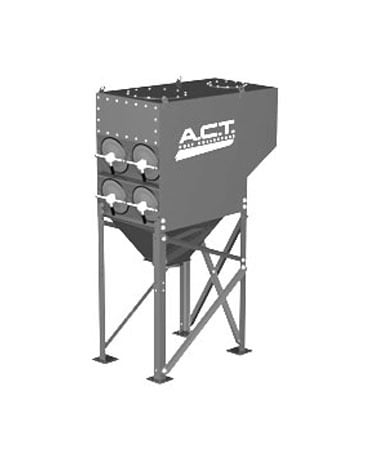
A bin vent dust collector is a compact filtration system that controls dust and vents displaced air as bulk material enters a bin, silo, hopper, or transfer point. As material fills an enclosed space, it displaces air that needs to escape. Without proper filtration, that air can carry dust particles into the surrounding facility.
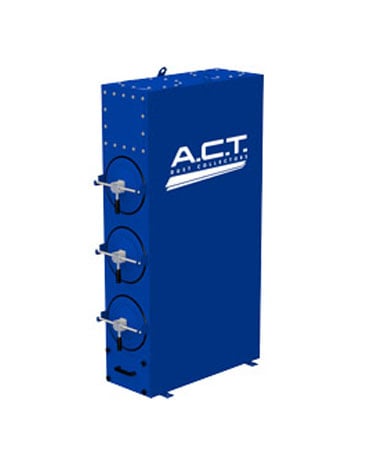
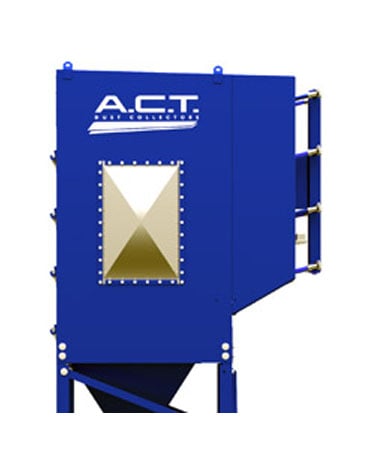
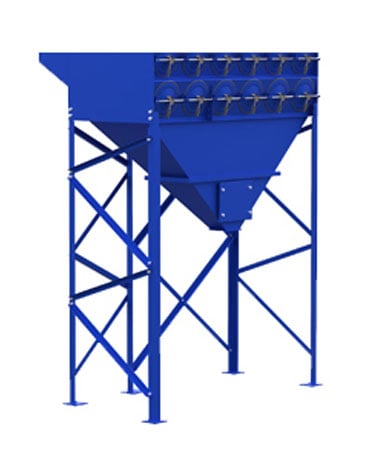
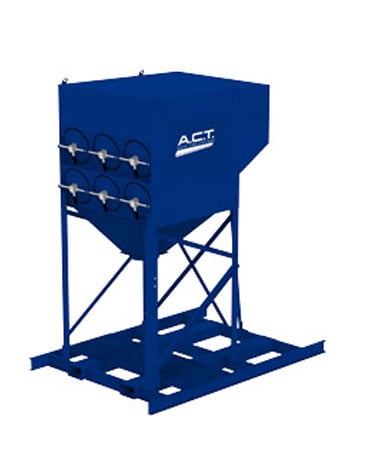
A.C.T. Dust Collectors' bin vent systems filter the displaced air before it leaves the vessel, helping contain dust at the point of generation. These systems are commonly used in feed and grain operations, bulk powder handling, and other processes where dry materials are loaded, transferred, or stored.
How Bin Vent Dust Collectors Work
As bulk material enters a bin or silo, the material displaces air inside the vessel. A bin vent dust collector provides a filtered path for that air to escape while capturing airborne dust particles before they enter the surrounding work environment.
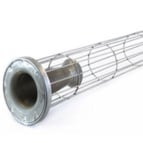
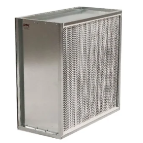
Air passes through cartridge or bag filter media, where dust is separated from the airstream and clean air is released. A pulse-jet cleaning system uses short bursts of compressed air to remove accumulated dust from the filters, allowing the collected material to fall back into the vessel. Automatic filter cleaning helps maintain consistent airflow and filtration performance during operation.
Bin Vent Cartridge vs. Bag Collectors
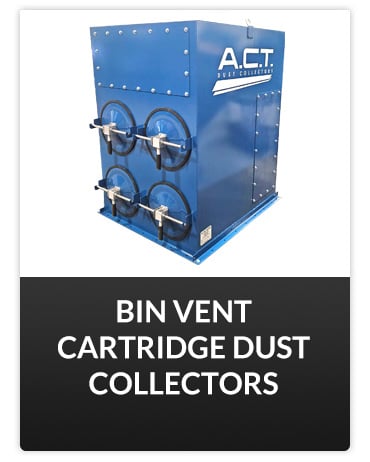
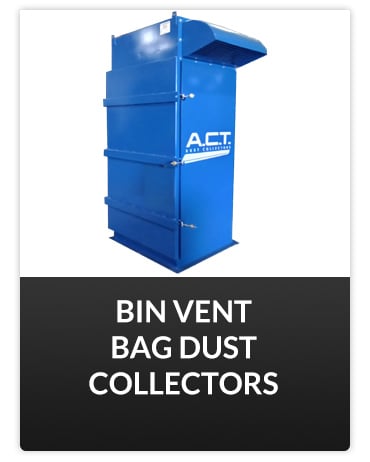
A.C.T. Dust Collectors offers both cartridge and bag bin vent collectors. Both control displaced air at the point of material transfer, but the appropriate filter configuration depends on the characteristics and volume of the dust being collected.
|
Factor
|
Cartridge Bin Vent
|
Bag Bin Vent
|
|
Filter type
|
Cartridge filters
|
Fabric filter bags
|
|
Dust characteristics
|
Fine particulate
|
Larger, heavier particulate
|
|
Dust loading
|
General bulk material handling
|
Heavier, continuous dust loading
|
|
Footprint
|
Compact
|
Application dependent
|
|
Common applications
|
Bins, silos and bulk powder handling
|
High-volume feed and grain operations
|
Cartridge bin vents are a compact option for fine dust and general bulk material handling, while bag-style bin vents are better suited to heavier dust loading and larger particulate. The right configuration depends on your material characteristics, dust volume, available space, and operating requirements.
Where Are Bin Vent Dust Collectors Used?
Bin vent dust collectors are used wherever dry bulk material enters an enclosed vessel and displaced air needs to be filtered. Common applications include feed and grain handling, bulk powder processing, silos, storage bins, hoppers, and material transfer points.
Because the collector can be mounted directly at or near the vessel, a bin vent can provide localized dust control without routing contaminated air through extensive ductwork to a centralized dust collector. This can simplify installation while containing dust close to where it's generated.



.svg)



















%20Collectors%20Image.png?width=143&height=143&name=ADC%20(Ambient)%20Collectors%20Image.png)



.png?width=240&height=91&name=ACT%20Dust%20Collectors%20Logo%20Solid%20White%202020%20(1).png "ACT Dust Collectors Logo Solid White 2020-2")
.png?width=148&height=149&name=usa-manufactured-dust-collectors%20(1).png "United States Flag")